Amara, ingeniería de marketing

Author: Salvador Galindo

  • Customer service: what it is, its functions and how to implement it effectively

    Customer service: what it is, its functions and how to implement it effectively


    In today’s fast-paced and digitally connected world, customer service represents one of the key pieces in the mechanism that keeps a company at the highest standards of customer satisfaction and loyalty. But, what exactly is it and how can it be implemented effectively to boost a company?

    Customer service is no longer just about solving problems, but about building a memorable experience that contributes to the growth and reputation of the brand. Below, we will explore the functions and strategies to offer a service that not only meets, but exceeds customer expectations.

    Definition of customer service

    The term customer service refers to all the services a company provides to its customers before, during and after making a purchase. Its essence lies in effective assistance and the ability to resolve problems or queries quickly and satisfactorily.

    Outstanding customer service is characterized by being accessible, customizable and consistent across all of the company’s communication platforms. This includes direct interaction with the customer, whether in person, through phone calls, email, social media or any other available channel.

    It is important to emphasize that good customer service must be proactive, anticipating the customer’s potential needs and problems and addressing them before they arise. Furthermore, it must be reactive, providing quick and effective solutions when the customer presents a complaint or request.

    To better understand what customer service is, let us consider that it is not limited to a department, but is a philosophy that must permeate all areas and levels of a company.

    Customer service

    Main functions of customer service

    The key functions of customer service focus on assistance, information and problem solving. The main objective is to improve the customer experience, thus contributing to greater loyalty and retention. Here are some of the most notable functions:

    • Handling queries and resolving customer incidents.
    • Providing information about products or services.
    • Managing complaints and returns effectively.
    • Offering technical assistance when necessary.
    • Collecting customer feedback to improve services.

    These actions must be carried out with efficiency and empathy, always putting the customer’s needs first.

    Importance of customer service in companies

    The quality of customer service can make the difference between a successful company and one that is not. Exceptional customer service turns customers into brand advocates, thereby increasing the reputation and credibility of the brand.

    Furthermore, good customer service helps companies better understand their customers, which translates into products and services more aligned with their needs and expectations.

    Customer service is also fundamental for customer loyalty, since a satisfied customer is more likely to make a repeat purchase and recommend the brand to others.

    Examples of successful customer service

    Companies like Amazon and Zappos are known for their exceptional customer service. These companies have placed customer service at the heart of their business strategy, offering flexible return policies, quick and personalized responses, and a very carefully crafted user experience across all their communication channels.

    These examples demonstrate that a customer-centric approach is not only possible, but also highly profitable. These practices have contributed to these brands being recognized and respected worldwide.

    Strategies to implement customer service in your company

    To implement effective customer service, it is necessary to develop a strategy that takes into account the company’s culture and the specific needs of customers. Some strategies include:

    • Establishing a customer-centric organizational culture.
    • Promoting continuous training for customer service staff.
    • Implementing a CRM to manage customer relationships.
    • Developing clear and effective customer service policies.
    • Using technology to facilitate interaction with the customer.

    Ensuring that every team member understands the importance of their role within customer service is fundamental to the success of these strategies.

    Customer service strategies

    Tools and software to optimize customer service

    Today’s technological tools offer great help to companies in managing and optimizing their customer service. CRM software is one of the most valuable tools, as it allows customer information to be collected, analyzed and managed in a centralized way.

    Other useful tools include multichannel customer service platforms, chatbots and ticketing systems. These tools can improve the efficiency of customer service, providing faster and more personalized responses to each customer.

    The use of specialized software not only improves the quality of service, but also allows companies to obtain valuable information about the behavior and preferences of their customers.

    How to improve the customer experience with good customer service

    Improving the customer experience requires a comprehensive approach that involves all customer touchpoints. This includes:

    • Understanding customer expectations and working to exceed them.
    • Offering personalized and human attention.
    • Ensuring clear and effective communication at all times.
    • Resolving problems quickly and professionally.

    Furthermore, it is important to request and act on customer feedback, as it shows that the company values their opinion and is committed to continuous improvement.

    Before continuing, let us look at a practical example of how a company has improved its customer service by implementing these strategies.

    Related questions about the implementation and optimization of customer service

    What are the functions of customer service?

    The functions of effective customer service range from providing detailed information about products or services to handling and resolving problems and complaints quickly and efficiently. It also handles returns, offers technical support and collects opinions and suggestions to improve the company’s offering.

    These functions seek not only to resolve any incidents that may arise, but also to anticipate customer needs and offer a pleasant and memorable experience.

    What is customer service?

    Customer service is the set of activities and strategies that a company carries out to ensure the satisfaction of its customers before, during and after making a purchase. It is a vital element for building customer loyalty and trust towards the brand.

    Its success is based on the quality and efficiency of the care provided, as well as the company’s ability to understand and meet customer expectations.

    What is the job of customer service?

    The job of customer service involves all tasks related to customer care and support. This means communicating effectively, resolving doubts and problems, and acting as the link between the customer and the company to ensure a satisfactory experience.

    Furthermore, customer service staff have the responsibility of staying informed about the company’s products and services in order to offer assistance based on knowledge and empathy.

    How to implement a customer service system?

    Implementing an effective customer service system requires a deep understanding of customer needs and the company’s ability to meet them. This includes the selection of qualified personnel, the adoption of appropriate technologies and the creation of clear customer service policies.

    It is also essential to establish monitoring and evaluation mechanisms to ensure that service standards are maintained and continuously improved.

  • Public Relations: Types, Elements and How They Define Your Goals

    Public Relations: Types, Elements and How They Define Your Goals

    Public relations is a discipline that has been gaining increasing relevance in today’s business and communications landscape. It is understood as the set of strategies and tactics focused on building and maintaining a positive image of an organization or individual in front of its various audiences. In this article, we will explore in depth what public relations are, the different types that exist, their fundamental elements and the objectives they seek to achieve.

    What is public relations?

    Public relations is a key component of the strategic communication of any organization. It is responsible for managing information between an entity and its audiences, always seeking to generate a favorable perception. Work in public relations ranges from crisis management to event organization, including constant interaction with the media.

    In the digital age, public relations in modern marketing has gained new dynamism, adapting to online platforms and finding new channels to connect with global audiences. This evolution has led to a stronger integration with disciplines such as content marketing and social media management.

    Public relations strategies for business success go beyond mere advertising; they seek to build a solid foundation of trust and credibility that allows organizations to stand out in increasingly competitive markets.

    What are the types of public relations?

    There are various types of public relations, each with its own particular focus and methodology. Some of the main types are: corporate relations, which seek to strengthen the company’s identity; media relations, focused on generating positive media coverage; and community relations, which center on interaction with the local community and corporate social responsibility.

    We also find government relations, which emphasize the relationship between entities and the different levels of government; and international relations, vital for companies operating in a globalized context.

    Another important type is personal public relations, which focuses on the image of public figures such as politicians, athletes or artists, who also need to manage their communication and reputation in a professional manner.

    What is the importance of public relations?

    The importance of public relations in communication lies in its ability to influence public perception and build a positive image. This process not only improves the reputation of a brand or entity, but can also have a direct impact on its profitability and long-term success.

    Public relations facilitate dialogue and effective business communication with stakeholders. They are essential for anticipating and managing crisis or controversy situations, protecting brand value and ensuring a quick and effective recovery.

    • Public relations help launch new products or services to market more effectively.
    • They contribute to building relationships with the media, which guarantees better coverage of the company’s actions and messages.
    • They play a crucial role in reputation management, anticipating and responding to changes in the environment.

    Public relations objectives

    The objectives of public relations are diverse and depend on the specific needs of each organization. However, there are common goals such as improving brand visibility, establishing and maintaining public trust, and managing reputation in times of crisis.

    Another objective is to influence public opinion and decision-making, which can be crucial for launching awareness campaigns or for positioning the organization as a thought leader in its sector.

    Finally, public relations also seek to generate leads and contribute to increased sales indirectly, through the creation of a solid and reliable brand image.

    Key elements of public relations

    The key elements of public relations include strategic planning, research and environmental analysis, the creation of relevant messages and content, and continuous evaluation. These elements allow public relations actions to be consistent with the company’s objectives and to adapt to market changes.

    In addition, media relations management and the ability to handle crisis situations are fundamental components. Without effective management of these aspects, public relations work can prove fruitless or even counterproductive.

    Another important area is the monitoring and measurement of the impact of public relations activities. This includes not only tracking media coverage, but also analyzing audience sentiment and perception.

    What does a public relations professional do?

    A public relations professional is responsible for designing and executing communication strategies that align an organization’s public image with its long-term objectives. Their tasks include writing press releases, planning events, managing social media and handling crises.

    In addition, they must be able to establish and maintain fruitful relationships with the media and other relevant influencers who can help spread the organization’s messages.

    The ability to understand and connect with different audiences is essential, as effective communication with each segment can determine the success of public relations initiatives.

    Examples of successful public relations

    Examples of successful public relations are numerous and range from small business campaigns to global strategies of large corporations. A classic example is that of corporate social responsibility campaigns that not only improve the company’s image, but also have a positive impact on the community.

    Another notable case is that of brands that have managed to reposition themselves in the market thanks to agile and effective crisis management, which has allowed them to regain the trust of their consumers.

    In the current context, campaigns that integrate social media and influencers as part of their communication strategy are also considered examples of modern and effective public relations practices.

    Related questions about public relations and their impact

    What is public relations and what is its objective?

    Public relations is the art and science of managing communication between an organization and its audiences. Its objective is to create and maintain a good brand image, influence public opinion and establish relationships of trust and credibility.

    These practices also seek to position the company as a leader in its field, promote its values and, ultimately, support its commercial and strategic goals.

    What are the types of public relations?

    The types of public relations include corporate, media, community, government, international and personal relations. Each type addresses specific objectives and audiences, but all share the goal of communicating key messages in the most effective way possible.

    In the context of different campaigns, these relations focus on strategies ranging from lobbying to social media management, demonstrating the versatility of the discipline.

    What does PR stand for?

    PR is an abbreviation that refers to Public Relations and Advertising, two areas that often work together. Public Relations focuses on communication and image, while Advertising centers on the promotion of products or services.

    The convergence of both areas can enhance the effectiveness of communication and marketing campaigns, achieving greater reach and impact on the desired target.

    What are examples of public relations?

    There are multiple examples of public relations in practice. For example, a company that launches an environmental awareness campaign is using public relations to improve its corporate image and connect emotionally with its consumers.

    Another case would be that of a celebrity who uses their platform to promote social causes, working in collaboration with non-profit organizations to amplify the message and generate change.

    To better illustrate the power of public relations in practice, let’s take a look at a concrete example through a video:

    In conclusion, public relations plays an essential role in the way organizations communicate and present themselves to the world. Through well-planned and executed strategies, public relations can transform the way a brand is perceived, helping it achieve its objectives and establish a deeper connection with its audience.

  • What is EBIT: How to Calculate It and a Practical Example

    What is EBIT: How to Calculate It and a Practical Example

    EBIT is a key term in corporate finance and a fundamental metric that investors and analysts use to assess the operating performance of a company. It reflects the profitability of core activities without taking into account the effects of capital structure and tax obligations.

    What is EBIT and how is it calculated?

    EBIT, short for Earnings Before Interest and Taxes, is an indicator that measures a company’s profit-generating capacity before it is affected by interest costs and taxes. In other words, it is the profit obtained exclusively from day-to-day business operations.

    To calculate EBIT, a simple formula is followed: subtract total operating costs from total revenues. This metric allows analysts to understand how the business operates at its core, regardless of financing decisions or the tax burden it may carry.

    A company with a high EBIT indicates that it is capable of generating substantial profits from its core operations, which is a good sign for investors and stakeholders.

    What is EBIT used for in financial evaluation?

    EBIT is useful for assessing how effectively a company is managing its resources to generate profits. It is an essential tool in financial analysis as it allows the profitability of companies to be compared without results being distorted by differences in capital structure, tax practices, or depreciation and amortization.

    Furthermore, it is a starting point for calculating other key indicators, such as the EBIT margin and interest coverage, which measure a company’s solvency and ability to meet its financial obligations.

    What is the difference between EBIT and EBITDA?

    The main difference between EBIT and EBITDA is that EBITDA excludes both depreciation and amortization, while EBIT only excludes interest and taxes. These two indicators offer different perspectives on a company’s profitability and cash flow.

    EBITDA may be more appropriate for industries where depreciation and amortization are significant, such as manufacturing or telecommunications. For its part, EBIT offers a more conservative view, as it includes these non-cash costs.

    How is EBIT interpreted in a financial report?

    In a financial report, a high EBIT suggests operational efficiency and a strong capacity to generate revenues above operating costs. It is essential to interpret EBIT in the context of the industry and the size of the company, as different sectors have different operating margins.

    A growing EBIT over time may indicate an improvement in profitability, while a declining or negative EBIT could be a warning sign of underlying problems in the company’s operations.

    EBIT formula: How is it calculated?

    The formula to calculate EBIT is:

    • Total revenues
    • Less: Cost of goods sold (COGS)
    • Less: Operating expenses

    The result is EBIT, which shows the profit generated before the application of interest and taxes. It is a formula that reflects how effectively a company controls its costs and maximizes its revenues.

    Practical example of EBIT calculation

    Suppose a company has total revenues of $2,000,000, cost of goods sold of $1,200,000, and operating expenses of $400,000. Its EBIT would be:

    • $2,000,000 (Total revenues)
    • -$1,200,000 (COGS)
    • -$400,000 (Operating expenses)
    • =$400,000 (EBIT)

    This result shows that the company is generating a profit of $400,000 before interest and taxes from its core operations.

    EBIT margin: What is it and how is it calculated?

    The EBIT margin is a metric that indicates what percentage of sales is converted into EBIT. It is calculated by dividing EBIT by total revenues and multiplying the result by 100 to obtain a percentage. It is a performance indicator that helps determine how efficiently a company is producing operating profits from each dollar of sales.

    For example, if a company has an EBIT of $200,000 and total revenues of $2,000,000, its EBIT margin would be 10%, indicating that for every $1 of sales, $0.10 is operating profit.

    Related questions about the calculation and application of EBIT

    What is EBIT and how is it calculated?

    EBIT is a company’s operating profit before the deduction of interest and taxes. To calculate it, the cost of goods sold and operating expenses are subtracted from total revenues.

    It is a revealing figure that allows investors and analysts to understand how the company’s primary operations are generating profits.

    What is the difference between EBITDA and EBIT?

    EBITDA is similar to EBIT, but excludes depreciation and amortization. EBIT, on the other hand, considers these expenses, which can provide a more conservative picture of the company’s operating profitability.

    The choice between EBITDA and EBIT may depend on the sector and the information the analyst or investor wishes to obtain.

    What does the EBIT margin measure?

    The EBIT margin measures how efficiently a company converts sales into operating profits. A higher margin indicates greater effectiveness in cost management and the generation of operating income.

    It is useful for comparing operating profitability between companies in the same industry.

    What happens if EBIT is positive?

    A positive EBIT means that the company is generating operating profits and that, before financing and taxes, it is profitable. It is a sign of financial and operational health.

    Analyzing the trend of EBIT over time can give a better idea of the direction in which the company is moving and its long-term financial sustainability.

    To further illustrate this topic, here is a video that explains the importance of EBIT in corporate finance:

    As professionals in technology and digital marketing, we continue to delve deeper into these concepts to maximize understanding and efficiency in financial management. EBIT plays a crucial role in the evaluation and comparison of companies, serving as a reliable indicator of operational performance and efficiency in the management of operating costs.

  • What Are Porter’s 5 Forces, How to Analyze Them and Practical Examples

    What Are Porter’s 5 Forces, How to Analyze Them and Practical Examples

    Understanding the market and competition is essential for any business that wants to stand out and be profitable. This is where Porter’s 5 Forces become an invaluable tool. This model, created by Michael Porter, allows the analysis of competition in any industry through five key aspects that influence profitability and business strategy.

    Since its conception in 1979, the Porter’s 5 Forces model has been fundamental to business strategy and the analysis of the competitive environment. Its correct application can lead to the identification of new opportunities and the improvement of business competitiveness, essential elements in the ever-changing market landscape.

    What Are Porter’s 5 Forces?

    Porter’s 5 Forces constitute a theoretical framework for analyzing competition within an industry. These forces help understand the various threats and powers that can affect the profitability and strategic planning of a company.

    These forces include direct competition among existing players in the market, the threat of new entrants, the bargaining power of suppliers, the bargaining power of customers, and the threat of substitute products. Understanding each of these forces allows strategies to be adjusted to strengthen a company’s position in its sector.

    Companies that apply this analysis can identify areas where the forces are most intense and where specific actions may be needed to improve competitiveness and profitability.

    How Is Porter’s 5 Forces Analysis Applied?

    Applying the Porter’s 5 Forces analysis involves a detailed review of the business environment and an evaluation of how each force affects a company’s ability to compete in the market.

    To carry out this analysis effectively, it is crucial to thoroughly understand each of the five forces and how they interact with one another. In addition, it is necessary to consider factors such as the economic context, technological trends, and changes in consumer preferences, which can influence the intensity of these forces.

    Gathering relevant information, monitoring the competition, and continuous evaluation are fundamental parts of the process. Conducting this analysis allows companies to adapt and plan strategically, always seeking to improve their competitive position.

    What Are the Forces in Porter’s Model?

    • Industry rivalry: Refers to the rivalry among existing competitors and how the intensity of this competition affects prices and marketing strategies.
    • Threat of new entrants: Analyzes the ease with which new companies can enter the market and challenge established ones.
    • Bargaining power of suppliers: Evaluates how the concentration and availability of suppliers affect the costs and quality of inputs.
    • Bargaining power of customers: Considers the impact that customers have on prices and sales conditions.
    • Threat of substitute products: Is the possibility that products from other industries replace those in the target market, offering alternative solutions to consumers.

    What Practical Examples Exist of Porter’s 5 Forces?

    Porter’s 5 Forces are applied in various contexts, from small businesses to large corporations. For example, Apple has used this model to better understand its position in the technology industry, focusing on product innovation to counter the threat of substitutes and competition.

    Starbucks, on the other hand, has applied the 5 Forces to improve its supply chain and its relationship with suppliers, thereby ensuring the quality of its products and strengthening its bargaining power.

    In the supermarket sector, Mercadona has used Porter’s analysis to develop strategies that allow it to differentiate itself from its competitors and minimize the threat of new entrants.

    What Is the Importance of Porter’s 5 Forces in Business?

    The 5 Forces model is crucial for any business because it offers a framework for better understanding the competitive landscape and making more informed strategic decisions.

    Knowing these forces allows companies to identify market opportunities, assess the risk of new investments, and develop strategies to improve their competitive position. It is not only a tool for reacting to current challenges, but also for anticipating future changes in the market.

    The application of this analysis translates into a company’s ability to set competitive prices, optimize its value chain, and create entry barriers that protect its market.

    How to Successfully Conduct a Porter’s 5 Forces Analysis?

    To successfully conduct a Porter’s 5 Forces analysis, exhaustive market research and a clear understanding of the company’s current position are essential.

    Correctly identifying each of the forces, along with their specific implications, is crucial. Furthermore, it is important to maintain a proactive attitude and be willing to adapt the company’s strategy in response to changes in the intensity of these forces.

    The use of quantitative and qualitative data, as well as the consideration of expert opinions and the application of complementary analytical tools such as PESTEL or SWOT analysis, contribute to the success of this process.

    Related Questions About Porter’s 5 Forces and Their Analysis

    What Are Porter’s 5 Forces and What Are They Used For?

    Porter’s 5 Forces are used to analyze competition in an industry and help companies develop strategies to improve their competitive position. They are an essential tool for understanding the dynamics of any sector and for making informed strategic decisions.

    Knowledge of these forces allows companies to adjust their tactics and business processes to optimize their profitability and better respond to environmental threats.

    What Is the Porter’s 5 Forces Analysis and How Is It Applied in the Diagnosis of an Organization?

    The Porter’s 5 Forces analysis is a framework that helps diagnose the competitive situation of an organization within its industry. It is applied by evaluating how each of the forces affects the company and using this information to identify areas of strength and weakness.

    The application of this analysis allows organizations to develop specific strategies to address each of the forces and improve their position in the market.

    How to Know Whether a Porter Force Is High or Low?

    To determine whether a Porter force is high or low, aspects such as the intensity of competition, the ease of entry of new competitors, the bargaining power of suppliers and customers, and the availability of substitute products must be analyzed.

    A force is considered high when it has a significant impact on the company’s ability to maintain or increase its profitability, while it is low if it has a lesser impact.

    What Are Porter’s 5 Forces According to the Authors?

    According to Michael Porter and other authors who have studied his model, Porter’s 5 Forces are a representation of the main aspects that affect competition and profitability in an industry. These authors emphasize the importance of detailed analysis and the constant adaptation of business strategies based on fluctuations in these forces.

    They understand that the model is not static, but must be applied in a flexible and contextual manner, taking into account the particularities of each sector and company.

    To expand our knowledge on this topic, let’s watch an explanatory video:

    In summary, Porter’s 5 Forces model is a fundamental tool for strategic management, helping companies adapt their strategies and remain competitive in an increasingly complex and changing business environment.

  • What is Amazon FBA, how it works and a guide to get started

    What is Amazon FBA, how it works and a guide to get started


    The possibility of starting your own business, backed by one of the largest e-commerce platforms, is an opportunity that many entrepreneurs seek. Amazon FBA presents itself as an attractive solution for those who want to sell online without having to deal with the logistics that this entails.

    What is Amazon FBA?

    Amazon FBA, which stands for “Fulfillment by Amazon”, is a service that Amazon offers to sellers and businesses of all sizes. This program allows them to store their products in Amazon’s fulfillment centers, where the company takes care of packing, shipping and customer service for orders. In this way, sellers can focus on other areas of their business, while Amazon manages the logistics.

    This selling model helps provide a Prime experience to customers, guaranteeing fast and reliable shipping. In addition, the FBA program can improve the visibility of products within the platform, thus increasing the chances of generating sales.

    When deciding what Amazon FBA is, how it works and the steps to get started, many sellers find a business opportunity that adapts to the current needs of the market.

    How does Amazon FBA work?

    The way Amazon FBA works is a business model that simplifies logistics for sellers. First, they register in the program and send their products to Amazon’s fulfillment centers. Once a sale is made, Amazon picks the product, packages it and ships it to the customer.

    Amazon also manages returns and customer service, offering support in multiple languages, which is essential for business expansion with Amazon FBA.

    Sellers have a dashboard at their disposal, where they can control inventory, track their sales and better understand their business metrics.

    This simple three-step process allows sellers to benefit from integrated services without having to incur large investments of time and resources in logistics.

    Amazon FBA

    Steps to get started with Amazon FBA

    For those interested in how to start selling on Amazon FBA, it is important to follow some specific steps:

    1. Create a seller account on Amazon and register in the FBA program.
    2. Prepare the products and send them to Amazon’s fulfillment centers.
    3. Once the products are in Amazon’s inventory, publish the product listings on the platform.
    4. Monitor sales and manage product restocking when necessary.

    Each of these steps is crucial to ensure the smooth operation and success of sales through Amazon FBA.

    Advantages of using Amazon FBA

    Using Amazon FBA offers numerous benefits to sellers, such as:

    • Access to Amazon’s credibility and reach.
    • Ability to offer fast and free shipping thanks to the Prime Experience.
    • Savings in time and money on storage, packaging and shipping.
    • Customer support provided by Amazon, including returns management.
    • Business expansion by having access to customers in Europe and other international markets.

    These advantages make Amazon FBA an attractive option for businesses of various sizes looking to grow in the competitive world of e-commerce.

    How much does Amazon FBA cost?

    Amazon FBA costs vary depending on several factors such as the size and weight of the products, as well as the volume of sales. There are storage fees and fees for each unit shipped, in addition to the monthly program fee. It is important for sellers to carefully evaluate the cost structure to ensure that the program is profitable for their business.

    Amazon provides an FBA fee calculator to help sellers better understand the associated costs. In addition, it is essential to consider the logistics savings benefits and the potential increase in sales when calculating the profitability of joining FBA.

    Amazon FBA

    Amazon FBA vs FBM: Key differences

    The main difference between Amazon FBA and FBM (Fulfillment by Merchant) lies in who handles the logistics. With FBA, Amazon takes care of the entire fulfillment process, while with FBM, the seller is responsible for storing, packaging and shipping the products.

    Another important difference is visibility on the platform, as FBA products tend to have higher priority in search results and are eligible for Prime. On the other hand, FBM can offer more control over inventory and the customer experience.

    The choice between FBA and FBM depends on the seller’s business strategy, resources and personal preferences.

    To learn more about how this service works and how it can benefit your business, watch this explanatory video:

    In conclusion, Amazon FBA is a powerful tool for sellers who want to expand their operations and take advantage of Amazon’s infrastructure. With a good strategy and understanding of costs, it can be the key to success in the world of e-commerce.

    Frequently asked questions about Amazon FBA

    What is Amazon FBA and how does it work?

    Amazon FBA is a service that allows sellers to store their products in Amazon’s fulfillment centers. The company takes care of the logistics, including storage, packaging and shipping of products to customers, as well as customer service and returns.

    This service is an option for sellers who prefer to delegate logistics management so they can focus on other areas of their business.

    What is the difference between Amazon and Amazon FBA?

    Amazon is the e-commerce platform where products are sold, while Amazon FBA is a specific service that Amazon offers to manage the logistics of those products. Sellers use the Amazon platform to reach customers, and with FBA, Amazon helps simplify the order fulfillment process.

    What is Amazon FBA in Spain?

    Amazon FBA Spain is the version of the Amazon FBA service available in Spain. It offers the same advantages of storage, management and shipping of products, allowing Spanish sellers or those who wish to sell in Spain to access Amazon’s logistics services.

    How much money can you make with Amazon FBA?

    Earnings with Amazon FBA can vary widely depending on factors such as the type of products, price, sales volume and product listing optimization. Some sellers generate small additional income, while others build lucrative and sustainable businesses.

    It is important to carry out a detailed analysis of the market, associated costs and competition to establish realistic income goals with Amazon FBA.

  • Email marketing: qué es, segmentación, automatización y métricas clave

    Email marketing: qué es, segmentación, automatización y métricas clave

    El email marketing sigue siendo uno de los canales digitales con mayor retorno sobre la inversión. A diferencia de las redes sociales, donde el alcance depende de algoritmos cambiantes, el correo electrónico te conecta directamente con personas que han decidido escucharte. Pero aprovecharlo bien requiere algo más que enviar mensajes masivos: necesitas estrategia, segmentación, automatización y, sobre todo, saber leer los datos.

    ¿Qué es el email marketing?

    El email marketing es la práctica de enviar mensajes de correo electrónico a una lista de contactos con un objetivo concreto: informar, fidelizar, vender o recuperar clientes. No se trata de spam ni de envíos indiscriminados; se trata de comunicación relevante enviada a personas que han dado su consentimiento para recibirla.

    En la práctica, una campaña de email marketing puede ser tan sencilla como un boletín semanal con novedades del sector, o tan sofisticada como una secuencia automatizada de diez correos que acompaña al usuario desde que se registra hasta que realiza su primera compra. La escala varía; la lógica de fondo es siempre la misma: el mensaje correcto, a la persona correcta, en el momento adecuado.

    Además, a diferencia de otros canales, el email te permite construir una audiencia propia. Tu lista de suscriptores no depende de ninguna plataforma externa: es un activo que controlas tú.

    ¿Por qué sigue siendo relevante?

    En un entorno saturado de notificaciones y contenido efímero, el correo electrónico mantiene una característica que lo distingue: la permanencia. Un email llega a la bandeja de entrada y permanece ahí hasta que el usuario decide qué hacer con él. No desaparece en un feed.

    Esto tiene implicaciones prácticas importantes. Puedes enviar un correo a las 9 de la mañana y que el destinatario lo abra a las 3 de la tarde, cuando tiene tiempo y disposición. Esa asincronía favorece la atención y la reflexión, algo difícil de conseguir en redes sociales.

    Por otro lado, el email permite una personalización profunda. Puedes adaptar el asunto, el contenido, las imágenes e incluso la oferta en función de los datos que tienes de cada suscriptor. Esa capacidad de personalización es lo que convierte el email marketing en una herramienta de diferenciación real frente a canales más genéricos.

    ¿Cómo funciona la segmentación de listas?

    Enviar el mismo mensaje a toda tu lista es el error más común en email marketing. La segmentación de listas consiste en dividir tu base de contactos en grupos más pequeños según criterios específicos, para enviar a cada grupo el mensaje que mejor encaja con su situación.

    Criterios de segmentación más habituales

    Los criterios de segmentación pueden ser demográficos (edad, ubicación, sector profesional), de comportamiento (qué páginas ha visitado, qué emails ha abierto, qué productos ha comprado) o de ciclo de vida (nuevo suscriptor, cliente activo, cliente inactivo). Cuanto más preciso sea el criterio, más relevante será el mensaje.

    Por ejemplo, una pyme que vende software de gestión podría segmentar su lista entre usuarios en periodo de prueba y clientes de pago. A los primeros les enviaría tutoriales y casos de uso para acelerar la adopción; a los segundos, novedades de producto y ofertas de renovación. El mismo producto, dos mensajes completamente distintos, porque las necesidades son distintas.

    Segmentación dinámica vs. estática

    Una segmentación estática agrupa a los contactos una sola vez y no se actualiza. Una segmentación dinámica, en cambio, recalcula automáticamente qué usuarios pertenecen a cada segmento en función de sus acciones más recientes. Si un suscriptor inactivo abre tres correos seguidos, puede pasar automáticamente al segmento de “usuarios reactivados” y recibir una secuencia diferente.

    La mayoría de las plataformas de email marketing modernas permiten segmentación dinámica sin necesidad de configuraciones complejas. Aprovecharlo es una de las formas más efectivas de mejorar la relevancia sin aumentar el volumen de envíos.

    ¿Qué es la automatización de emails y cómo se aplica?

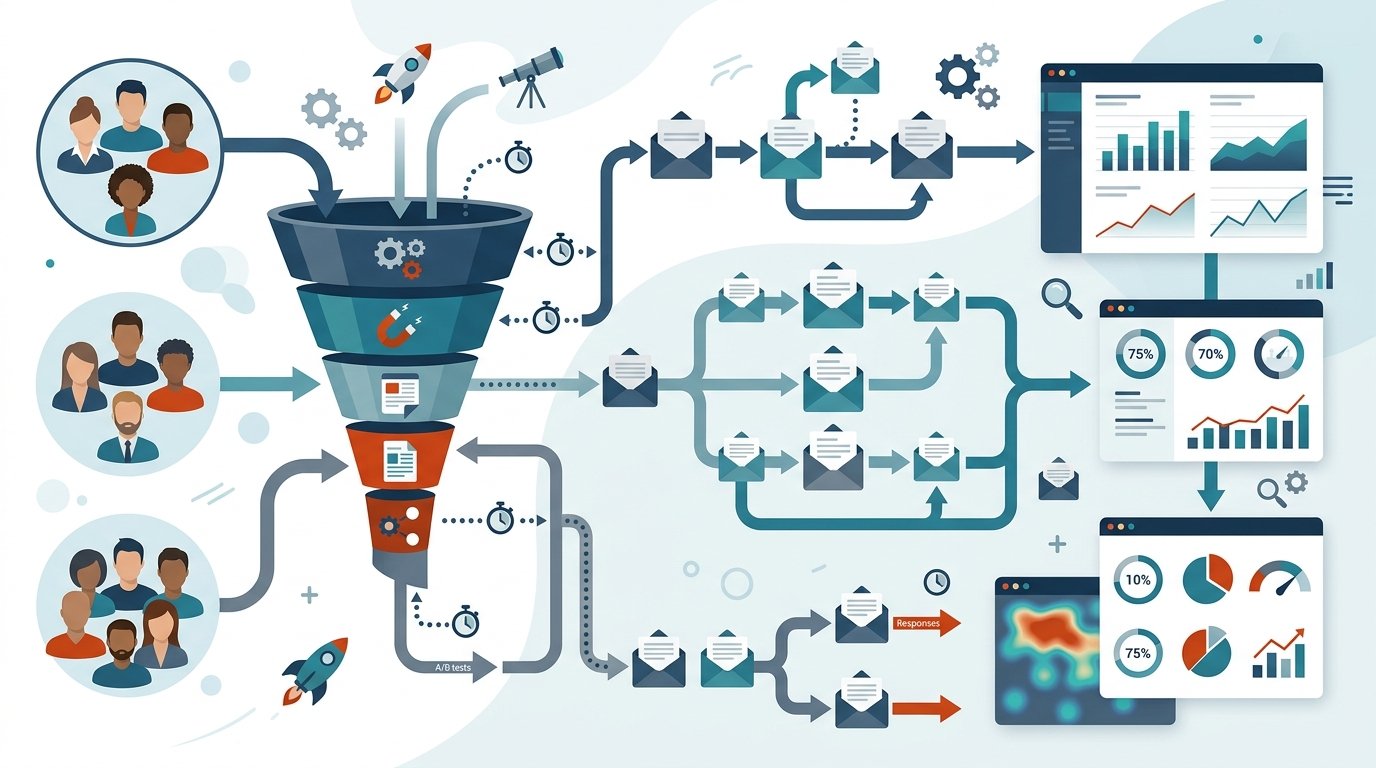
    Diagrama de automatización de emails con flujos condicionales, puntos de activación y secuencias temporales de envío.
    La automatización dispara envíos basados en acciones del usuario: apertura de email anterior, clic en enlace o inactividad, creando secuencias personalizadas sin intervención manual.

    La automatización de emails consiste en configurar flujos de mensajes que se envían de forma automática cuando el usuario realiza una acción o cumple una condición determinada. En lugar de enviar campañas manualmente, defines las reglas una vez y el sistema trabaja por ti.

    Tipos de flujos automatizados más útiles

    Existen varios tipos de automatizaciones que cualquier negocio puede implementar desde el primer día:

    • Secuencia de bienvenida: se activa cuando alguien se suscribe. Presenta la marca, establece expectativas y ofrece valor inmediato. Es el primer contacto y, por tanto, el más importante.
    • Flujo de onboarding: guía al nuevo usuario o cliente a través de los primeros pasos con el producto o servicio. Reduce la fricción y aumenta la activación.
    • Recuperación de carrito abandonado: se activa cuando un usuario añade productos al carrito pero no completa la compra. Un recordatorio bien redactado puede recuperar una parte significativa de esas ventas perdidas.
    • Reactivación de inactivos: detecta suscriptores que no han interactuado en un periodo definido y les envía un mensaje de reenganche. Si no responden, los elimina de la lista para mantener la calidad de la base de datos.
    • Emails de cumpleaños o aniversario: mensajes personalizados en fechas relevantes para el suscriptor. Generan cercanía con un esfuerzo mínimo.

    Cada uno de estos flujos responde a un momento concreto del ciclo de vida del cliente. Implementarlos no requiere grandes recursos técnicos; la mayoría de las plataformas ofrecen plantillas y editores visuales que permiten configurarlos en pocas horas.

    La lógica detrás de un buen flujo automatizado

    Un flujo automatizado efectivo no es una secuencia de mensajes de venta. Es una progresión lógica que aporta valor en cada paso y avanza al usuario hacia una acción concreta. Antes de construirlo, conviene responder tres preguntas: ¿qué acción lo activa?, ¿qué objetivo tiene cada mensaje?, ¿cuándo debe terminar o ramificarse?

    Por ejemplo, si alguien descarga una guía sobre gestión de proyectos, el flujo podría comenzar con un email de entrega del recurso, seguir con dos o tres correos que profundizan en el tema y terminar con una propuesta de demostración del producto relacionado. Cada mensaje tiene un propósito claro y está conectado con el anterior.

    ¿Qué tipos de campañas existen en email marketing?

    Más allá de los flujos automatizados, el email marketing incluye campañas puntuales que se envían de forma manual o programada a toda la lista o a un segmento específico. Conocer los tipos principales ayuda a planificar una estrategia equilibrada.

    • Newsletter: envío periódico (semanal, quincenal, mensual) con contenido de valor: artículos, noticias del sector, recursos. Su objetivo principal es mantener la relación con el suscriptor.
    • Campaña promocional: anuncia una oferta, descuento o lanzamiento. Tiene un objetivo de conversión claro y una fecha de caducidad.
    • Email transaccional: confirmación de pedido, factura, restablecimiento de contraseña. Aunque no son campañas de marketing en sentido estricto, su tasa de apertura es muy alta y son una oportunidad de reforzar la marca.
    • Email de contenido educativo: comparte conocimiento relevante para el suscriptor sin intención comercial directa. Construye autoridad y confianza a largo plazo.

    Una estrategia de email marketing madura combina todos estos tipos. No todo puede ser promoción; tampoco todo puede ser contenido sin llamada a la acción. El equilibrio entre valor y conversión es lo que mantiene la lista sana y comprometida.

    ¿Cuáles son las métricas clave para medir el éxito?

    Sin datos, el email marketing es intuición. Las métricas de email te permiten saber qué funciona, qué no y dónde mejorar. Aquí están las más importantes y lo que realmente indican.

    Métricas de apertura y clics

    La tasa de apertura mide el porcentaje de destinatarios que abrieron el email. Es un indicador de la relevancia del asunto y del remitente. Si es baja, el problema suele estar en la línea de asunto, en el nombre del remitente o en el momento del envío.

    La tasa de clics (CTR, click-through rate) mide cuántos usuarios hicieron clic en al menos un enlace del correo. Indica si el contenido fue lo suficientemente relevante y si la llamada a la acción fue clara. Un email con buena apertura pero bajo CTR suele tener un problema de alineación entre el asunto y el contenido.

    Existe también la tasa de clics sobre aperturas (CTOR), que divide los clics entre las aperturas. Es un indicador más preciso de la calidad del contenido, porque filtra a quienes ni siquiera abrieron el email.

    Métricas de salud de la lista

    La tasa de rebote mide los emails que no llegaron a su destino. Un rebote duro (hard bounce) indica una dirección inválida o inexistente; un rebote blando (soft bounce) puede ser un buzón lleno o un problema temporal del servidor. Mantener la tasa de rebote por debajo del 2% es fundamental para proteger la reputación del dominio remitente.

    La tasa de bajas (unsubscribe rate) indica cuántos suscriptores se dieron de baja tras recibir un email. Un pico puntual puede ser normal; una tasa sostenida alta señala que el contenido no es relevante o que la frecuencia de envío es excesiva.

    Por último, la tasa de spam mide cuántos usuarios marcaron el email como correo no deseado. Es la métrica más crítica: si supera ciertos umbrales, los proveedores de correo pueden bloquear tus envíos o enviarlos directamente a la carpeta de spam.

    Métricas de conversión

    Las métricas anteriores son indicadores de proceso. Las métricas de conversión miden el resultado final: ¿cuántas personas completaron la acción que querías que completasen? Puede ser una compra, un registro, una descarga o una llamada.

    Para calcularlas necesitas conectar tu plataforma de email con tu herramienta de analítica web. Solo así podrás atribuir conversiones a campañas concretas y calcular el retorno real de cada envío.

    Métricas clave de email marketing: qué miden y cuándo preocuparte
    Métrica Qué mide Señal de alerta
    Tasa de apertura Relevancia del asunto y remitente Por debajo del 15-20%
    Tasa de clics (CTR) Relevancia del contenido y CTA Por debajo del 2%
    Tasa de rebote Calidad de la lista Por encima del 2%
    Tasa de bajas Relevancia y frecuencia Por encima del 0,5%
    Tasa de spam Reputación del remitente Por encima del 0,1%

    ¿Qué herramientas se usan para hacer email marketing?

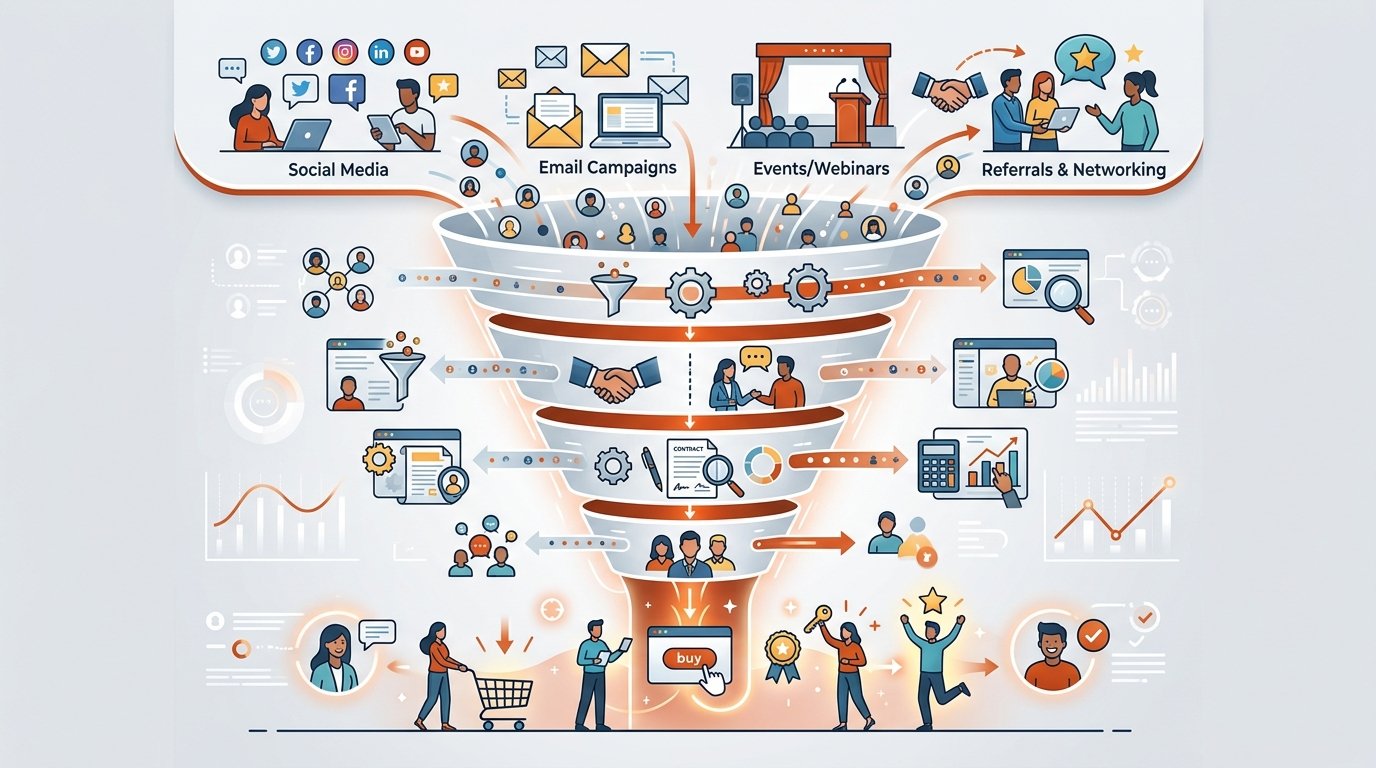
    Conjunto de herramientas de email marketing conectadas mostrando integración de datos, automatización y análisis de campañas.
    Las plataformas de email marketing profesionales integran gestión de listas, diseño de plantillas, automatización de secuencias y análisis de métricas en un único ecosistema.

    Existen plataformas diseñadas específicamente para gestionar listas, crear campañas, configurar automatizaciones y analizar resultados. La elección depende del tamaño de la lista, el nivel de automatización necesario y el presupuesto disponible.

    Las más utilizadas en el mercado hispanohablante incluyen Mailchimp (ideal para empezar, con plan gratuito), ActiveCampaign (orientada a automatizaciones avanzadas y CRM), Brevo (antes Sendinblue, buena opción para pymes con volúmenes medios) y Klaviyo (muy popular en ecommerce por su integración con datos de comportamiento de compra).

    Sin embargo, la herramienta no es lo más importante. Una estrategia bien definida con una plataforma básica supera siempre a una herramienta sofisticada sin estrategia. Antes de elegir el software, define qué quieres conseguir y qué flujos necesitas configurar.

    ¿Por dónde empezar si eres nuevo en email marketing?

    Si estás comenzando, la tentación es configurarlo todo a la vez: lista, automatizaciones, segmentación, diseño. Es un error. La forma más efectiva de arrancar es hacerlo en capas, de lo simple a lo complejo.

    El primer paso es construir la lista. Sin suscriptores, no hay email marketing. Crea un incentivo claro para que las personas se suscriban: una guía descargable, un descuento, acceso a contenido exclusivo. Coloca el formulario en los puntos de mayor tráfico de tu web.

    El segundo paso es configurar la secuencia de bienvenida. Es el flujo más importante y el que mayor impacto tiene en la percepción inicial de la marca. Con tres o cuatro emails bien escritos ya tienes una base sólida.

    El tercer paso es enviar con regularidad. La consistencia construye confianza. No hace falta enviar cada día; sí hace falta enviar con una cadencia predecible para que el suscriptor sepa cuándo esperar noticias tuyas.

    A partir de ahí, puedes ir añadiendo capas: segmentación por comportamiento, flujos de reactivación, tests A/B en los asuntos, análisis de métricas por segmento. Cada nueva capa multiplica el rendimiento de las anteriores, pero solo si las anteriores están bien asentadas.

    Preguntas frecuentes sobre email marketing

    ¿Cuántos emails debo enviar a la semana?

    No hay una respuesta universal. Depende del tipo de negocio, del contenido que puedas producir y de las expectativas que hayas creado al suscriptor. Lo más importante es la consistencia: es mejor enviar un email semanal de calidad que tres emails mediocres. Si tu lista tiene una alta tasa de bajas, reduce la frecuencia antes de cambiar el contenido.

    ¿Puedo hacer email marketing sin una web propia?

    Sí, aunque es poco recomendable a largo plazo. Puedes usar una landing page sencilla para captar suscriptores y una plataforma de email para gestionar los envíos. Sin embargo, tener una web propia te permite hacer seguimiento de conversiones, personalizar la experiencia del suscriptor y construir una presencia digital más sólida.

    ¿Qué diferencia hay entre un email transaccional y uno de marketing?

    Un email transaccional se envía como respuesta a una acción del usuario: confirmación de compra, restablecimiento de contraseña, factura. Un email de marketing se envía de forma proactiva con un objetivo comercial o de contenido. La distinción importa porque los transaccionales tienen tasas de apertura mucho más altas y no requieren consentimiento explícito de marketing, aunque sí deben cumplir el RGPD.

    ¿Cómo sé si mi tasa de apertura es buena?

    Las tasas de referencia varían mucho según el sector. En general, una tasa de apertura entre el 20% y el 30% se considera saludable para la mayoría de los sectores B2B y B2C. Lo más útil no es compararte con promedios del sector, sino hacer seguimiento de tu propia evolución: si tu tasa mejora mes a mes, vas en la dirección correcta.

  • Prospección de clientes: métodos, estrategias y errores clave

    Prospección de clientes: métodos, estrategias y errores clave

    La prospección de clientes es el proceso sistemático de identificar, evaluar y contactar a personas o empresas con potencial real de convertirse en clientes. No es una llamada al azar ni un correo masivo sin criterio: es la primera fase del ciclo de ventas y, en gran medida, la que determina la calidad de todo lo que viene después. Si tu pipeline empieza mal, el resto del proceso lo acusa.

    ¿Qué es exactamente la prospección de clientes?

    La prospección de clientes es la fase inicial del proceso comercial en la que el equipo de ventas o marketing sale a buscar —o a atraer— contactos que encajan con el perfil de cliente ideal de la empresa. El objetivo es iniciar un contacto con los consumidores potenciales, ya sea que provengan de una estrategia de inbound o de outbound marketing.

    Es importante distinguir entre dos conceptos que a menudo se confunden. Un lead es un individuo o empresa que ha mostrado interés inicial en los productos o servicios de una empresa, pero aún no ha sido calificado como prospecto. Los prospectos, en cambio, son leads cualificados con características más alineadas con la marca; han mostrado interés y, además, poseen atributos sociodemográficos o económicos que los convierten en perfil ideal.

    Dicho de otro modo: todos los prospectos empezaron siendo leads, pero no todos los leads llegan a ser prospectos. La prospección de clientes es precisamente el trabajo de filtrar y avanzar en esa distinción. En entornos B2B, esta función suele recaer en un SDR (Sales Development Representative), un perfil especializado en la fase de identificación y cualificación inicial, que después pasa las oportunidades al equipo de cierre.

    ¿Por qué es tan importante sistematizar la prospección?

    Muchas pymes generan clientes de forma reactiva: esperan a que alguien les contacte, confían en el boca a boca o actúan cuando el negocio flojea. Ese enfoque es frágil. La prospección de clientes es el primer paso fundamental para cualquier empresa que busca escalar sus ventas; especialmente para las pymes, donde optimizar recursos es clave, implementar un proceso efectivo puede marcar la diferencia entre crecer o estancarse.

    Una buena estrategia de prospección permite aumentar el volumen de leads cualificados, proporcionar mayor previsibilidad al proceso de ventas, llegar a clientes a los que de otro modo no se llegaría y lograr una tasa de retorno de la inversión más rápida que con otros enfoques de marketing.

    Además, sistematizar la prospección te permite medir qué canales funcionan, qué mensajes convierten y dónde se pierden las oportunidades. Sin proceso, no hay datos. Sin datos, no hay mejora. Según datos de HubSpot, el 42 % de los comerciales considera la prospección la parte más difícil del trabajo, por delante incluso del cierre; eso convierte la metodología en una ventaja competitiva directa.

    ¿Cuáles son los principales métodos de prospección?

    Los métodos de prospección se dividen en dos grandes enfoques que no son excluyentes, sino complementarios. Conocerlos te permite elegir la combinación más adecuada para tu modelo de negocio y tu audiencia.

    Prospección outbound: tú tomas la iniciativa

    La prospección outbound o prospección directa se caracteriza por la búsqueda activa de leads potenciales a partir de la definición e identificación de las características de uno o varios compradores potenciales. La empresa sale al mercado sin esperar a que el cliente llegue por su cuenta.

    Los canales más habituales en outbound son las llamadas en frío, el correo electrónico directo, LinkedIn y la asistencia a eventos. El outbound resulta especialmente eficaz para empresas que necesitan generar demanda de forma rápida y controlar directamente su pipeline comercial; este modelo permite identificar cuentas estratégicas, contactar con decisores específicos y acelerar el acceso a oportunidades de alto valor. Una variante avanzada del outbound es el account-based marketing (ABM), que concentra todos los esfuerzos de prospección en un conjunto reducido de cuentas estratégicas de alto potencial, coordinando ventas y marketing para personalizar cada interacción.

    Prospección inbound: el cliente llega a ti

    El inbound marketing se basa en atraer a los clientes mediante contenido de valor que responda a sus necesidades y dudas; esta estrategia utiliza blogs, webinars, ebooks y vídeos que generan confianza y autoridad, haciendo que los leads se acerquen por iniciativa propia.

    La ventaja del inbound es que los leads que llegan ya tienen un nivel de interés previo, lo que facilita la cualificación posterior. Sin embargo, requiere tiempo y consistencia para generar resultados. Las empresas con mejores resultados suelen combinar ambos enfoques: utilizan inbound para generar visibilidad y outbound para acelerar la prospección y aumentar las oportunidades comerciales de forma proactiva.

    ¿Cómo se define el perfil de cliente ideal antes de prospectar?

    Perfil de cliente ideal con atributos clave como sector, tamaño empresarial, presupuesto y puntos de dolor.

    Antes de lanzar cualquier acción de prospección de clientes, necesitas saber a quién te diriges. Prospectar sin un perfil claro es como lanzar una red sin saber qué peces quieres capturar: gastas energía y obtienes resultados inconsistentes.

    El perfil de cliente ideal (ICP, por sus siglas en inglés) recoge los atributos que definen a tu mejor cliente posible: sector, tamaño de empresa, cargo del decisor, presupuesto disponible, reto principal que resuelves. Utiliza herramientas de CRM y plataformas de análisis de datos para segmentar tu audiencia de manera precisa; la segmentación basada en datos te ayudará a enviar mensajes más relevantes y a conectar de manera efectiva con los leads. Por ejemplo, puedes segmentar a tus potenciales clientes por ubicación geográfica, industria o comportamiento de compra.

    Un buen ICP también se construye mirando hacia dentro: analiza a tus clientes actuales más rentables y satisfechos, identifica qué tienen en común y usa esos patrones como criterios de selección para la prospección de clientes futura. El impacto de un ICP preciso es medible: un análisis de más de 10.000 campañas B2B muestra que pasar de un ICP genérico a uno muy específico puede multiplicar la tasa de respuesta de un 2 % a un 11 %.

    ¿Qué estrategias de prospección son más efectivas?

    Una vez tienes el perfil definido, el siguiente paso es elegir las estrategias concretas. No existe una fórmula única: la efectividad depende de tu sector, tu ciclo de venta y los recursos disponibles. Estas son las que mejor funcionan en la práctica.

    Social selling en LinkedIn

    LinkedIn es hoy el canal de prospección de clientes B2B más potente. Permite identificar decisores por cargo, sector y tamaño de empresa, interactuar con su contenido antes del primer contacto y enviar mensajes directos con contexto. La clave no es vender desde el primer mensaje, sino generar credibilidad y abrir una conversación. Los datos respaldan la apuesta: los profesionales con un índice de social selling alto en LinkedIn generan un 45 % más de oportunidades de venta que quienes no trabajan esa presencia, según LinkedIn.

    En LinkedIn, esto se traduce en comentar publicaciones relevantes, compartir perspectivas propias y construir una presencia que atraiga prospectos de forma orgánica. El social selling no sustituye al outbound directo; lo complementa reduciendo la fricción del primer contacto.

    Email outbound personalizado

    El email de prospección consiste en enviar correos personalizados y segmentados para atraer la atención de clientes potenciales, ofreciendo soluciones a sus necesidades o problemas específicos. La palabra clave es personalizado: un correo genérico enviado a mil contactos tiene una tasa de respuesta marginal.

    ¿Cuánto es marginal? Según datos de 2026, la tasa de respuesta media del cold email B2B se sitúa en torno al 3-5 %, con una caída sostenida desde el 8,5 % de 2019 provocada por la saturación de bandejas de entrada y los filtros de spam más estrictos. Superar ese umbral —llegar al 8-10 %— requiere ICP preciso, personalización real y cadencia bien diseñada. Una buena secuencia incluye entre tres y cinco mensajes espaciados en el tiempo, cada uno con un ángulo diferente: el problema que resuelves, un caso de uso relevante, una pregunta directa.

    Llamadas en frío estratégicas

    La llamada en frío no ha muerto; lo que ha muerto es la llamada sin preparación. Antes de marcar, investiga a la empresa, identifica el reto que podrías resolver y prepara una apertura que conecte con su realidad. El 82 % de los compradores acepta reuniones con vendedores que contactan de forma proactiva, según HubSpot, lo que desmiente el mito de que el outbound telefónico es intrusivo por definición.

    Una metodología de prospección equilibrada incluye una combinación de llamadas telefónicas, reuniones en persona, correos electrónicos, LinkedIn, mensajes de texto, referencias, networking y ferias comerciales. Ningún canal funciona en aislamiento; la cadencia multicanal es lo que genera resultados consistentes.

    Referencias y programa de recomendaciones

    Solicitar a clientes actuales que refieran a otros contactos interesados en tus productos o servicios puede generar leads cualificados. Las referencias de clientes satisfechos suelen ser altamente cualificadas y tienen una mayor probabilidad de convertirse en clientes. Sin embargo, este canal requiere un trabajo previo: no puedes pedir referencias si no has construido una relación de confianza y entregado valor real.

    Contenido y posicionamiento orgánico

    Publicar contenido especializado —artículos, guías, casos de éxito— atrae leads que ya están buscando soluciones. Una institución educativa puede publicar artículos sobre tendencias en formación online y organizar webinars gratuitos para captar estudiantes interesados; así no solo educa, sino que atrae leads cualificados sin un contacto frío inicial. Este principio es aplicable a cualquier sector: el contenido que resuelve dudas reales convierte mejor que el contenido que solo habla de la empresa.

    ¿Cómo se cualifican las oportunidades identificadas?

    Identificar leads es solo la mitad del trabajo. La cualificación de oportunidades es el proceso por el que filtras qué contactos merecen tiempo y atención comercial. Sin este paso, el equipo de ventas pierde horas persiguiendo prospectos que nunca van a comprar.

    La cualificación evalúa qué tan probable es que un prospecto se convierta en cliente; aquí se prioriza la calidad sobre la cantidad. Los criterios más habituales para cualificar son:

    • Necesidad real: ¿el prospecto tiene un problema que tu solución resuelve?
    • Presupuesto disponible: ¿puede asumir el coste de tu producto o servicio?
    • Autoridad: ¿estás hablando con quien toma la decisión de compra?
    • Timing: ¿hay urgencia o un plazo concreto para resolver el problema?

    Este marco —conocido como BANT: Budget, Authority, Need, Timing— es uno de los más utilizados en entornos B2B. Después de que el lead pasa por los filtros de cualificación aplicados por el SDR o el equipo de preventa, se lo deriva al equipo de ventas para que lo prospecte de forma activa. Separar la función de cualificación de la de cierre mejora la eficiencia de todo el proceso y reduce el tiempo medio del ciclo de venta.

    Una métrica clave a seguir es la tasa de conversión por etapa: qué porcentaje de leads pasan a prospectos cualificados, y qué porcentaje de esos prospectos avanzan a reunión o propuesta. Sin esos datos, no puedes saber dónde se rompe tu embudo.

    ¿Qué herramientas facilitan la prospección de clientes?

    Herramientas de prospección incluyen CRM, automatización de email, redes profesionales, lead scoring y análisis de datos.

    La prospección de clientes manual escala mal. A partir de cierto volumen, necesitas herramientas que automaticen tareas repetitivas, centralicen la información y te ayuden a priorizar esfuerzos. La elección correcta depende del tamaño del equipo y del presupuesto disponible.

    Herramientas según tamaño de equipo

    • Equipos de 1-3 personas: HubSpot CRM gratuito para centralizar contactos y seguimientos, combinado con Apollo.io en su plan básico para identificar leads y automatizar secuencias de email. Son herramientas con curva de aprendizaje baja y coste inicial cero o reducido.
    • Equipos de 4-10 personas: Sales Navigator de LinkedIn para prospección B2B precisa por cargo, sector y señales de actividad reciente, más un CRM de pago (HubSpot Starter o Pipedrive) que permita gestionar pipelines diferenciados por SDR y comercial.
    • Equipos mayores o con ABM: Salesforce o HubSpot Enterprise, integrado con herramientas de intent data (como Bombora o 6sense) que permiten detectar qué cuentas están investigando activamente soluciones como la tuya. En este nivel, la automatización puede reducir el tiempo dedicado a tareas no comerciales hasta en un 66 %, según datos de Flowlu.

    Las estrategias outbound modernas se apoyan en herramientas de automatización e inteligencia artificial para gestionar grandes volúmenes de prospección de forma eficiente; esto permite a las empresas escalar su actividad comercial sin aumentar proporcionalmente la carga administrativa.

    Errores frecuentes en la prospección de clientes

    La mayoría de los equipos que prospectan sin resultados no tienen un problema de esfuerzo, sino de método. Estos son los errores más habituales y sus consecuencias directas en el pipeline.

    ICP demasiado amplio o mal definido

    Prospectar a «empresas de cualquier sector con más de 10 empleados» no es un ICP: es una lista de exclusión mínima. Un ICP vago obliga al equipo a invertir tiempo en contactos que nunca van a comprar, lo que dispara el coste por oportunidad y desmotiva al equipo. La precisión del ICP es el factor que más impacta en la tasa de respuesta, por encima del copy o del canal elegido.

    Secuencias sin personalización real

    Enviar el mismo correo a quinientos contactos cambiando solo el nombre es lo que los compradores B2B identifican como spam. El buyer moderno ha investigado soluciones antes de hablar con ningún vendedor; un mensaje genérico confirma que quien lo envía no ha hecho el mismo esfuerzo. La personalización no significa escribir cada correo desde cero: significa demostrar que conoces el negocio del destinatario en dos o tres líneas concretas.

    Ausencia de seguimiento sistemático

    El 70 % de los vendedores envía un único correo a cada prospecto y no vuelve a contactar, según datos de Invesp. Sin embargo, la mayoría de las ventas B2B requieren cinco o más puntos de contacto antes de materializarse. Abandonar tras el primer intento es el error más costoso y más fácil de corregir: basta con diseñar una cadencia mínima de tres a cinco toques en canales diferentes.

    Mezclar cualificación y cierre en el mismo rol

    Cuando el mismo comercial prospecta, cualifica y cierra, el tiempo disponible para cada fase se comprime. El resultado es que se prospecta poco, se cualifica mal y se cierra con prisas. Separar la función del SDR (prospección y cualificación) de la del Account Executive (presentación y cierre) es una de las palancas de eficiencia más documentadas en ventas B2B.

    No medir las métricas correctas

    Medir solo el número de correos enviados o de llamadas realizadas es medir actividad, no resultados. Las métricas que importan en prospección son la tasa de respuesta por canal, el porcentaje de leads que avanzan a reunión cualificada y el ciclo de venta medio desde el primer contacto hasta la oportunidad abierta. Sin esos datos, no hay forma de saber qué mejorar.

    ¿Cómo se estructura un proceso de prospección de clientes paso a paso?

    La prospección de clientes efectiva no es un conjunto de tácticas dispersas: es un proceso con fases definidas, responsables claros y métricas de seguimiento. Un buen proceso debe incluir investigación y análisis de mercado, método, estrategia e interacción. A continuación, el flujo que recomendamos desde Amara, ingeniería de marketing:

    1. Define el ICP: establece los criterios exactos que debe cumplir un prospecto para ser considerado cualificado. Sin este paso, todo lo demás es ruido.
    2. Construye listas segmentadas: usa fuentes como LinkedIn, directorios sectoriales, bases de datos o tu propio CRM para generar listas de contactos que encajen con el ICP.
    3. Investiga antes de contactar: dedica unos minutos a entender el negocio del prospecto, sus retos actuales y el contexto en el que opera. Esto marca la diferencia entre un mensaje genérico y uno relevante.
    4. Diseña la cadencia de contacto: define cuántos puntos de contacto vas a hacer, en qué canales y con qué frecuencia. Combina email, LinkedIn y teléfono según el perfil del prospecto.
    5. Cualifica en el primer contacto: usa las primeras conversaciones para validar los criterios BANT y decidir si el prospecto merece avanzar en el embudo de ventas.
    6. Registra todo en el CRM: cada interacción, cada respuesta, cada objeción. Los datos son el activo más valioso de tu proceso de prospección de clientes.
    7. Analiza y optimiza: revisa periódicamente qué canales generan más respuestas, qué mensajes convierten mejor y dónde se pierden los prospectos. Ajusta en consecuencia.

    Al trabajar con procesos estructurados y métricas claras, la prospección facilita la construcción de pipelines mucho más estables y previsibles; los equipos pueden medir tasas de respuesta, reuniones generadas o conversiones en cada etapa del embudo, permitiendo anticipar resultados y optimizar la planificación comercial.

    Preguntas frecuentes sobre prospección de clientes

    ¿Cuánto tiempo hay que dedicar a la prospección de clientes cada semana?

    No existe una cifra universal, pero los equipos comerciales más efectivos reservan bloques de tiempo fijos y protegidos para la prospección de clientes, sin mezclarlos con otras tareas. Lo importante no es la cantidad de horas, sino la consistencia: prospectar de forma irregular genera pipelines irregulares. Para una pyme con un equipo pequeño, dedicar entre un 20 % y un 30 % del tiempo comercial a prospección activa suele ser un punto de partida razonable.

    ¿Qué diferencia hay entre un lead y un prospecto?

    Un lead es cualquier contacto que ha mostrado algún tipo de interés en tu empresa o que encaja superficialmente con tu perfil de cliente. Un prospecto es un lead que ya ha pasado por un proceso de cualificación de oportunidades y cumple los criterios que lo hacen viable: tiene necesidad real, presupuesto, autoridad para decidir y un timing concreto. La prospección de clientes es precisamente el proceso de convertir leads en prospectos cualificados.

    ¿Es mejor el outbound o el inbound para la prospección?

    Depende del contexto. El outbound genera resultados más rápidos y permite controlar el pipeline de forma activa, pero requiere más esfuerzo por contacto. El inbound atrae leads con mayor intención de compra, pero tarda más en dar frutos. La estrategia más sólida combina ambos métodos de prospección: el inbound construye autoridad y atrae leads de forma orgánica, mientras que el outbound acelera la generación de oportunidades en el corto plazo.

    ¿Cuál es una buena tasa de respuesta en cold email?

    En 2025-2026, la tasa de respuesta media en cold email B2B se sitúa entre el 3 % y el 5 %. Una tasa superior al 5 % se considera por encima de la media; alcanzar el 8-10 % de forma consistente es un resultado excelente y propio de los equipos del cuartil superior. Por debajo del 1 % hay un problema estructural: de ICP, de entregabilidad o de personalización. Estos benchmarks proceden del análisis de miles de millones de correos de outbound en plataformas como Instantly y Belkins.

    ¿Cómo sé si mi proceso de prospección de clientes está funcionando?

    Las métricas clave son: número de prospectos contactados por semana, tasa de respuesta en cada canal, porcentaje de leads que avanzan a reunión cualificada y tiempo medio desde el primer contacto hasta la oportunidad abierta. Si estas cifras no mejoran con el tiempo, revisa el ICP, los mensajes de contacto y la cadencia. Un proceso de prospección de clientes bien medido siempre tiene margen de optimización.

    ¿La prospección de clientes funciona igual en B2C que en B2B?

    No exactamente. En B2B, la prospección suele implicar ciclos de venta más largos, múltiples decisores y un mayor peso del outbound personalizado (email, LinkedIn, llamadas). En B2C, los volúmenes son mayores y la cualificación individual es menos viable; aquí el inbound, la publicidad segmentada y los programas de referidos cobran más protagonismo. Las pymes B2C pueden adaptar el marco BANT simplificando los criterios: necesidad real y capacidad de compra son los filtros más relevantes en ese contexto.

    Fuentes

    Fuentes

  • Business Storytelling: What It Is, Structure and How to Use It in Marketing

    Business Storytelling: What It Is, Structure and How to Use It in Marketing

    Storytelling is, in essence, the art of telling stories with a strategic purpose. In a business context, it is not about inventing fictional tales, but about building authentic narratives that connect your brand with the people you want to reach. If you have ever felt that your marketing messages sound like a product catalogue, storytelling is the tool you need to change that perception.

    What is business storytelling?

    Business storytelling is the practice of communicating a company’s values, value proposition and identity through structured stories. Instead of listing product features, a story places the customer in a recognisable scenario, presents a real problem and shows how the brand helps to solve it.

    Corporate storytelling has moved beyond being a marketing tactic to become a fundamental strategic competence: it is the art and science of building stories that not only inform, but inspire, connect and mobilise. In other words, it is not advertising disguised as a tale; it is honest communication with a narrative structure.

    The difference from traditional marketing is clear: while a conventional advertisement describes what you sell, storytelling shows why it matters. And that difference, in a market saturated with messages, is decisive.

    Why does storytelling work in marketing?

    Stories activate cognitive and emotional mechanisms that rational arguments cannot achieve on their own. When we hear a well-constructed story, our brain does not merely process information: it experiences it. This generates memory, empathy and, ultimately, trust.

    The use of authentic narratives allows for greater emotional connection, increases brand recall and positively influences the audience’s willingness to consume content or follow brands on social media. This is not a pleasant side effect; it is the central mechanism that makes storytelling work as a marketing tool.

    Furthermore, by telling authentic and relevant stories, companies can capture the audience’s attention, differentiate themselves from the competition and build a brand identity that endures over time. For entrepreneurs and marketing managers, this translates into something very concrete: less effort to persuade, more ease in being remembered.

    What are the key elements of a good brand story?

    Not every narrative is effective storytelling. A brand story that works combines four fundamental elements that work together to create impact:

    Character

    Every story needs a protagonist with whom the audience can identify. In business storytelling, that character is usually the customer — not the brand. The company acts as a guide or facilitator, not as the hero. This shift in perspective is one of the most common mistakes brands make: talking about themselves when they should be talking about those who use them.

    Define who your ideal customer is: their fears, their aspirations, their context. The more specific the character, the easier it will be for your audience to recognise themselves in them.

    Conflict

    Without tension there is no story. The conflict is the problem, the friction or the challenge that the character needs to overcome. In marketing, this conflict must align exactly with the pain point or need that your product or service resolves. A narrative must present a conflict or challenge that sparks interest and generates narrative tension; the solution to this conflict is where the product or service enters naturally, not as an advertising imposition, but as a key component in the character’s transformation.

    Transformation

    Transformation is the emotional heart of any story. The character enters the story with a problem and leaves it having changed something: their situation, their knowledge or their perspective. In the context of brand stories, that transformation must be credible and specific. Not “their life improved”, but “they cut their management time in half and were able to dedicate those hours to their family”.

    Message

    Every story must convey a clear message, aligned with the brand’s values, that reinforces the relationship with consumers. This message does not have to be explicit; in fact, the best stories leave it implicit and allow the reader to discover it for themselves. That generates a sense of complicity that no slogan can replicate.

    How is an effective business story structured?

    Three-act structure of a brand story: setup, conflict and resolution, with connected visual elements
    An effective business story follows the same narrative pattern as classic stories: it introduces the context, presents a real challenge and shows how your brand resolves it, generating a

    There are several narrative structures you can apply to business storytelling. The most versatile and proven is the one that follows the classic three-act arc:

    1. Initial situation: introduces the character in their usual context. The reader must recognise that reality as their own.
    2. Conflict or trigger: something changes, a problem or an opportunity appears that forces the character to act.
    3. Resolution and transformation: the character overcomes the obstacle — with or without the help of your brand — and reaches a better state. This is where your value proposition fits in naturally.

    This structure is the foundation, but you can enrich it with additional narrative devices. Suspense is a classic storytelling technique that significantly increases the audience’s level of interest, keeping them captivated until the denouement. Another powerful device is the emotional climax: the “star moment” or climax is the culminating point that will make your story unforgettable; it can be dramatic, funny or moving, but it must be something that stays in your audience’s memory.

    Where to apply storytelling in your marketing strategy?

    Storytelling is not a format; it is a way of thinking about communication. That is why it can — and should — be applied across multiple channels and formats:

    Website and “About Us” page

    The “About Us” page is the most underused place for business storytelling. Instead of a list of years of experience and corporate values, tell the origin story of the company: what problem you saw, why you decided to solve it and what you learned along the way. Brand narratives help companies clarify their core values for the public, using a messaging framework that ensures a consistent voice across all narrative marketing.

    Social media and organic content

    On social media, storytelling works especially well in the format of a success story, testimonial or customer story. One of the keys to successful storytelling is focusing on your brand’s values rather than just on the products. This means that a post about your product’s manufacturing process can connect more than a post about its technical features.

    Furthermore, story-based content tends to generate greater participation on social media — comments, shares and reactions; an engaging narrative motivates users to interact with the brand, which translates into greater organic reach and visibility.

    Email marketing and nurturing sequences

    Email is one of the channels where storytelling delivers the greatest return. A welcome sequence that tells the story of how your company was born, or an email that introduces a real customer with their before and after, generates an emotional connection that promotional emails never achieve. The key is to treat each email as a chapter in a longer story.

    Presentations and commercial proposals

    In B2B sales, presentations loaded with data and feature slides rarely convince. A proposal that opens with the story of a customer similar to the prospect — their doubts, their decision, their result — creates a mirror in which the interlocutor recognises themselves. This reduces resistance and accelerates the decision.

    What makes a business narrative authentic?

    Authenticity is the most important — and most difficult to fake — criterion in business storytelling. A fabricated or exaggerated story is easily detected and generates the opposite of the desired effect: distrust.

    By adapting storytelling to your business and showing real experiences, an emotional connection of trust is generated that reinforces the authenticity of your brand. In practice, this implies several things:

    • Use real testimonials with names, contexts and specific results, not generic ones.
    • Show the process, not just the result. Stories that include difficulties and mistakes generate more credibility than those that only show successes.
    • Maintain consistency between what you tell and what you do. Your brand story must be in line with the rest of your offering for it to resonate with the public.
    • Avoid corporate jargon. Natural, approachable language connects; institutional language distances.

    Storytelling allows you to show the human side of the company, presenting it not only as a business, but as an entity with values, purpose and shared experiences, which helps to generate greater trust and credibility among consumers.

    How to start applying storytelling in your company?

    Storytelling implementation roadmap with key milestones: purpose definition, audience identification, message
    Starting with storytelling requires clarity about your brand purpose, a deep understanding of your audience and strategic selection of the channels where your narrative will resonate with the greatest impact.

    If you have never worked on storytelling in a systematic way, the simplest starting point is to identify the stories you already have and are not yet telling. Every company has narrative material; the challenge is to recognise it and structure it.

    Follow these steps to get started:

    1. Identify your protagonist customer: choose a real customer profile and write their story before and after working with you. Be specific.
    2. Define the central conflict: what was their main problem? What prevented them from solving it on their own?
    3. Describe the transformation: what changed? What could they do afterwards that they could not do before?
    4. Extract the message: what does this story say about your brand’s values or value proposition?
    5. Choose the channel: adapt the format to the medium — a LinkedIn post, an email, a section of your website — without losing the essence of the story.

    At Amara, ingeniería de marketing, we work through this process with entrepreneurs and marketing teams who want to stop selling features and start generating real emotional connection with their audience. Storytelling is not a creative resource reserved for big brands; it is a strategic competence that any company can develop with the right approach.

    What mistakes to avoid in business storytelling?

    Knowing the theory of storytelling does not guarantee its correct execution. These are the most frequent mistakes you should avoid:

    • Making the brand the hero: the protagonist must be the customer, not your company. If your story starts with “we are…”, it starts badly.
    • Forcing the product into the narrative: the product or service must appear as a natural consequence of the story, not as an advertising interruption.
    • Ignoring consistency across channels: a fragmented business narrative — one story on Instagram and a different one on the website — erodes brand identity.
    • Prioritising emotion over truth: an exciting but implausible story generates distrust. Emotion must arise from real facts, not exaggerations.
    • Not including a call to action: adding a call to action is key to pushing the audience to become customers. Storytelling connects; the CTA converts.

    Avoiding these mistakes makes the difference between a story that moves people and one that, in addition, generates measurable results for your business.

    Frequently asked questions about business storytelling

    Does storytelling only work for big brands?

    No. Storytelling is especially powerful for small and medium-sized businesses because it allows them to compete on differentiation when they cannot do so on advertising budget. An SME with an authentic story connects more than a big brand with a generic advertisement.

    How long does it take to see results with storytelling?

    Storytelling builds long-term assets: brand recognition, trust and loyalty. The first effects — greater engagement, more time on page, better email open rates — are usually noticeable within weeks. The consolidation of the business narrative as a competitive advantage is a process of months.

    Is storytelling the same as branded content?

    Not exactly. Branded content is a format of content sponsored by a brand. Storytelling is a narrative technique that can be applied within branded content, but also in any other channel: email, website, presentations or social media. Storytelling is the tool; branded content can be one of its vehicles.

    How do I measure whether my storytelling is working?

    The most relevant metrics are: engagement rate on social media (comments, shares), time spent on pages with narrative content, open rate and clicks on emails in story format, and, in the long term, conversion rate and customer retention. Combine quantitative metrics with qualitative feedback from your audience.

    Sources

  • Storytelling empresarial: qué es, estructura y cómo usarlo en marketing

    Storytelling empresarial: qué es, estructura y cómo usarlo en marketing

    El storytelling es, en esencia, el arte de contar historias con un propósito estratégico. En el contexto empresarial, no se trata de inventar relatos de ficción, sino de construir narrativas auténticas que conecten tu marca con las personas que quieres alcanzar. Si alguna vez has sentido que tus mensajes de marketing suenan a catálogo de producto, el storytelling es la herramienta que necesitas para cambiar esa percepción.

    ¿Qué es el storytelling empresarial?

    El storytelling empresarial es la práctica de comunicar los valores, la propuesta de valor y la identidad de una empresa a través de historias estructuradas. En lugar de enumerar características de un producto, una historia sitúa al cliente en un escenario reconocible, presenta un problema real y muestra cómo la marca contribuye a resolverlo.

    El storytelling corporativo ha dejado de ser una táctica de marketing para convertirse en una competencia estratégica fundamental: es el arte y la ciencia de construir historias que no solo informan, sino que inspiran, conectan y movilizan. Dicho de otro modo, no es publicidad disfrazada de cuento; es comunicación honesta con estructura narrativa.

    La diferencia con el marketing tradicional es clara: mientras que un anuncio convencional describe lo que vendes, el storytelling muestra por qué importa. Y esa diferencia, en un mercado saturado de mensajes, es decisiva.

    ¿Por qué funciona el storytelling en marketing?

    Las historias activan mecanismos cognitivos y emocionales que los argumentos racionales no consiguen por sí solos. Cuando escuchamos una historia bien construida, nuestro cerebro no solo procesa información: la experimenta. Eso genera recuerdo, empatía y, en último término, confianza.

    El uso de narrativas auténticas permite una mayor conexión emocional, incrementa la recordación de marca e influye positivamente en la disposición del público para consumir contenidos o seguir marcas en redes sociales. Esto no es un efecto secundario agradable; es el mecanismo central que hace que el storytelling funcione como herramienta de marketing.

    Además, al contar historias auténticas y relevantes, las empresas pueden captar la atención del público, diferenciarse de la competencia y construir una identidad de marca que trascienda en el tiempo. Para emprendedores y gestores de marketing, esto se traduce en algo muy concreto: menos esfuerzo para convencer, más facilidad para ser recordados.

    ¿Cuáles son los elementos clave de una buena historia de marca?

    No toda narrativa es storytelling efectivo. Una historia de marca que funciona combina cuatro elementos fundamentales que trabajan juntos para crear impacto:

    Personaje

    Toda historia necesita un protagonista con el que la audiencia pueda identificarse. En el storytelling empresarial, ese personaje suele ser el cliente —no la marca—. La empresa actúa como guía o facilitador, no como héroe. Este cambio de perspectiva es uno de los errores más comunes que cometen las marcas: hablar de sí mismas cuando deberían hablar de quien las usa.

    Define quién es tu cliente ideal: sus miedos, sus aspiraciones, su contexto. Cuanto más específico sea el personaje, más fácil será que tu audiencia se reconozca en él.

    Conflicto

    Sin tensión no hay historia. El conflicto es el problema, la fricción o el desafío que el personaje necesita superar. En marketing, este conflicto debe coincidir exactamente con el dolor o la necesidad que tu producto o servicio resuelve. Una narrativa debe presentar un conflicto o desafío que despierte el interés y genere tensión narrativa; la solución a este conflicto es donde entra el producto o servicio de manera natural, no como una imposición publicitaria, sino como un componente clave en la transformación del personaje.

    Transformación

    La transformación es el corazón emocional de cualquier historia. El personaje entra en la historia con un problema y sale de ella habiendo cambiado algo: su situación, su conocimiento o su perspectiva. En el contexto de las historias de marca, esa transformación debe ser creíble y específica. No “mejoró su vida”, sino “redujo su tiempo de gestión a la mitad y pudo dedicar esas horas a su familia”.

    Mensaje

    Toda historia debe transmitir un mensaje claro, alineado con los valores de la marca, que refuerce la relación con los consumidores. Este mensaje no tiene que ser explícito; de hecho, las mejores historias lo dejan implícito y permiten que el lector lo descubra por sí mismo. Eso genera una sensación de complicidad que ningún eslogan puede replicar.

    ¿Cómo se estructura una historia empresarial efectiva?

    Estructura de tres actos de una historia de marca: planteamiento, conflicto y resolución, con elementos visuales conectados
    Una historia empresarial efectiva sigue el mismo patrón narrativo que las historias clásicas: introduce el contexto, presenta un desafío real y muestra cómo tu marca lo resuelve, generando una

    Existen varias estructuras narrativas que puedes aplicar al storytelling empresarial. La más versátil y probada es la que sigue el arco clásico en tres actos:

    1. Situación inicial: presenta al personaje en su contexto habitual. El lector debe reconocer esa realidad como propia.
    2. Conflicto o detonante: algo cambia, aparece un problema o una oportunidad que obliga al personaje a actuar.
    3. Resolución y transformación: el personaje supera el obstáculo —con o sin la ayuda de tu marca— y llega a un estado mejor. Aquí es donde tu propuesta de valor encaja de forma natural.

    Esta estructura es la base, pero puedes enriquecerla con recursos narrativos adicionales. El suspense es una técnica clásica del storytelling que aumenta significativamente el nivel de interés de la audiencia, manteniéndola cautiva hasta el desenlace. Otro recurso poderoso es el clímax emocional: el «momento estrella» o clímax es el punto culminante que hará que tu historia sea inolvidable; puede ser dramático, divertido o conmovedor, pero debe ser algo que quede grabado en la memoria de tu audiencia.

    ¿Dónde aplicar el storytelling en tu estrategia de marketing?

    El storytelling no es un formato; es una forma de pensar la comunicación. Por eso puede —y debe— aplicarse en múltiples canales y formatos:

    Web y página «Sobre nosotros»

    La página «Quiénes somos» es el lugar más infrautilizado del storytelling empresarial. En lugar de una lista de años de experiencia y valores corporativos, cuenta el origen de la empresa: qué problema viste, por qué decidiste resolverlo y qué aprendiste en el camino. Las narrativas de marca ayudan a las empresas a clarificar sus valores fundamentales para el público, utilizando un marco de mensajería que garantiza una voz coherente en todo el marketing narrativo.

    Redes sociales y contenido orgánico

    En redes sociales, el storytelling funciona especialmente bien en formato de caso de éxito, testimonio o historia de cliente. Una de las claves para un storytelling exitoso es enfocarse en los valores de tu marca en lugar de solo en los productos. Esto significa que un post sobre el proceso de fabricación de tu producto puede conectar más que un post sobre sus características técnicas.

    Además, el contenido basado en historias tiende a generar mayor participación en redes sociales, comentarios, compartidos y reacciones; una narrativa atractiva motiva a los usuarios a interactuar con la marca, lo que se traduce en un mayor alcance y visibilidad orgánica.

    Email marketing y secuencias de nurturing

    El email es uno de los canales donde el storytelling tiene mayor retorno. Una secuencia de bienvenida que cuenta la historia de cómo nació tu empresa, o un email que presenta a un cliente real con su antes y después, genera una conexión emocional que los emails promocionales nunca logran. La clave es tratar cada email como un capítulo de una historia más larga.

    Presentaciones y propuestas comerciales

    En ventas B2B, las presentaciones cargadas de datos y diapositivas de características rara vez convencen. Una propuesta que abre con la historia de un cliente similar al prospecto —sus dudas, su decisión, su resultado— crea un espejo en el que el interlocutor se reconoce. Eso reduce la resistencia y acelera la decisión.

    ¿Qué hace que una narrativa empresarial sea auténtica?

    La autenticidad es el criterio más importante —y más difícil de fingir— en el storytelling empresarial. Una historia fabricada o exagerada se detecta con facilidad y genera el efecto contrario al deseado: desconfianza.

    Al adaptar el storytelling a tu negocio mostrando experiencias reales, se genera una conexión emocional de confianza que refuerza la autenticidad de tu marca. Esto implica varias cosas en la práctica:

    • Usa testimonios reales con nombres, contextos y resultados concretos, no genéricos.
    • Muestra el proceso, no solo el resultado. Las historias que incluyen dificultades y errores generan más credibilidad que las que solo muestran éxitos.
    • Mantén coherencia entre lo que cuentas y lo que haces. La historia de tu marca debe estar en consonancia con el resto de tu oferta para que cale en el público.
    • Evita la jerga corporativa. El lenguaje natural y cercano conecta; el lenguaje institucional distancia.

    El storytelling permite mostrar el lado humano de la empresa, presentándola no solo como un negocio, sino como una entidad con valores, propósito y experiencias compartidas, lo que ayuda a generar mayor confianza y credibilidad entre los consumidores.

    ¿Cómo empezar a aplicar el storytelling en tu empresa?

    Ruta de implementación del storytelling con hitos clave: definición de propósito, identificación de audiencia, mensaje
    Comenzar con storytelling requiere claridad sobre tu propósito de marca, comprensión profunda de tu audiencia y selección estratégica de los canales donde tu narrativa resonará con mayor impacto.

    Si nunca has trabajado el storytelling de forma sistemática, el punto de partida más sencillo es identificar las historias que ya tienes y que aún no estás contando. Toda empresa tiene material narrativo; el reto es reconocerlo y estructurarlo.

    Sigue estos pasos para dar el primer impulso:

    1. Identifica a tu cliente protagonista: elige un perfil de cliente real y escribe su historia antes y después de trabajar contigo. Sé específico.
    2. Define el conflicto central: ¿cuál era su problema principal? ¿Qué le impedía resolverlo por su cuenta?
    3. Describe la transformación: ¿qué cambió? ¿Qué pudo hacer después que no podía hacer antes?
    4. Extrae el mensaje: ¿qué dice esta historia sobre los valores o la propuesta de valor de tu marca?
    5. Elige el canal: adapta el formato al medio —un post de LinkedIn, un email, una sección de tu web— sin perder la esencia de la historia.

    En Amara, ingeniería de marketing, trabajamos este proceso con emprendedores y equipos de marketing que quieren dejar de vender características y empezar a generar conexión emocional real con su audiencia. El storytelling no es un recurso creativo reservado a grandes marcas; es una competencia estratégica que cualquier empresa puede desarrollar con el enfoque adecuado.

    ¿Qué errores evitar en el storytelling empresarial?

    Conocer la teoría del storytelling no garantiza su ejecución correcta. Estos son los errores más frecuentes que debes evitar:

    • Convertir la marca en el héroe: el protagonista debe ser el cliente, no tu empresa. Si tu historia empieza por “nosotros somos…”, empieza mal.
    • Forzar el producto en la narrativa: el producto o servicio debe aparecer como consecuencia natural de la historia, no como interrupción publicitaria.
    • Ignorar la coherencia entre canales: una narrativa empresarial fragmentada —una historia en Instagram y otra distinta en la web— erosiona la identidad de marca.
    • Priorizar la emoción sobre la verdad: una historia emocionante pero inverosímil genera desconfianza. La emoción debe surgir de hechos reales, no de exageraciones.
    • No incluir una llamada a la acción: añadir una llamada a la acción es clave para empujar a la audiencia a convertirse en clientes. El storytelling conecta; la CTA convierte.

    Evitar estos errores marca la diferencia entre una historia que emociona y una que, además, genera resultados medibles para tu negocio.

    Preguntas frecuentes sobre storytelling empresarial

    ¿El storytelling solo funciona para grandes marcas?

    No. El storytelling es especialmente poderoso para pequeñas y medianas empresas porque les permite competir en diferenciación cuando no pueden hacerlo en presupuesto publicitario. Una pyme con una historia auténtica conecta más que una gran marca con un anuncio genérico.

    ¿Cuánto tiempo lleva ver resultados con el storytelling?

    El storytelling construye activos de largo plazo: reconocimiento de marca, confianza y lealtad. Los primeros efectos —mayor engagement, más tiempo en página, mejores tasas de apertura en email— suelen apreciarse en semanas. La consolidación de la narrativa empresarial como ventaja competitiva es un proceso de meses.

    ¿El storytelling es lo mismo que el branded content?

    No exactamente. El branded content es un formato de contenido patrocinado por una marca. El storytelling es una técnica narrativa que puede aplicarse dentro del branded content, pero también en cualquier otro canal: email, web, presentaciones o redes sociales. El storytelling es la herramienta; el branded content puede ser uno de sus soportes.

    ¿Cómo mido si mi storytelling está funcionando?

    Las métricas más relevantes son: tasa de engagement en redes (comentarios, compartidos), tiempo de permanencia en las páginas con contenido narrativo, tasa de apertura y clics en emails con formato de historia, y, a largo plazo, tasa de conversión y retención de clientes. Combina métricas cuantitativas con feedback cualitativo de tu audiencia.

    Fuentes

  • Business Storytelling: What It Is, Structure and How to Apply It in Marketing

    Business Storytelling: What It Is, Structure and How to Apply It in Marketing

    Storytelling is, in essence, the art of telling stories with a strategic purpose. In a business context, it is not about inventing fictional tales, but about building authentic narratives that connect your brand with the people you want to reach. If you have ever felt that your marketing messages sound like a product catalogue, storytelling is the tool you need to change that perception.

    What is business storytelling

    Business storytelling is the practice of communicating a company’s values, value proposition and identity through structured stories. Instead of listing product features, a story places the customer in a recognisable scenario, presents a real problem and shows how the brand helps to solve it.

    Corporate storytelling has moved beyond being a marketing tactic to become a fundamental strategic competence: it is the art and science of building stories that not only inform, but inspire, connect and mobilise. It is not advertising disguised as a tale; it is honest communication with a narrative structure.

    The difference from traditional marketing is clear: while a conventional advertisement describes what you sell, storytelling shows why it matters. And that difference, in a market saturated with messages, is decisive.

    Why storytelling works in marketing

    Stories activate cognitive and emotional mechanisms that rational arguments cannot achieve on their own. When we hear a well-constructed story, our brain does not simply process information: it experiences it. This generates memory, empathy and, ultimately, trust.

    There is solid evidence behind this mechanism. A study by Professor Chip Heath of Stanford University showed that after listening to presentations that combined stories and data, 63% of participants remembered the stories, while only 5% were able to recall an isolated statistic. In other words: data informs, but stories stick.

    Furthermore, according to the Stanford Graduate School of Business, stories are remembered up to 22 times more than isolated facts. For an entrepreneur or a marketing director, this has a very concrete translation: less effort to persuade, more ease in being remembered.

    The four key elements of a good brand story

    Not every narrative is effective storytelling. A brand story that works combines four fundamental elements that work together to create impact:

    Character

    Every story needs a protagonist with whom the audience can identify. In business storytelling, that character is usually the customer, not the brand. The company acts as a guide or facilitator, not as the hero. This shift in perspective is one of the most common mistakes brands make: talking about themselves when they should be talking about those who use them.

    A concrete example: Nike does not sell trainers, it tells stories of personal overcoming. Its Just Do It campaign speaks directly to the consumer’s emotions, conveying that, regardless of circumstances, you can achieve what you set out to do. The protagonist is not Nike; it is the athlete — or the ordinary person — who surpasses their own limits. The brand appears as a companion on the journey.

    Conflict

    Without tension there is no story. Conflict is the problem, the friction or the challenge that the character needs to overcome. In marketing, this conflict must match exactly the pain that your product or service resolves. A narrative that does not anchor the conflict in the reader’s reality generates no tension, and without tension, there is no story.

    Airbnb, instead of talking about prices or amenities, has told stories of travellers who found a home away from home, building a narrative around the idea of belonging. The conflict is universal: the loneliness and rootlessness of travelling. The platform appears as the natural solution, not as an advertisement.

    Transformation

    Transformation is the emotional heart of any story. The character enters with a problem and leaves having changed something: their situation, their knowledge or their perspective. In the context of brand stories, that transformation must be credible and specific. Not “their life improved”, but “they halved their management time and were able to dedicate those hours to their family”.

    Apple’s Shot on iPhone campaign turned its users into narrators, showcasing real photos and videos taken with their devices. The transformation is visible: any person can capture extraordinary moments. The product is not advertised; it is demonstrated through the real experience of those who use it.

    Message

    Every story must convey a clear message, aligned with the brand’s values. This message does not have to be explicit; in fact, the best stories leave it implicit and allow the reader to discover it for themselves. That generates a sense of complicity that no slogan can replicate.

    Apple, with Think Different, did not talk about technical specifications but about the mindset of those who use its products: innovators, creatives, people who dare to dream big. The message — “we are for those who change the world” — is never stated literally. And that is why it works.

    How an effective business story is structured

    Three-act structure of a brand story: initial situation, conflict and resolution, with connected visual elements
    An effective business story follows the same narrative pattern as classic tales: it introduces the context, presents a real challenge and shows how your brand resolves it, generating a credible transformation.

    There are several narrative structures you can apply to business storytelling. The most versatile and proven is the one that follows the classic three-act arc:

    1. Initial situation: introduces the character in their usual context. The reader must recognise that reality as their own.
    2. Conflict or trigger: something changes, a problem or opportunity appears that forces the character to act.
    3. Resolution and transformation: the character overcomes the obstacle — with or without the help of your brand — and reaches a better state. This is where your value proposition fits in naturally.

    This structure is the foundation, but you can enrich it with additional narrative devices. Suspense keeps the audience in suspense until the outcome. The emotional climax — that peak moment that makes the story unforgettable — can be dramatic, funny or moving, but it must be something that stays in your audience’s memory.

    Narrative canvas: a template to apply today

    Before writing any piece of content, complete this four-question canvas. If you cannot answer all four, you still have a catalogue, not a story:

    • Who is the protagonist? Define your ideal customer with a name, context and specific situation. The more specific, the better.
    • What is their conflict? What problem did they have before meeting you. What prevented them from solving it on their own.
    • What changed? Describe the transformation in tangible terms: what can they do now that they could not before.
    • What does this say about your brand? Extract the implicit message that connects the story with your values or value proposition.

    This canvas works for any format: a LinkedIn post, a welcome email, the “About Us” page of your website or a commercial presentation. The story changes in length and tone depending on the channel; the structure does not.

    Where to apply storytelling in your marketing strategy

    Storytelling is not a format; it is a way of thinking about communication. That is why it can — and should — be applied across multiple channels and formats:

    Website and “About Us” page

    The “About Us” page is the most underused place for business storytelling. Instead of a list of years of experience and corporate values, tell the origin story of the company: what problem you saw, why you decided to solve it and what you learned along the way. Brand narratives help companies clarify their values with a consistent voice at every customer touchpoint.

    Social media and organic content

    On social media, storytelling works especially well in the format of a success story, testimonial or customer story. One of the keys is to focus on the brand’s values, not just the products: a post about the manufacturing process can connect more than one about technical specifications.

    Furthermore, story-based content tends to generate greater participation — comments, shares and reactions — which translates into greater organic reach and visibility.

    Video storytelling: Reels, YouTube and brand spots

    Video is today the fastest-growing narrative format. According to HubSpot’s State of Marketing 2025 report, short-form video — Reels, YouTube Shorts, TikTok — is the type of content in which the most marketers plan to invest in 2025. And it is no coincidence: video storytelling gives brands an effective way to stand out by sharing genuine stories that highlight their human side.

    GoPro is the greatest example of storytelling built from user-generated content: it builds its brand narrative with the stories that its own customers capture with their cameras. The result is a community that produces authentic content continuously, at no production cost to the brand. YouTube, for its part, gives brands the freedom to tell the stories they want to tell regardless of format or length, making it the ideal channel for more elaborate narratives.

    In practice, adapting storytelling to video means thinking in three simultaneous layers: what is seen (image), what is heard (music, voice, silence) and what is felt (rhythm, tension, resolution). Brands that master these three layers build pieces that are remembered long after the screen goes dark.

    Email marketing and nurturing sequences

    Email is one of the channels where storytelling offers the greatest return. A welcome sequence that tells the story of how your company was born, or an email that introduces a real customer with their before and after, generates an emotional connection that promotional emails never achieve. The key is to treat each email as a chapter of a longer story.

    Presentations and commercial proposals

    In B2B sales, presentations loaded with data and feature slides rarely convince. A proposal that opens with the story of a customer similar to the prospect — their doubts, their decision, their result — creates a mirror in which the interlocutor recognises themselves. That reduces resistance and accelerates the decision.

    What makes a business narrative authentic

    Authenticity is the most important — and most difficult to fake — criterion in business storytelling. A fabricated or exaggerated story is easily detected and generates the opposite effect to the one desired: distrust.

    In practice, building authenticity involves several concrete things:

    • Use real testimonials with specific names, contexts and results, not generic ones.
    • Show the process, not just the result. Stories that include difficulties and mistakes generate more credibility than those that only show successes.
    • Maintain consistency between what you tell and what you do. Your brand story must be in line with the rest of your offering for it to resonate with the public.
    • Avoid corporate language. Natural, approachable language connects; institutional language distances.

    Storytelling allows you to show the human side of the company, presenting it not only as a business, but as an entity with values, purpose and shared experiences, which helps to generate greater trust and credibility among consumers.

    How to start applying storytelling in your company

    Storytelling implementation roadmap with key milestones: purpose definition, audience identification, channel selection
    Starting with storytelling requires clarity about your brand’s purpose, a deep knowledge of your audience and the strategic selection of the channels where your narrative will resonate with the greatest impact.

    If you have never worked on storytelling in a systematic way, the simplest starting point is to identify the stories you already have and are not yet telling. Every company has narrative material; the challenge is to recognise it and structure it.

    Follow these steps to get started:

    1. Identify your protagonist customer: choose a real customer profile and write their story before and after working with you. Be specific.
    2. Define the central conflict: what was their main problem? What prevented them from solving it on their own?
    3. Describe the transformation: what changed? What can they do now that they could not before?
    4. Extract the message: what does this story say about your brand’s values or value proposition?
    5. Choose the channel: adapt the format to the medium — a LinkedIn post, an email, a section of your website, a Reel — without losing the essence of the story.

    At Amara, marketing engineering, we work through this process with entrepreneurs and marketing teams who want to stop selling features and start generating a real emotional connection with their audience. Storytelling is not a creative resource reserved for large brands; it is a strategic competence that any company can develop with the right approach.

    What mistakes to avoid in business storytelling

    Knowing the theory of storytelling does not guarantee its correct execution. These are the most frequent mistakes you should avoid:

    • Making the brand the hero: the protagonist must be the customer, not your company. If your story starts with “we are…”, it starts badly.
    • Forcing the product into the narrative: the product or service must appear as a natural consequence of the story, not as an advertising interruption.
    • Ignoring consistency across channels: a fragmented business narrative — one story on Instagram and a different one on the website — erodes brand identity.
    • Prioritising emotion over truth: an emotional but implausible story generates distrust. Emotion must arise from real facts, not exaggerations.
    • Not including a call to action: storytelling connects; the CTA converts. A story without a next step leaves the reader without direction.

    Avoiding these mistakes makes the difference between a story that moves people and one that, in addition, generates measurable results for your business.

    Frequently asked questions about business storytelling

    Does storytelling only work for large brands?

    No. Storytelling is especially powerful for small and medium-sized businesses because it allows them to compete on differentiation when they cannot do so on advertising budget. An SME with an authentic story connects more than a large brand with a generic advertisement.

    How long does it take to see results with storytelling?

    Storytelling builds long-term assets: brand recognition, trust and loyalty. The first effects — greater engagement, more time on page, better email open rates — are usually noticed within weeks. The consolidation of the business narrative as a competitive advantage is a process of months.

    Is storytelling the same as branded content?

    Not exactly. Branded content is a format of content sponsored by a brand. Storytelling is a narrative technique that can be applied within branded content, but also in any other channel: email, web, presentations or social media. Storytelling is the tool; branded content can be one of its vehicles.

    How do I measure whether my storytelling is working?

    The most relevant metrics are: engagement rate on social media (comments, shares), time spent on pages with narrative content, open rate and clicks in story-format emails, and, in the long term, conversion rate and customer retention. Combine quantitative metrics with qualitative feedback from your audience.

    Are there differences between B2B and B2C storytelling?

    Yes, although the narrative structure is the same. In B2C, the conflict is usually emotional or aspirational; in B2B, the conflict is more frequently operational or business-related (inefficiencies, costs, risks). In B2B, furthermore, the protagonist can be a team or a department head, and the transformation must be expressed in terms of measurable business results, not just personal wellbeing.

    Sources

    Sources