Amara, ingeniería de marketing

Author: Salvador Galindo

  • IA para pymes: evaluación, presupuesto y primeros pasos (2025)

    IA para pymes: evaluación, presupuesto y primeros pasos (2025)

    La inteligencia artificial ya no es territorio exclusivo de las grandes corporaciones. Hoy, la IA para pymes es una realidad accesible y, en muchos casos, la diferencia entre crecer o quedarse atrás. El problema real no es la tecnología en sí, sino saber por dónde empezar: qué evaluar, cuánto presupuestar y cómo lanzar un primer proyecto sin que suponga un riesgo para el negocio.

    Esta guía responde exactamente a esas preguntas. Encontrarás un proceso de evaluación de necesidades de IA claro, rangos de presupuesto reales para el contexto español y un plan de piloto paso a paso que cualquier gestor puede aplicar, aunque no tenga formación técnica. La inteligencia artificial para pequeñas y medianas empresas ya no es una opción futura: es una herramienta presente.

    ¿Por qué la IA para pymes es una prioridad ahora?

    Durante años, la inteligencia artificial fue sinónimo de proyectos millonarios y equipos de datos que pocas empresas podían permitirse. Eso ha cambiado de forma radical. Proyectos que hace tres años costaban entre 50.000 € y 100.000 € se implementan hoy por 2.000 €–8.000 €, gracias al auge de herramientas no-code y las APIs de modelos de lenguaje (LLM) que se pagan por uso. La IA para pymes se ha vuelto, por tanto, financieramente viable para casi cualquier negocio.

    Según la Encuesta sobre el uso de TIC y comercio electrónico del INE (edición 2024), el 21,1 % de las empresas españolas de diez o más empleados ya usa inteligencia artificial, ocho puntos más que el año anterior. Sin embargo, entre las pymes con menor madurez digital, el uso real de IA para pequeñas empresas sigue siendo muy bajo. Quien se mueve ahora todavía llega temprano y puede construir una ventaja competitiva antes de que la adopción masiva iguale el terreno de juego.

    Además, la IA para pymes no solo reduce costes: permite competir en capacidades que antes requerían plantillas mucho más grandes. Automatizar la atención al cliente, generar contenido, analizar datos de ventas o priorizar leads son tareas que hoy puede ejecutar un equipo de cinco personas con las herramientas adecuadas. La inteligencia artificial para pymes abre así un abanico de posibilidades que antes estaba reservado a grandes corporaciones.

    ¿Cómo evaluar si tu pyme necesita IA?

    Antes de hablar de herramientas o presupuesto, la evaluación de necesidades de IA es el paso más crítico. Muchas pymes fracasan en sus primeros proyectos de IA no porque la tecnología falle, sino porque automatizan el proceso equivocado. La madurez digital de la empresa —su nivel de digitalización actual— condiciona directamente qué tipo de solución tiene sentido abordar primero. Por eso, cualquier hoja de ruta de IA para pymes debe comenzar por este diagnóstico.

    Identifica tus puntos de dolor reales

    El punto de partida es una pregunta sencilla: ¿qué tarea consume más tiempo de tu equipo sin generar valor diferencial? Aplicar IA para pymes solo tiene sentido cuando se orienta a resolver un problema concreto y medible. Algunos ejemplos habituales en pymes españolas:

    • Atención al cliente repetitiva: responder siempre las mismas preguntas por email o chat.
    • Generación de contenido: redactar fichas de producto, posts o informes periódicos.
    • Clasificación y priorización de leads: decidir manualmente a quién llamar primero.
    • Procesamiento de documentos: extraer datos de facturas, pedidos o contratos.
    • Análisis de datos de ventas: construir informes que podrían generarse solos.

    Para cada punto de dolor, estima cuántas horas semanales consume y qué coste tiene ese tiempo. Ese cálculo es la base de cualquier análisis de ROI de IA posterior. En el contexto de la transformación digital de las pymes, este ejercicio suele revelar oportunidades de ahorro mucho mayores de lo esperado.

    Aplica el filtro de viabilidad

    No todo proceso merece automatizarse con IA. Antes de seguir adelante, comprueba que el proceso candidato cumple estas tres condiciones:

    1. Está documentado: si no existe un procedimiento claro, la IA amplificará el caos en lugar de resolverlo.
    2. Tiene volumen suficiente: automatizar algo que ocurre dos veces al mes raramente compensa la inversión.
    3. Sus datos son accesibles: la IA necesita información para aprender o para actuar; si los datos están en papel o en silos, el coste de preparación se dispara.

    Si el proceso supera este filtro, tienes un candidato sólido para tu primer piloto de IA para pymes. Si no lo supera, no lo descartes: documenta primero el proceso y vuelve a evaluarlo en tres meses. La automatización robótica de procesos (RPA) puede ser un paso previo útil para estructurar flujos antes de incorporar inteligencia artificial.

    ¿Cuánto cuesta implementar IA en una pyme?

    La pregunta sobre el presupuesto y ROI de IA es la que más paraliza a los gestores. La respuesta honesta es que el rango es amplio, pero existe una estructura clara según el tipo de solución elegida. Conocer estos rangos es esencial para planificar la adopción de IA para pymes con realismo.

    Rangos de presupuesto para IA en pymes (España, 2025-2026)
    Tipo de solución Inversión inicial Coste recurrente Perfil ideal
    SaaS con IA integrada 0 € – 500 € 50 € – 300 €/mes Pymes que quieren empezar sin riesgo
    Automatización low-code 2.000 € – 8.000 € 200 € – 800 €/mes Pymes con procesos definidos y algo de datos
    Desarrollo a medida 8.000 € – 30.000 € 600 € – 2.500 €/mes Pymes con necesidades específicas y volumen alto

    Para la mayoría de pymes que dan sus primeros pasos con IA, el punto de entrada más inteligente es la capa de automatización low-code: plataformas como Make, Zapier o n8n combinadas con APIs de LLM permiten construir flujos de trabajo sofisticados sin necesidad de un equipo de desarrollo propio. Esta capa es donde la IA para pymes ofrece mejor relación entre inversión y resultados.

    ¿Cómo calcular el ROI de IA antes de invertir?

    El cálculo del ROI de IA no necesita ser complejo. Una fórmula sencilla para una pyme es: (horas ahorradas al mes × coste hora del empleado) – coste mensual de la solución. Si el resultado es positivo en menos de doce meses, el proyecto tiene sentido financiero.

    Por ejemplo: si un proceso de clasificación de leads consume quince horas semanales de un comercial con un coste de 25 €/hora, el coste mensual de esa tarea es de aproximadamente 1.500 €. Una solución de IA para pymes que automatice el 70 % de ese trabajo y cueste 300 €/mes genera un ahorro neto de más de 700 €/mes. El retorno de una inversión inicial de 5.000 € se alcanza en menos de siete meses.

    Ayudas y subvenciones para IA en pymes españolas

    El coste real de implementar IA para pymes en España es significativamente inferior al precio de catálogo cuando se aprovechan las vías de financiación disponibles. Estas son las principales opciones vigentes en 2025-2026:

    • Kit Digital: subvención de hasta 12.000 € para pymes de entre 3 y 49 empleados, y de hasta 6.000 € para microempresas de 0 a 2 empleados. Financia soluciones de automatización, IA aplicada y gestión de clientes a través de agentes digitalizadores acreditados. Las convocatorias se gestionan a través de Acelera Pyme.
    • Deducciones fiscales por innovación tecnológica (IS): las empresas que documenten su proyecto de IA como innovación tecnológica pueden deducir el 12 % de la inversión en el Impuesto de Sociedades. Para I+D el porcentaje sube hasta el 25 %. La clave está en documentar correctamente el proyecto desde el inicio.
    • CDTI (Centro para el Desarrollo Tecnológico y la Innovación): ofrece préstamos participativos y subvenciones para proyectos de innovación con componente tecnológica. Los importes van desde 25.000 € hasta varios millones para proyectos en consorcio. Más información en cdti.es.
    • Bonificación FUNDAE: la formación del equipo en IA para pymes puede bonificarse íntegramente a través de FUNDAE, lo que reduce a coste cero la capacitación interna en herramientas de automatización y modelos de lenguaje.
    • Convocatorias autonómicas: comunidades como Cataluña, Madrid o el País Vasco tienen líneas propias de apoyo a la digitalización e IA en pymes con plazos y requisitos específicos. Consulta el organismo de promoción empresarial de tu comunidad.

    La combinación más habitual en pymes de entre 5 y 20 empleados es el Kit Digital para la herramienta, la deducción fiscal para el desarrollo a medida y FUNDAE para la formación. Con esta combinación, el coste neto de un proyecto de 8.000 € puede quedar por debajo de los 3.000 €.

    ¿Qué herramientas IA asequibles existen para pymes?

    Herramientas IA asequibles para pymes presentadas como tarjetas modulares con iconos, etiquetas e indicadores de costo.
    Las herramientas IA asequibles para pymes abarcan desde automatización de atención al cliente hasta análisis de datos; muchas ofrecen planes freemium o pruebas gratuitas.

    La selección de soluciones IA para pymes es uno de los momentos más confusos del proceso, porque el mercado crece más rápido que la capacidad de evaluarlo. La clave es no elegir por popularidad, sino por encaje con el proceso que quieres resolver.

    Comparativa de herramientas por área de negocio

    La siguiente tabla recoge las opciones más contrastadas para las dos áreas donde la IA para pymes genera retorno más rápido: atención al cliente y automatización de procesos.

    Comparativa de herramientas IA para pymes (atención al cliente y automatización, 2025)
    Herramienta Área Precio orientativo Curva de aprendizaje Soporte en español
    Tidio Atención al cliente Desde 0 €/mes (plan gratuito) Baja Sí (interfaz y docs)
    Intercom Atención al cliente Desde 39 €/mes Media Parcial (docs en inglés)
    Solución propia (API OpenAI/Anthropic) Atención al cliente Variable (pago por uso) Alta Depende del proveedor
    Make (ex-Integromat) Automatización de procesos Desde 0 €/mes (plan gratuito) Media Sí (comunidad activa)
    n8n Automatización de procesos Desde 0 € (self-hosted) Media-alta Comunidad en español
    Zapier Automatización de procesos Desde 19,99 €/mes Baja Parcial (docs en inglés)

    Más allá de estas categorías, hay opciones probadas para otras áreas: ChatGPT, Claude o Jasper para marketing y contenido; Microsoft Copilot en Excel o Google Gemini en Sheets para análisis de datos con lenguaje natural; y Holded o Factorial para gestión y administración, con capas de IA diseñadas específicamente para el contexto de la pyme española.

    Antes de contratar cualquier herramienta nueva de IA para pymes, revisa si las que ya usas tienen funciones de IA activables. Tu CRM, tu plataforma de email marketing o tu herramienta de gestión de proyectos probablemente ya ofrecen capacidades que no estás aprovechando.

    Criterios de selección de soluciones IA

    A la hora de evaluar opciones de IA para pymes, aplica estos cuatro criterios para no dejarte llevar por el marketing del proveedor:

    1. Integración con tu stack actual: una herramienta que no se conecta con tu CRM o tu ERP creará silos de información nuevos.
    2. Escalabilidad: diseña pensando en dos o tres veces tu volumen actual, no en el volumen de hoy.
    3. Privacidad y cumplimiento: el AI Act europeo exige registrar qué decisiones se delegan en sistemas de IA; el RGPD sigue aplicando a cualquier dato personal que entre en un prompt.
    4. Soporte y comunidad: una herramienta con documentación escasa o sin soporte en español multiplica el tiempo de implementación.

    Casos reales: pymes españolas que ya usan IA

    Los marcos teóricos son útiles, pero la prueba social concreta es lo que convence a los gestores que dudan. Estos tres mini-casos ilustran cómo la IA para pymes genera resultados medibles en sectores muy distintos:

    Caso 1: gestoría de 8 personas en Madrid

    Una gestoría laboral y contable con ocho empleados implementó un flujo de automatización con n8n y la API de OpenAI para procesar facturas de clientes. El proceso anterior consumía tres horas diarias de un técnico; tras el piloto de seis semanas, el tiempo se redujo a veinte minutos de revisión. Inversión total: 4.200 € (cubiertos parcialmente por la deducción fiscal del 12 % en IS). El retorno se alcanzó en cuatro meses. Este caso demuestra que la IA para pymes de servicios profesionales tiene un impacto directo y rápidamente cuantificable.

    Caso 2: tienda de ecommerce de moda en Barcelona

    Una pyme de moda con doce empleados y tienda online incorporó Tidio con IA para gestionar las consultas de posventa. Antes, dos personas dedicaban el 40 % de su jornada a responder preguntas repetitivas sobre tallas, plazos de envío y devoluciones. Con el chatbot entrenado sobre su catálogo, el 68 % de las consultas se resuelven sin intervención humana. El equipo reorientó ese tiempo a gestión de colecciones y atención personalizada a clientes VIP.

    Caso 3: empresa de servicios industriales en el País Vasco

    Una pyme de mantenimiento industrial con veinte empleados usó Make combinado con un LLM para automatizar la generación de informes técnicos tras cada visita. Los técnicos rellenan un formulario de voz en campo; el sistema genera el informe estructurado y lo envía al cliente en menos de dos horas. El tiempo de documentación por visita pasó de 45 minutos a 8 minutos. La empresa pudo asumir un 20 % más de contratos sin ampliar plantilla. Es un ejemplo claro de cómo la IA para pymes industriales puede transformar la capacidad operativa sin incrementar la estructura de costes fijos.

    ¿Cómo lanzar un piloto de IA paso a paso?

    El mayor error que cometen las pymes al adoptar IA es intentar transformar todo a la vez. Un piloto acotado, con un proceso concreto y métricas claras, es la forma más segura de validar el valor antes de escalar. Este es el proceso que recomendamos desde Amara, ingeniería de marketing, a los clientes que acompañamos en sus primeros proyectos de IA para pymes.

    Semanas 1-2: diagnóstico y selección del caso de uso

    Define el proceso candidato usando el filtro de viabilidad descrito antes. Documenta el flujo actual con detalle: quién hace qué, cuánto tarda y qué datos maneja. Mide el estado inicial (tiempo por tarea, tasa de error, satisfacción del equipo) para poder comparar después. Este diagnóstico es el punto de partida imprescindible en cualquier proyecto de IA para pymes bien ejecutado.

    En esta fase también debes evaluar qué herramientas de tu stack actual ya tienen IA integrada. Muchas veces el primer piloto de IA para pymes no requiere contratar nada nuevo, solo activar funciones que ya están disponibles.

    Semanas 3-6: implementación y medición

    Implementa la solución elegida en un departamento o proceso concreto, no en toda la empresa. Mide antes y después: tiempo por tarea, errores cometidos, volumen procesado y satisfacción del equipo. Estos datos son los que justificarán la inversión ante dirección y los que guiarán la decisión de escalar. En IA para pymes, los datos del piloto son el argumento más poderoso para convencer a los escépticos internos.

    Durante esta fase, involucra al equipo desde el principio. La resistencia al cambio es uno de los principales obstáculos en la adopción de IA para pymes, y se reduce drásticamente cuando las personas que usan la herramienta participan en su configuración y sienten que la IA les quita trabajo tedioso, no su puesto.

    Semanas 7-10: formación y ajuste

    Con los primeros datos del piloto en la mano, capacita al equipo en el uso avanzado de la herramienta. En España, la formación en IA para pymes puede bonificarse a través de FUNDAE, lo que reduce el coste real de esta fase. Incluye el prompt engineering como competencia transversal: saber dar instrucciones claras a un modelo de lenguaje grande (LLM) es hoy tan útil como saber usar una hoja de cálculo.

    Aprovecha también esta fase para documentar el proyecto de IA para pymes como innovación tecnológica, lo que puede dar acceso a la deducción fiscal del 12 % en el Impuesto de Sociedades.

    Semanas 11-12: escala y documenta

    Si los datos del piloto son positivos, amplía la solución a otros departamentos o procesos. Documenta los aprendizajes: qué funcionó, qué ajustes fueron necesarios y qué métricas mejoró el proyecto. Esta documentación es el activo más valioso para el siguiente ciclo de adopción de IA en tu pyme, y la base sobre la que construir una estrategia de transformación digital más ambiciosa.

    ¿Qué errores evitar en la implementación de IA?

    Conocer los errores más comunes ahorra tiempo y dinero. Estos son los que vemos con más frecuencia en pymes que se acercan por primera vez a la IA para pequeñas y medianas empresas:

    • Automatizar sin proceso documentado: la IA amplifica lo que ya existe; si el proceso es caótico, la automatización lo hará más caótico y más rápido.
    • Ignorar los costes ocultos: integración con sistemas existentes, formación del equipo, mantenimiento y actualizaciones pueden representar entre el 15 % y el 25 % del coste inicial anual.
    • Presupuestar solo para el volumen actual: diseña la solución para dos o tres veces tu volumen actual desde el inicio; escalar después es más caro que escalar desde el diseño.
    • Elegir herramienta antes que problema: la selección de soluciones IA para pymes debe partir del proceso a resolver, no de la herramienta más popular en LinkedIn.
    • Ignorar el cumplimiento normativo: el AI Act europeo y el RGPD aplican desde el primer día; no es algo que se gestione «cuando el proyecto esté maduro».
    • No documentar el proyecto como innovación: muchas pymes pierden la deducción fiscal del 12 % en IS simplemente por no registrar correctamente la naturaleza tecnológica del proyecto desde el inicio.

    ¿Cómo saber si tu pyme está lista para dar el paso?

    Diagrama de evaluación de preparación de pymes para IA con puntos de decisión, iconos de datos, equipo y presupuesto.
    La evaluación de necesidades de IA debe considerar madurez de datos, capacidades del equipo y presupuesto disponible; no todas las pymes requieren la misma solución.

    La madurez digital no es un requisito previo para empezar con IA para pymes, pero sí condiciona el punto de entrada. Si tu empresa aún gestiona procesos clave en papel o en hojas de cálculo sin estructura, el primer paso es digitalizar esos procesos antes de automatizarlos. La IA necesita datos accesibles para generar valor; sin esa base, incluso los mejores modelos de lenguaje grande producen resultados inconsistentes.

    Por otro lado, si ya usas un CRM, una plataforma de email marketing o un ERP, probablemente tienes la infraestructura mínima para lanzar un primer piloto de IA para pymes en menos de seis semanas. El nivel de madurez digital determina el tipo de solución, no la posibilidad de empezar.

    En Amara, ingeniería de marketing, trabajamos con pymes en distintos puntos de su transformación digital. Desde el diagnóstico inicial hasta el diseño e implementación de soluciones de IA para pymes adaptadas al tamaño, sector y presupuesto de cada empresa. El primer paso siempre es el mismo: entender qué problema quieres resolver antes de hablar de tecnología.

    Conclusión: la IA para pymes no es el futuro, es el presente

    La inteligencia artificial para pymes ha dejado de ser una promesa para convertirse en una ventaja competitiva real y alcanzable. El momento de empezar no es cuando tengas más presupuesto o más equipo: es ahora, con un proceso concreto, un piloto acotado y métricas claras que justifiquen el siguiente paso.

    La evaluación de necesidades de IA, la planificación del presupuesto, el aprovechamiento de las ayudas disponibles y el lanzamiento de un piloto paso a paso son las palancas que convierten la inteligencia artificial de un concepto abstracto en resultados medibles para tu negocio. La IA para pymes no requiere que seas experto en tecnología ni en RPA ni en LLM; necesitas saber qué problema quieres resolver y tener la metodología adecuada para abordarlo.

    Artículo elaborado por el equipo de Amara, ingeniería de marketing — especialistas en transformación digital y estrategia de IA para pymes españolas. Conoce al equipo.

    Preguntas frecuentes

    ¿Cuánto tiempo tarda en implementarse una solución de IA en una pyme?

    Un piloto inicial bien acotado de IA para pymes puede estar operativo en cuatro a seis semanas. La implementación completa, con formación del equipo y ajustes, suele completarse en diez a doce semanas. Los proyectos de desarrollo a medida más complejos pueden extenderse hasta seis meses.

    ¿Necesito un equipo técnico propio para implementar IA?

    No necesariamente. Las herramientas low-code y los SaaS con IA integrada permiten implementar soluciones de IA para pymes sin programación. Para proyectos más complejos, puedes trabajar con un proveedor externo especializado, como Amara, ingeniería de marketing, que gestiona el desarrollo y la integración por ti.

    ¿Hay ayudas o subvenciones para implementar IA en pymes españolas?

    Sí. En España existen varias vías de financiación para la IA en pymes: el Kit Digital (para digitalización con componente de IA), deducciones fiscales por innovación tecnológica en el Impuesto de Sociedades, y convocatorias específicas de organismos como el CDTI. Además, la formación del equipo en IA para pymes puede bonificarse a través de FUNDAE.

    ¿Qué pasa con la privacidad de los datos de mi empresa si uso herramientas de IA?

    El RGPD sigue aplicando a cualquier dato personal que entre en un sistema de IA para pymes. Antes de elegir herramienta, identifica qué datos van a procesarse y verifica que el proveedor cumple con la normativa europea. El AI Act añade la obligación de registrar qué decisiones se delegan en sistemas de IA y clasificar el nivel de riesgo del proyecto.

    ¿Por dónde es mejor empezar si mi pyme tiene presupuesto muy limitado?

    Empieza por las herramientas que ya usas: muchos CRM, plataformas de email y suites de ofimática ya incluyen funciones de IA para pymes activables sin coste adicional. Si necesitas ir más allá, las versiones freemium de herramientas como ChatGPT, Make o Tidio permiten validar resultados antes de comprometer presupuesto.

    Fuentes

  • Benchmarking competitivo: qué es, cómo hacerlo y herramientas

    Benchmarking competitivo: qué es, cómo hacerlo y herramientas

    El benchmarking es el proceso sistemático de comparar el rendimiento, las prácticas y los resultados de tu empresa con los de tus competidores o con referentes del sector para identificar brechas de mejora y tomar decisiones estratégicas con base en datos reales. No se trata de copiar: se trata de aprender qué funciona, por qué funciona y cómo adaptarlo a tu propio negocio. Si gestionas una pyme o emprendes en un mercado competitivo, el benchmarking es una de las herramientas más accionables que tienes a tu disposición.

    ¿Qué es el benchmarking y para qué sirve?

    El benchmarking es, en esencia, un análisis comparativo estructurado. Consiste en medir tus procesos, productos o estrategias frente a los de otras organizaciones —ya sean competidores directos o referentes de otros sectores— con el objetivo de identificar buenas prácticas y oportunidades de mejora.

    La diferencia clave respecto a un análisis de competencia puntual es que el benchmarking no es un estudio aislado: es un proceso continuo orientado a la mejora sistemática. Mientras que el análisis competitivo te dice dónde está tu competencia hoy, el benchmarking te da el marco para mejorar tú de forma sostenida a lo largo del tiempo.

    En términos prácticos, el benchmarking sirve para detectar ineficiencias que quizá pasaban desapercibidas, tomar decisiones con base en datos objetivos y establecer estándares de rendimiento claros para tu equipo. Sin ese marco de referencia, es fácil trabajar con intensidad sin saber si los resultados son realmente competitivos o simplemente mantienen el ritmo del sector sin diferenciarse.

    ¿Cuáles son los tipos de benchmarking?

    No existe un único enfoque de benchmarking. Según el objetivo y el contexto de tu empresa, puedes aplicar modalidades distintas. Conocerlas te ayuda a elegir la más adecuada antes de invertir tiempo y recursos.

    Benchmarking competitivo

    Es el tipo más conocido y el que más interesa a pymes y emprendedores. Consiste en comparar directamente tu empresa con tus competidores más cercanos: sus productos, precios, estrategias de marketing, experiencia de cliente y resultados. El objetivo es identificar fortalezas y debilidades propias, y detectar oportunidades para superar a la competencia en áreas concretas.

    Su principal dificultad es que los competidores raramente comparten datos operativos de forma abierta. Sin embargo, existen fuentes públicas muy valiosas: informes sectoriales, datos de redes sociales, herramientas de análisis digital y la propia experiencia como cliente.

    Benchmarking funcional

    Amplía el foco más allá de tu sector. Compara una función o proceso específico —atención al cliente, logística, onboarding— con organizaciones que destacan en esa área concreta, aunque pertenezcan a industrias diferentes. Por ejemplo, una empresa de servicios B2B podría comparar su proceso de incorporación de clientes con el de una empresa tecnológica reconocida por su experiencia de usuario.

    Este enfoque es especialmente útil para descubrir innovaciones que tu sector todavía no ha adoptado.

    Benchmarking interno

    Se realiza dentro de la propia organización, comparando departamentos, equipos o unidades de negocio entre sí. Es habitual en empresas con varias delegaciones o líneas de producto. Ayuda a estandarizar buenas prácticas internas y a optimizar el rendimiento sin necesidad de mirar fuera.

    ¿Cómo se diferencia el benchmarking del análisis competitivo?

    Aunque se solapan en algunos puntos, son herramientas con alcances distintos. El análisis competitivo se centra en estudiar a tus rivales para entender su posición en el mercado: sus fortalezas, debilidades, estrategia de precios y movimientos tácticos. Es un estudio más puntual y orientado al conocimiento del entorno.

    El benchmarking, en cambio, pone el foco en tu propio rendimiento como punto de partida. Mide brechas entre lo que haces tú y lo que hacen los mejores —ya sean competidores o referentes de otros sectores— y traduce ese análisis en un plan de mejora con indicadores y seguimiento. Es una herramienta que forma parte de una estrategia de mejora continua, no de un estudio puntual del mercado.

    En la práctica, ambas metodologías se complementan: el análisis competitivo te da el contexto, y el benchmarking te da la hoja de ruta para actuar.

    ¿Cómo realizar un benchmarking paso a paso?

    Pasos secuenciales del benchmarking: definir objetivos, identificar competidores, recopilar datos, analizar métricas,
    Seguir una metodología estructurada garantiza que el análisis competitivo sea sistemático, comparable y accionable para tu estrategia empresarial.

    Realizar un benchmarking eficaz no requiere grandes presupuestos, pero sí requiere método. Estos seis pasos te guiarán desde la definición del objetivo hasta la implementación de mejoras concretas.

    Paso 1: Define el área que quieres mejorar

    Antes de buscar datos, debes saber qué quieres mejorar y por qué. ¿Tu tasa de conversión web está por debajo de lo esperado? ¿Tu tiempo de respuesta al cliente es más lento que el de tus competidores? ¿Tu coste de adquisición es demasiado alto? Cuanto más específico sea el foco, más útil será el análisis.

    Evita el error de querer compararlo todo a la vez. Un benchmarking bien delimitado —sobre una sola área o proceso— produce resultados accionables. Uno demasiado amplio produce ruido.

    Paso 2: Establece los indicadores clave (KPIs)

    Una vez definida el área, determina qué métricas utilizarás para comparar. Estos indicadores deben ser objetivos, medibles y relevantes para el proceso seleccionado. Algunos ejemplos habituales en benchmarking competitivo de marketing:

    • Tráfico orgánico y posicionamiento SEO
    • Tasa de engagement en redes sociales
    • Precio medio de producto o servicio
    • Tiempo de respuesta en atención al cliente
    • Valoraciones y reseñas de clientes
    • Frecuencia y tipo de contenido publicado

    Los KPIs son el lenguaje común del benchmarking: sin ellos, la comparación de competidores se convierte en una opinión subjetiva. Como recordaba Peter Drucker, «lo que se mide, se gestiona»: sin indicadores claros, la mejora es imposible de verificar.

    Paso 3: Selecciona las empresas de referencia

    Elige con criterio a quién vas a analizar. Para un benchmarking competitivo, lo habitual es seleccionar entre dos y cuatro competidores directos que operen en tu mismo mercado. Sin embargo, no te limites solo a los rivales más cercanos: incluir alguna empresa referente del sector —aunque sea más grande— te da un horizonte de mejores prácticas al que aspirar.

    Si optas por un benchmarking funcional, busca organizaciones reconocidas por su excelencia en el proceso concreto que quieres mejorar, independientemente del sector. La inspiración puede venir de donde menos lo esperas.

    Paso 4: Recopila los datos

    Esta es la fase más laboriosa, pero también la más valiosa. La recopilación de datos puede hacerse a través de fuentes públicas y herramientas digitales. Algunas vías habituales:

    • Herramientas de análisis digital (Semrush, SimilarWeb, Google Trends) para datos de tráfico, palabras clave y posicionamiento
    • Redes sociales para analizar engagement, frecuencia de publicación y tipo de contenido
    • Informes sectoriales y estudios de mercado disponibles públicamente: el INE, las asociaciones sectoriales y el tier gratuito de Statista ofrecen datos de referencia sin coste
    • Mystery shopping: vivir la experiencia de cliente de tu competidor de primera mano
    • Reseñas y valoraciones en Google, Trustpilot o plataformas especializadas

    Cuanta más información relevante y precisa recopiles, más sólidas serán tus conclusiones. Eso sí: prioriza la calidad del dato sobre la cantidad.

    Paso 5: Analiza las brechas y extrae conclusiones

    Con los datos en mano, llega el momento del análisis. Compara tus métricas con las de las empresas de referencia e identifica las brechas de rendimiento: ¿qué hacen ellos que tú no haces? ¿En qué áreas superas a tu competencia? ¿Qué prácticas podrías adaptar a tu contexto?

    Un recurso clave en esta fase es el gap analysis o análisis de brechas: una tabla que enfrenta tu situación actual con la situación de referencia en cada KPI, dejando visible de un vistazo dónde están las oportunidades prioritarias. Aquí tienes un modelo reproducible que puedes copiar directamente en una hoja de cálculo:

    Plantilla de gap analysis para benchmarking competitivo
    KPI Tu valor Referente A Referente B Brecha Acción prioritaria
    Tráfico orgánico mensual 8.000 visitas 22.000 visitas 15.000 visitas −14.000 / −7.000 Reforzar estrategia de contenidos y SEO técnico
    Tasa de conversión web 1,2 % 2,8 % 2,1 % −1,6 pp / −0,9 pp Optimizar páginas de producto y proceso de checkout
    Tiempo de respuesta (atención al cliente) 18 horas 4 horas 8 horas −14 h / −10 h Implementar chatbot o protocolo de primera respuesta
    Engagement medio en redes sociales 0,8 % 3,2 % 1,9 % −2,4 pp / −1,1 pp Revisar formatos y frecuencia de publicación
    Valoración media (Google / Trustpilot) 3,9 / 5 4,6 / 5 4,3 / 5 −0,7 / −0,4 Activar protocolo de recogida de reseñas postventa

    Copia esta tabla en Google Sheets o Excel, sustituye los valores de ejemplo por los reales de tu análisis y tendrás un gap analysis operativo en menos de una hora. La columna «Acción prioritaria» es la que convierte el análisis en decisión: no la dejes en blanco.

    Paso 6: Diseña un plan de acción y mide los resultados

    El benchmarking solo tiene valor si se traduce en acción. A partir de las brechas identificadas, diseña un plan con mejoras concretas, responsables asignados y plazos definidos. Prioriza las acciones de mayor impacto y menor coste de implementación.

    Una vez implementadas las mejoras, mide los resultados con los mismos KPIs que usaste en la fase de análisis. Esto te permitirá validar el impacto real de los cambios y ajustar el rumbo si es necesario. El benchmarking no es un punto de llegada: es un ciclo que se repite.

    Ejemplo práctico: benchmarking en una pyme de e-commerce

    Para ver el método en acción, imagina una tienda online de accesorios de deporte con una tasa de conversión del 1,2 % —por debajo de la media del sector, que según datos de referencia del mercado europeo de e-commerce ronda el 2-3 % para categorías de equipamiento deportivo.

    El equipo aplica el proceso de seis pasos: define el foco (mejorar la tasa de conversión), establece los KPIs (conversión web, tasa de abandono de carrito, valoración media de producto), selecciona dos referentes —un competidor directo de tamaño similar y un líder de categoría— y recopila datos con Semrush para el tráfico y las páginas de producto, y con Google para las reseñas.

    El gap analysis revela tres hallazgos accionables: los competidores tienen más imágenes por producto (media de 8 frente a 3 propias), ofrecen envío gratuito desde un umbral más bajo y responden a reseñas negativas en menos de 24 horas. Con ese diagnóstico, el plan de acción es concreto: ampliar el banco de imágenes, ajustar el umbral de envío gratuito y activar un protocolo de respuesta a reseñas. Tres meses después, la tasa de conversión sube al 1,9 %. El benchmarking no detectó el problema: detectó exactamente dónde estaba y qué hacer para corregirlo.

    Un patrón similar describe Cegid en su análisis de casos de benchmarking: un servicio técnico que comparó su tiempo de resolución con una referencia sectorial, rediseñó el diagnóstico inicial e incorporó plantillas, y en tres meses redujo un 25 % el tiempo de cierre.

    Benchmarking de precios: cómo comparar tu estrategia de pricing

    El benchmarking de precios es una de las aplicaciones más buscadas por pymes, y también una de las más mal ejecutadas. No consiste en ver cuánto cobran los demás para igualarlo: consiste en entender cómo está posicionada tu oferta dentro del entorno competitivo, qué brechas existen y si esas diferencias están alineadas con el valor que el mercado percibe.

    Dos productos pueden tener precios similares pero ofrecer valores percibidos muy distintos según el canal, el empaque, el reconocimiento de marca o la atención al cliente. Comparar sin analizar el contexto puede llevar a bajar precios de forma innecesaria o a dañar el posicionamiento de marca.

    Métricas clave para el benchmarking de precios

    • Precio medio de venta (ASP): compara tu precio medio por categoría con el de los competidores directos, segmentando por canal (web propia, marketplace, retail físico).
    • Índice de precio relativo: ratio entre tu precio y el precio medio del mercado en cada categoría. Un índice por encima de 1 indica posicionamiento premium; por debajo, posicionamiento de valor.
    • Frecuencia y profundidad de descuentos: con qué regularidad y en qué porcentaje aplican descuentos tus competidores. Revela su estrategia de gestión de márgenes.
    • Umbral de envío gratuito y condiciones de devolución (en e-commerce): son parte del precio percibido aunque no aparezcan en el PVP.
    • Elasticidad de precios estimada: cómo varía la demanda ante cambios de precio en tu categoría, observable a través del historial de ventas y de herramientas de monitorización.

    Fuentes de datos para el benchmarking de precios

    Para pymes con presupuesto limitado, las fuentes más accesibles son:

    • Marketplaces públicos (Amazon, El Corte Inglés online, Zalando): permiten rastrear precios de competidores sin coste, aunque de forma manual.
    • Comparadores de precios (Idealo, Google Shopping): ofrecen visibilidad del posicionamiento de precio en tiempo real para categorías de producto.
    • Herramientas de monitorización de precios como Prisync o Price2Spy: automatizan el seguimiento de precios de competidores y generan alertas ante cambios. Especialmente útiles en sectores con precios dinámicos como tecnología, moda o alimentación.
    • Informes sectoriales de asociaciones del sector o del INE: aportan datos de precio medio por categoría y tendencias de evolución.

    En mercados con alta variabilidad de precios —tecnología, moda, supermercados—, el benchmark de precios debe ser continuo y automatizado, no un ejercicio puntual. Como señala el análisis de PriceLab Solutions, comparar sin actuar es como tener un mapa y no usarlo.

    ¿Qué herramientas usar para el benchmarking competitivo?

    La buena noticia para las pymes es que hoy existen herramientas digitales accesibles que facilitan enormemente la recopilación y el análisis de datos competitivos. Aquí tienes las más útiles según el tipo de dato que necesites.

    Herramientas de benchmarking por tipo de análisis
    Herramienta Para qué sirve en benchmarking
    Semrush Análisis de palabras clave, tráfico orgánico, backlinks y estrategia SEO de competidores
    SimilarWeb Estimación de tráfico web, fuentes de visitas y comportamiento de audiencia
    Google Trends Evolución del interés en términos clave y comparación de popularidad entre marcas o temas
    Metricool / Hootsuite Análisis de redes sociales: engagement, frecuencia de publicación y crecimiento de seguidores
    Prisync / Price2Spy Monitorización automatizada de precios de competidores; alertas ante cambios y comparativas por categoría
    Google Sheets / Excel Centralización y comparación de datos; ideal para construir tablas de gap analysis
    Power BI / Tableau Visualización dinámica de grandes volúmenes de datos para identificar patrones y tendencias

    Para pymes que se inician en el benchmarking, la combinación de Google Trends + Semrush + una hoja de cálculo bien estructurada ya ofrece un punto de partida sólido sin necesidad de grandes inversiones. A medida que el proceso madure, puedes incorporar herramientas más avanzadas de visualización, análisis de datos o monitorización de precios.

    ¿Cuáles son los beneficios del benchmarking para una pyme?

    El benchmarking no es una práctica reservada a grandes corporaciones. De hecho, para una pyme o un emprendedor, la comparación de competidores puede ser especialmente valiosa porque permite tomar decisiones estratégicas con datos en lugar de intuiciones.

    Estos son los beneficios más relevantes:

    • Visibilidad sobre tu posición competitiva real: sabes exactamente en qué áreas estás por debajo del estándar del sector y en cuáles tienes ventaja.
    • Identificación de oportunidades de mejora concretas: el análisis comparativo revela ineficiencias que de otro modo pasarían desapercibidas.
    • Base objetiva para la toma de decisiones: cada mejora tiene una justificación en datos, no en suposiciones.
    • Estímulo para la innovación: observar las mejores prácticas de otros —incluso de sectores distintos— activa la creatividad interna y abre nuevas posibilidades.
    • Mejora de la experiencia del cliente: al elevar tus estándares operativos, el cliente percibe directamente el valor añadido.

    Además, el benchmarking fomenta una cultura de mejora continua dentro del equipo: cuando los datos son el punto de partida, las conversaciones estratégicas se vuelven más productivas y menos subjetivas.

    Limitaciones del benchmarking que debes conocer

    El benchmarking es una herramienta poderosa, pero tiene límites estructurales que conviene tener presentes antes de confiar ciegamente en sus conclusiones.

    • Los datos públicos son incompletos: solo ves lo que los competidores muestran. Sus márgenes reales, sus costes operativos o sus tasas de retención raramente son accesibles. El análisis comparativo siempre trabaja con una imagen parcial.
    • El riesgo de imitación excesiva: si toda la industria se compara con los mismos referentes y copia las mismas prácticas, el resultado es la homogeneización del sector. El benchmarking debe informar tu propuesta de valor, no sustituirla.
    • El sesgo de contexto: lo que funciona para un competidor con más recursos, más reconocimiento de marca o una audiencia diferente puede no ser trasladable a tu realidad. Adaptar siempre es más inteligente que copiar.
    • La obsolescencia rápida: en mercados dinámicos, un análisis comparativo de hace seis meses puede estar ya desfasado. El benchmarking que no se actualiza pierde valor rápidamente.

    Conocer estas limitaciones no invalida el método: lo hace más robusto. Un benchmarking bien ejecutado es consciente de sus sesgos y los compensa con fuentes cualitativas, actualización periódica y criterio propio.

    ¿Qué errores evitar al hacer un benchmarking?

    Errores comunes en benchmarking: recopilación incompleta, selección incorrecta de competidores, métricas desactualizadas y
    Evitar trampas comunes como compararse con competidores no relevantes o usar datos desactualizados es crucial para que el análisis genere insights válidos.

    El proceso de benchmarking puede perder todo su valor si se cometen ciertos errores habituales. Conocerlos de antemano te ahorra tiempo y recursos.

    • Comparar sin un objetivo claro: si no sabes qué quieres mejorar, los datos no te dirán nada útil. Define el foco antes de recopilar información.
    • Copiar sin adaptar: las mejores prácticas de un competidor funcionan en su contexto. Antes de implementarlas, analiza si encajan con tu modelo de negocio, tu audiencia y tus recursos.
    • Hacer el análisis una sola vez: el mercado cambia. Un benchmarking que no se repite con cierta periodicidad se queda obsoleto rápidamente.
    • Ignorar las fuentes cualitativas: los datos cuantitativos son esenciales, pero las reseñas de clientes, las entrevistas o la experiencia directa como cliente de tu competidor aportan una dimensión que los números no capturan.
    • Analizar demasiados competidores a la vez: un análisis comparativo de diez empresas simultáneas raramente produce conclusiones accionables. Mejor dos o tres bien analizados que diez superficialmente.

    ¿Cómo integrar el benchmarking en tu estrategia de marketing?

    El benchmarking competitivo no es un ejercicio aislado: su mayor valor aparece cuando se integra dentro de una estrategia de marketing más amplia. El análisis comparativo funciona como palanca de diferenciación, no como un fin en sí mismo.

    Para integrar el benchmarking en tu estrategia de forma efectiva, ten en cuenta estos principios:

    • Vincula los hallazgos del benchmarking a tu propuesta de valor. Si el análisis revela que tu competencia falla en atención postventa, esa es tu oportunidad de diferenciación: comunícala activamente y conviértela en un argumento de venta.
    • Usa el benchmarking para priorizar tu hoja de ruta. No puedes mejorar todo a la vez; el análisis comparativo te ayuda a decidir qué mejoras tienen mayor impacto competitivo con los recursos disponibles.
    • Comparte los resultados con tu equipo. El benchmarking es más efectivo cuando toda la organización comprende el contexto competitivo y trabaja hacia los mismos objetivos de mejora.
    • Combínalo con el análisis de tu propia analítica. Los datos internos y los datos comparativos juntos ofrecen una visión completa de tu rendimiento real. El benchmarking sin datos propios es solo la mitad del diagnóstico.

    En definitiva, el benchmarking es la herramienta que convierte la información dispersa sobre el mercado en estándares claros y comparables. Aplicado con método y periodicidad, te permite tomar decisiones más rigurosas, identificar tu posición competitiva real y construir una estrategia de mejora continua que se traduzca en resultados concretos para tu negocio.

    Preguntas frecuentes sobre benchmarking

    ¿Con qué frecuencia debo realizar un benchmarking?

    La frecuencia ideal depende del dinamismo de tu sector. En mercados muy cambiantes —como el marketing digital o el e-commerce—, un análisis comparativo trimestral o semestral es razonable. En sectores más estables, una revisión anual puede ser suficiente. Lo importante es que el benchmarking sea periódico, no puntual.

    ¿Es el benchmarking competitivo lo mismo que el espionaje industrial?

    No. El benchmarking competitivo se basa exclusivamente en información pública y legalmente accesible: webs, redes sociales, informes sectoriales, reseñas de clientes o la propia experiencia como usuario. El espionaje industrial implica obtener información confidencial de forma ilícita, lo que es ilegal y éticamente inaceptable.

    ¿Puede una pyme pequeña hacer benchmarking sin herramientas de pago?

    Sí. Herramientas gratuitas como Google Trends, la versión gratuita de Semrush, las métricas nativas de redes sociales y una hoja de cálculo bien estructurada son suficientes para empezar. El benchmarking de calidad depende más del método que del presupuesto en herramientas.

    ¿Qué diferencia hay entre benchmarking y análisis DAFO?

    El análisis DAFO (Debilidades, Amenazas, Fortalezas, Oportunidades) es un marco de diagnóstico estratégico más amplio que incluye factores internos y externos. El benchmarking es una metodología específica de comparación con referencias externas. Ambas herramientas se complementan: el benchmarking puede alimentar con datos concretos el análisis DAFO.

    Fuentes

  • Memorandum: What It Is, Parts, Types and Examples (with Template)

    Memorandum: What It Is, Parts, Types and Examples (with Template)

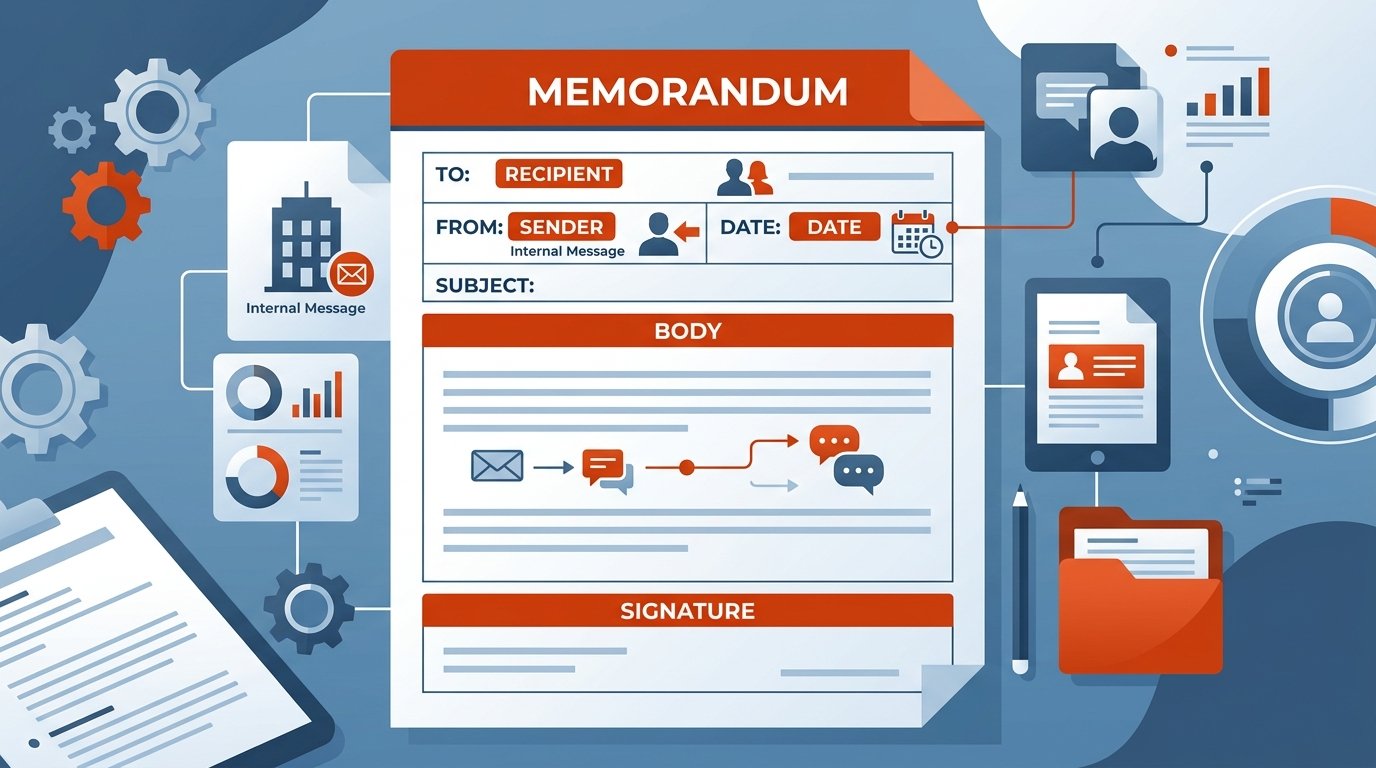
    A memorandum —also called a memo— is an essential tool within the internal communication of any organization. This document allows information to be conveyed clearly and concisely, ensuring that all members of a team are aware of important matters. According to the Panhispanic Dictionary of Doubts of the RAE, memorando is the preferred form in Spanish to refer to the report in which facts and reasons that must be taken into account in a given matter are compiled, with memorándum being its equally valid Latinized variant.

    In the business environment, the memorandum has remained a formal document that, although it has evolved with the arrival of email and corporate intranets, continues to be indispensable for certain communications. Below you will find everything you need to know: its definition, structure, types, mistakes to avoid, real examples and a ready-to-use template.

    What is a memorandum?

    A memorandum is a brief, official written document used within an organization to make requests, issue reminders, give instructions or communicate relevant information. Its formal nature gives it particular weight in internal communication, as it is considered an official record that can be consulted in the future.

    This type of document can address a variety of topics, from policy changes to reminders about important events. What distinguishes a memorandum from a simple email is precisely its documentary value: once issued, it is usually filed and becomes part of the institutional memory of the company.

    Furthermore, the memorandum can be used to document decisions, agreements and other relevant aspects. This helps create a company record that can be consulted in the future, and can even acquire evidentiary value in audits or internal administrative processes.

    In terms of length, a standard memorandum should not exceed one page (between 150 and 300 words). If the content requires further development, the appropriate document is probably a report. Brevity is not a limitation, but a defining characteristic of the format: it forces the writer to prioritize information and communicate with precision.

    How does a memorandum work in internal communication?

    The memorandum acts as an effective communication channel within a company. Unlike an email, which can easily get lost in an inbox, the memorandum has a standardized format that ensures information is presented clearly and formally.

    The impact of the memorandum on internal communication is reflected in several areas:

    • Clarity: Its structure helps information to be understood quickly.
    • Formality: It establishes a serious tone that emphasizes the importance of the message.
    • Record: It allows communication to be documented, which can be useful in the future.
    • Reach: It is usually addressed to many people at once, representing the interests of the company as a whole.

    Furthermore, the use of memorandums can help reduce confusion and misunderstandings among employees, ensuring that everyone receives the same information at the same time. In the digital age, many organizations send their memorandums by email or publish them on intranets, but maintain the structured format that defines them as an official document.

    What are the parts of a memorandum?

    A well-structured memorandum consists of several fundamental parts that ensure its effectiveness:

    1. Header: Includes the organization’s letterhead, internal numbering, sender information, recipient, date and subject.
    2. Introduction: Presents the purpose of the memorandum briefly and directly.
    3. Body: Details the information to be communicated. The message should be brief and precise, with paragraphs of no more than four to six lines.
    4. Conclusion: May include a call to action or an invitation to discuss the content.
    5. Signature and footer: The sender’s signature, their position and, if applicable, the company seal are added to validate the document.

    Clarity in the presentation of these parts is essential for the memorandum to fulfill its function. Each section should be easily identifiable and contain relevant information. According to Asana, a well-written subject line in the header is key: “it lets people know what it is about before opening it and helps them prioritize their reading”.

    What types of memorandum exist and when should each be used?

    There are several types of memorandum, each with a specific purpose. Knowing the right type is key to improving corporate communication and ensuring that information reaches its audience effectively:

    • Informational: Used to communicate relevant information to all employees or to a specific department.
    • Clarification: Seeks to clarify doubts about a specific topic already addressed in a previous meeting or communication.
    • Reminder: Notifies about upcoming events, deadlines or important dates.
    • Proposal: Presents ideas, changes or initiatives to be implemented that require approval or discussion.

    Memorandum vs. other internal documents: when to use each one?

    A frequent question in companies is knowing when it is appropriate to write a memorandum and when another type of document is more suitable. The following comparison will help you choose the correct format:

    • Memorandum: Brief and formal internal communication, addressed to one or more recipients within the same organization. Ideal for instructions, reminders, policy changes or proposals. No response is required and it is filed as an official record.
    • Circular: Similar to the memorandum, but its recipient is always collective (the entire staff or a complete department). Used for general announcements such as schedule changes or safety regulations. Unlike the memorandum, it is usually not individually numbered.
    • Minutes: A document that records the agreements and proceedings of a meeting. While the memorandum anticipates or instructs, the minutes record what has already occurred. They require the approval of those in attendance.
    • Report: A more extensive and analytical document that develops a topic with data, conclusions and recommendations. Used when the matter requires in-depth analysis, not just quick communication. If you need to know more, consult our guide on how to write a report.

    The practical rule is simple: if you need to communicate something quickly, formally and in a way that leaves a record, the memorandum is your tool. If you need to analyze, use the report; if you need to keep a record of a meeting, use the minutes.

    The memorandum in Spain and Latin America: differences in use

    Although the memorandum is a universal document in the Spanish-speaking world, its use and terminology present nuances depending on the geographical and administrative context that are worth knowing.

    In Spain, the most widely used term in the private business sector is memorando or simply nota interna (internal note). In the Spanish public administration, this type of communication is usually channeled through internal official letters or internal administrative notes, although the memorandum format is applied de facto. The National Institute of Public Administration (INAP) recognizes the memorandum as part of the internal communication instruments in public organizations.

    In Latin America, the memorandum has a much more prominent presence in public administration and the corporate world. In countries such as Colombia, Peru, Mexico or Venezuela, the term memorando (or memorándum) is in everyday use and is regulated in the document management manuals of state bodies. In many of these contexts, the memorandum has the status of an official document with mandatory numbering, the issuer’s signature and filing in the institutional record. In Colombia, for example, the ICONTEC technical standard for commercial documents (GTC 185) establishes specific guidelines for its drafting and format.

    The most practical difference: in Spain the formality of the memorandum is high but flexible; in much of Latin America, its protocol is stricter and non-compliance can invalidate the communication for administrative purposes.

    The memorandum in digital environments: email, intranets and electronic signatures

    The emergence of tools such as Slack, Microsoft Teams or corporate intranets has raised a legitimate question: does the memorandum still make sense in an environment where everything is communicated in real time? The answer is yes, but with nuances.

    The key distinction lies in the level of formality and purpose: the memorandum is reserved for official announcements, policy changes or directives that require a permanent record, while email and messaging tools are ideal for daily and dynamic communication.

    Some guidelines for adapting the memorandum to the digital environment:

    • Corporate email: You can send the memorandum as a PDF attachment, keeping its formal structure intact. The email subject line should reproduce the memorandum’s subject to facilitate later searching.
    • Intranet or corporate portal: Publishing the memorandum in a centralized space ensures that all recipients access the same version. Asana notes that sending an electronic memorandum to groups of employees is beneficial because “it gives them a centralized point where they can view company information”.
    • Slack or Teams: These platforms are suitable for informal or follow-up communications, but they do not replace the memorandum when the communication needs to be archived as an official record. In that case, the message in the channel can be accompanied by the attached document.
    • Mobile accessibility: If you distribute the memorandum in digital format, make sure it is readable from a smartphone. PDF is the most recommended format for its universal compatibility.

    The golden rule in digital environments: use the informal channel to notify, but the formal memorandum to leave a record. A Teams message that says “I’m attaching the memo about the new protocol” is perfectly valid; what cannot be missing is the structured document behind it.

    Validity of the digital signature on the electronic memorandum

    When the memorandum is distributed in digital format, a practical question arises: is the electronic signature valid as a substitute for the handwritten signature? In the European context, the eIDAS Regulation (EU) 910/2014 establishes the legal framework for electronic signatures and grants them full legal validity, equating them to handwritten signatures provided that a qualified electronic signature is used. This means that a memorandum signed digitally with a recognized certificate has the same evidentiary value as one signed on paper.

    In Latin America, the regulation varies by country, but the trend is convergent: Mexico has the Advanced Electronic Signature (FIEL/e.firma), Colombia regulates the digital signature through Law 527 of 1999 and its regulatory decree, and Peru has Law 27269 on Digital Signatures and Certificates. Under all these frameworks, the electronic memorandum with a certified digital signature has official validity before public bodies and in administrative proceedings. If your organization manages memorandums with legal or contractual consequences, it is advisable to verify with the legal department what level of electronic signature is required in each case.

    Tone and linguistic register: recommended phrases and expressions to avoid

    One of the aspects that raises the most doubts when drafting a memorandum is tone. Knowing that it should be “formal” is not always enough: the line between appropriate formality and excessive rigidity —or between approachability and inappropriate informality— can be blurry. The following concrete examples will help you calibrate the correct register.

    Recommended phrases for the memorandum

    • “By means of this document, all staff are hereby informed that…” — Standard opening, clear and neutral.
    • “Area managers are reminded that the submission deadline expires on…” — Direct reminder without an unnecessarily punitive tone.
    • “The [name] Department proposes the implementation of…” — Appropriate opening for proposal memorandums.
    • “For any queries, please contact [name or department] before [date].” — Closing with a precise call to action.
    • “The collaboration and punctuality of all teams is appreciated.” — Courteous closing that does not diminish formality.
    • “I remain available to provide any further information deemed necessary.” — Useful closing formula for proposal or clarification memorandums.

    Expressions to avoid

    • “Hi everyone, just wanted to let you know that…” — Informal opening typical of everyday email, not an official document.
    • “As you all know…” — Presupposes knowledge and reduces clarity; the memorandum should be self-explanatory.
    • “URGENT!!” or the use of emojis — These break the required formality and can undermine the authority of the message.
    • “I hope this is clear” — Condescending tone that can create unnecessary tension.
    • “I’m sending you this memo to…” — The informal first person is appropriate in messaging, not in an archivable document.
    • “Subject: Information” or “Subject: Meeting” — Vague subjects that do not allow the reader to prioritize reading or retrieve the document from the archive.

    The key is to write as if the document were going to be read by someone who does not know you and who, moreover, might consult it months later. The memorandum speaks on behalf of the organization, not the person who signs it.

    3 complete memorandum examples

    Below you will find three memorandum models, fully drafted and ready to adapt to your company. Each one responds to a different type of internal communication.

    Example 1: Informational memorandum (policy change)

    This model is used to communicate a change in the organization’s internal rules or procedures.

    • TO: All company staff
    • FROM: Human Resources Department
    • DATE: [Date of issue]
    • SUBJECT: Update to the hybrid work policy — Memorandum No. 012

    By means of this document, all staff are informed that, as of next month, the hybrid work policy is updated as follows: up to three remote working days per week will be permitted, subject to prior coordination with the head of each department. Mandatory in-office days will be Tuesdays and Thursdays.

    For any queries, please contact the Human Resources department before [deadline].

    Sincerely,[Full name]Head of Human Resources[Company name]

    Example 2: Reminder memorandum (submission deadline)

    This model is useful when a deadline is approaching and it is necessary to remind the teams involved.

    • TO: Department heads
    • FROM: Administration and Finance Department
    • DATE: [Date of issue]
    • SUBJECT: Reminder — Submission of quarterly reports — Memorandum No. 027

    All area managers are reminded that the reports corresponding to the first quarter of the fiscal year must be submitted before the 30th of this month. Late submission will affect the internal audit schedule and cannot be accepted unless a justified reason is communicated in advance.

    The punctuality and cooperation of all teams is appreciated.

    Sincerely,[Full name]Head of Administration and Finance[Company name]

    Example 3: Proposal memorandum (new initiative)

    This model is used to present an idea or project that requires evaluation or approval from management.

    • TO: Management Committee
    • FROM: Marketing Department
    • DATE: [Date of issue]
    • SUBJECT: Proposal for an internal digital communication training program — Memorandum No. 035

    By means of this memorandum, the Marketing Department proposes the implementation of a quarterly internal training program on digital communication tools. The objective is to improve efficiency in content management and coordination between departments.

    An executive summary with the objectives, proposed timeline and estimated budget is attached. We request that the Management Committee evaluate the proposal at the next regular meeting.

    Sincerely,[Full name]Marketing Manager[Company name]

    Free memorandum template: ready to fill in

    If you need to draft a memorandum immediately, you can use the following template as a starting point. Copy it, adapt the fields to your company and you will have a document ready in minutes.

    • Letterhead: [Company name and logo]
    • MEMORANDUM No.: [Internal sequential number]
    • TO: [Recipient’s name or department]
    • FROM: [Sender’s name and position]
    • DATE: [Day, month and year]
    • SUBJECT: [Brief description of the topic — maximum 8 words]

    [Introductory paragraph: explain the reason for the memorandum in 2-3 lines.]

    [Body: develop the necessary information clearly and directly. Use short paragraphs of 4-6 lines. If there are instructions or specific points, use a numbered list.]

    [Conclusion or call to action: indicate what recipients should do, if applicable, and by what date.]

    Sincerely,[Full name][Position][Department][Signature and seal, if applicable]

    Do you prefer to work directly in your word processor? You can copy this structure into Google Docs or Microsoft Word: paste the text, replace the fields in brackets with the actual data and add your company logo in the header to give it greater formality. If you use Word, save it as a template (.dotx) to reuse it without having to reformat it each time.

    How to write a memorandum in 4 steps?

    Drafting a memorandum may seem complicated, but by following these four steps you can create an effective document:

    1. Define the purpose: Before you start, make sure you are clear about the reason for the memorandum. Are you informing, reminding or proposing something?
    2. Structure the content: Organize the information into the parts we have described: header, introduction, body and conclusion.
    3. Draft the message: Use clear and direct language, avoiding unnecessary jargon. The tone should be formal but understandable to all recipients.
    4. Review before sending: Make sure there are no errors and that the information is accurate. An error-free memorandum reinforces the sender’s credibility.

    This simplified approach will help you create a memorandum that fulfills its purpose and is easy to understand. Attention to detail is key to making the document truly effective.

    Common mistakes when drafting a memorandum

    Knowing the most common mistakes is just as useful as knowing the correct structure. These are the errors that appear most frequently and that, in many cases, reduce the validity or effectiveness of the document:

    • Vague or generic subject line: Writing “Subject: Information” or “Subject: Meeting” says nothing. The subject must be specific and self-explanatory: whoever reads it must understand the content without opening the body of the document.
    • Informal or colloquial tone: The memorandum is an official document. Expressions such as “hi everyone,” “just wanted to let you know” or the use of emojis break the required formality and can undermine the authority of the message.
    • Absence of numbering: Failing to assign a sequential number to the memorandum makes it difficult to file, trace and subsequently locate. In administrative contexts, a memorandum without a number may lack formal validity.
    • Excessively long body: The memorandum is not a report. If the development exceeds three or four paragraphs, the appropriate document is probably a different one. A lengthy body dilutes the message and reduces the likelihood that the recipient will read it in full.
    • Omitting the call to action: If the memorandum requires a response or action from the recipient, this must be stated explicitly, including a deadline. Leaving it implicit creates ambiguity and delays.

    Reviewing these five points before sending any memorandum is a simple practice that notably improves the quality and effectiveness of internal communication.

    Tips for writing an effective memorandum

    To make your memorandum truly effective, consider these tips:

    • Keep it brief: Avoid including unnecessary information that distracts from the main message.
    • Use clear language: Make sure all employees understand the content, regardless of their area.
    • Check grammar and spelling: An error-free document reinforces credibility.
    • Include a call to action: If necessary, indicate what steps recipients should take and by what date.
    • Number your memorandums: Keeping a sequential numbering system facilitates filing and the traceability of internal communications.

    By following these tips, you can ensure that your memorandum is effective and fulfills its objective of informing and coordinating within the organization. If you want to explore other types of business documents, at Narratias you will find specific guides for each format.

  • The 12 Best Technology Blogs to Stay Up to Date in 2026

    The 12 Best Technology Blogs to Stay Up to Date in 2026

    Last reviewed: June 2026

    Keeping up with the latest technology trends is essential for professionals, enthusiasts and curious minds alike. But with hundreds of tech publications available, the real question is not whether good technology blogs exist, but which ones truly deserve your time.

    In this article we present the 12 best technology blogs you can follow right now, in both English and Spanish. The selection is not arbitrary: we have evaluated each outlet according to specific criteria that we explain below. Whether you are looking for minute-by-minute tech news or prefer in-depth analysis on artificial intelligence, cybersecurity or the digital impact on society, you will find your reference here.

    Selection criteria: why these technology blogs and not others

    To compile this ranking we applied four objective criteria that distinguish a quality digital technology outlet from the rest. Each criterion carries a different weight in the final score:

    • Verifiable audience (30%): monthly traffic verified with tools such as Semrush or SimilarWeb, reflecting the real reach of each publication. An outlet must exceed 500,000 monthly visits to enter the generalist ranking; niche specialists (cybersecurity, AI) can score with less traffic if they compensate in the other criteria.
    • Publication frequency (20%): outlets that update their content regularly, with at least several new articles every week.
    • Editorial reputation (30%): proven track record, informational rigor, visible fact-checking and recognition within the technology sector. This is the criterion with the greatest weight alongside audience, because a blog with millions of visits but no rigor does not make this list.
    • Thematic coverage (20%): balance between current technology news, analysis, reviews and in-depth content on emerging science and technology.

    The result is a list that combines the best science and technology blogs in Spanish — essential for Spanish-speaking audiences — with the most influential international tech publications, including for the first time two outlets specializing in AI and cybersecurity that complete the map.

    Comparison table: the 12 technology blogs at a glance

    Blog Language Main topic Approx. frequency Estimated audience
    Xataka Spanish Gadgets, consumer electronics, AI Daily (20–30 art./day) ~25 M visits/month
    TechCrunch English Startups, funding, enterprise technology Daily (50+ art./day) ~17 M readers/month
    Ars Technica English Hardware, science, tech policy Daily (10–15 art./day) High (millions/month)
    The Verge English Technology, culture, entertainment Daily (20+ art./day) ~15 M visits/month
    Hipertextual Spanish Technology, science, digital culture Daily (5–10 art./day) ~1.7 M visits/month
    ExtremeTech English Hardware, science, gaming Daily (5–10 art./day) Medium-high
    Engadget English Gadgets, digital entertainment, reviews Daily (10–20 art./day) ~8 M visits/month
    WIRED English Technology, culture, society, AI Daily (10+ art./day) ~17 M visits/month
    Genbeta Spanish Software, apps, digital productivity Daily (5–10 art./day) Medium
    Teknautas Spanish Tech journalism, AI, cybersecurity Daily (5+ art./day) High (El Confidencial backing)
    MIT Technology Review English AI, biotechnology, emerging technology Daily (3–5 art./day) ~1.3 M visits/month
    Krebs on Security English Cybersecurity, cybercrime, investigation Weekly (2–4 art./week) 700K–1 M visits/month

    Why is Xataka the most-read Spanish-language technology blog?

    Best technology blogs: Xataka

    Xataka is the undisputed leader among Spanish-language technology blogs. It is part of Weblogs SL and publishes new technological products on the market with rigor and passion. With nearly 25 million monthly visits according to Semrush data, it is the absolute reference Spanish-language technology channel.

    Founded in 2004, it has built a community of influential and engaged users that makes it much more than a technology news outlet: it is a meeting point for the Spanish-speaking tech ecosystem. Since 2010 it has held its own awards recognizing the most innovative devices of the year, and organizes what it calls Tech Experiences, where the public can try products before their official launch. It also offers a daily newsletter and active RSS feed, making it easy to keep up with its publication pace without missing anything.

    • Topics: consumer electronics, smartphones, tablets, consoles, video games, artificial intelligence
    • Formats: reviews, market analysis, comparisons, current news
    • Alternative channels: newsletter, RSS, mobile app, YouTube channel
    • Language: Spanish
    • Ideal for: anyone who wants to buy technology or follow tech news in Spanish

    TechCrunch: the pulse of the startup ecosystem and tech funding

    TechCrunch is one of the most established blogs in the world of tech publications. Founded by Michael Arrington, it stands out for its ability to generate an enormous amount of updated content: it publishes an average of several articles in each of its news categories every day, following current events by the second. Its media kit puts its audience at more than 17 million monthly readers, with a predominantly male profile between 25 and 34 years old linked to the business and technology world.

    It uses an extremely informal but very engaging language, and bets on two-way communication: it always encourages collaboration from its followers and has no qualms about asking for help to improve the information it provides. Its specialty is the startup ecosystem, venture capital funding and enterprise technology. Its podcast Equity is one of the references in financial data journalism in the sector.

    • Topics: startups, venture capital, AI, enterprise technology, cryptocurrencies
    • Formats: current news, interviews, funding round analysis, podcast
    • Alternative channels: newsletter, RSS, podcast Equity
    • Language: English
    • Ideal for: entrepreneurs, investors and technology sector professionals

    Ars Technica: uncompromising technical analysis since 1998

    Ars Technica is one of the most respected science and technology blogs in the world. Founded in 1998 by Ken Fisher and Jon Stokes, it focuses on providing detailed analysis and news on technology, science, tech policy, computer security, astronomy and physics. Its main hallmark is rigor: each article is built to break down complex technical topics in a clear and accessible way, without sacrificing depth.

    Since its beginnings it has maintained a firm commitment to creating original high-quality content, avoiding the reuse of material from other outlets. The site’s design is clean and intuitive, and it complements its written articles with videos and podcasts that enrich the reader’s experience.

    • Topics: hardware, software, science, computer security, tech policy
    • Formats: in-depth analysis articles, news, podcasts, videos
    • Alternative channels: newsletter, RSS, podcast Ars Technicast
    • Language: English
    • Ideal for: technology professionals and readers with an advanced technical background

    The Verge: technology with cultural perspective and benchmark design

    10 best technology blogs: The Verge

    The Verge is a benchmark in international technology journalism. With around 15 million monthly visits according to Semrush data, it combines technology news coverage with culture, entertainment, science, business and automobiles, all wrapped in a modern and attractive design that sets it apart from other digital technology outlets.

    What truly defines The Verge is its commitment to multimedia content: benchmark podcasts in the sector and a very active YouTube channel make the experience go far beyond the written article. It also organizes events and conferences that create spaces for debate about the role of technology in our lives.

    • Topics: technology, science, entertainment, automobiles, tech companies
    • Formats: articles, videos, podcasts, live events
    • Alternative channels: newsletter, RSS, podcast Decoder, YouTube channel
    • Language: English
    • Ideal for: young and adult readers who want technology with a cultural perspective

    Hipertextual: journalistic rigor and critical vision in Spanish

    The 10 best technology blogs: Hipertextual

    Hipertextual is the Spanish-language technology blog that best balances journalistic rigor and thematic breadth. With approximately 1.7 million monthly visits and an audience distributed across Spain, Mexico, Chile and Colombia according to Semrush, it is a reference publication for the entire Spanish-speaking community interested in digital current affairs.

    Its content ranges from news and analysis to opinions and debates on artificial intelligence, cybersecurity, space exploration, climate change and social media trends. With a critical and rigorous approach, together with a clear and accessible style, Hipertextual goes beyond the technology news story to analyze the impact of technology on society. Its fact-checking process is visible and explicit, something unusual among Spanish-language digital technology outlets.

    • Topics: technology, science, digital culture, AI, cybersecurity, space
    • Formats: articles, podcasts, videos, interviews, special reports
    • Alternative channels: weekly newsletter, RSS, podcast
    • Language: Spanish
    • Ideal for: Spanish-speaking readers who want depth and critical perspective

    ExtremeTech: the benchmark for specialized hardware enthusiasts

    The 10 best technology blogs: ExtremeTech

    Founded in 2001, ExtremeTech is one of the most veteran portals among international technology blogs and remains very active today. Its offering covers computing, mobile phones, automobiles, video games and science from a more specialized perspective than most of its competitors.

    The key to its success lies in its team: according to the outlet itself, its writers are true technology lovers who have built their professional careers in the sectors they cover. That experience shows in the technical depth of its articles, which are complemented with photos and videos to make reading more enjoyable.

    • Topics: hardware, computing, science, video games, automotive
    • Formats: technical articles, analysis, news with multimedia
    • Alternative channels: RSS, newsletter
    • Language: English
    • Ideal for: hardware enthusiasts and readers with an advanced technical profile

    Engadget: accessible reviews and digital entertainment in one place

    Engadget is one of the most up-to-date and interesting digital technology outlets today, with around 8 million monthly visits according to Semrush. Like other blogs, it covers news in computing, mobile phones, science and video games, but it stands out in two specific ways.

    First, it dedicates a significant portion of its content to online entertainment: streaming platforms, YouTube, social media. Second, its writers publish reviews with an informal and approachable tone, always accompanied by photos and videos, which keeps the reader’s attention from start to finish.

    • Topics: gadgets, digital entertainment, streaming, science, video games
    • Formats: informal reviews, news, videos, product comparisons
    • Alternative channels: newsletter, RSS, podcast Engadget Podcast
    • Language: English
    • Ideal for: technology consumers looking for accessible and entertaining reviews

    WIRED: analysis of the social and cultural impact of technology

    WIRED belongs to Wired Magazine, an American magazine founded on January 2, 1993 and currently owned by Condé Nast. With nearly 17.5 million monthly visits according to Semrush, it is one of the most influential tech publications in the world. But what distinguishes WIRED from the rest is not its traffic, but its approach: it analyzes the impact of technology on society, culture, the economy and politics, inviting the reader to think beyond the gadget.

    Its investigative articles and long-form reports on artificial intelligence, cybersecurity and technology ethics make it a reference for those seeking depth, not just speed. WIRED organizes its content into thematic blocks — culture, business, science, security — so that each reader can quickly find what interests them. It also has local editions in several countries and a newsletter with a strong reputation in the sector.

    • Topics: AI, cybersecurity, science, culture, business, tech policy
    • Formats: investigative reports, analysis, interviews, opinion articles
    • Alternative channels: newsletter, RSS, local editions (UK, Italy, Japan, Germany)
    • Language: English (with local editions in several countries)
    • Ideal for: readers who want in-depth analysis of the social impact of technology

    Genbeta: the Spanish-language technology blog for mastering your digital tools

    The 10 best technology blogs: Genbeta

    Genbeta is the Spanish-language technology blog specializing in software, applications and online services. It also belongs to the Weblogs SL group — the same as Xataka — and has become the reference for those who want to get the most out of their digital tools: from discovering new apps to optimizing productivity or solving everyday technical problems.

    With a practical and approachable focus, Genbeta offers news and analysis of new developments, but also tips, guides and tutorials that set it apart from other more generalist outlets. Its team of experts shares applied knowledge on security, social media, tools for developers and advances in artificial intelligence.

    • Topics: software, mobile and web applications, productivity, AI, cybersecurity
    • Formats: tutorials, practical guides, news, app analysis
    • Alternative channels: RSS, newsletter, Telegram channel
    • Language: Spanish
    • Ideal for: users who want to master their digital tools, from beginners to advanced

    Teknautas: rigorous technology journalism backed by El Confidencial

    The 10 best technology blogs: Teknautas

    Teknautas is the technology section of El Confidencial, one of the most widely read digital newspapers in Spain. This gives it something few Spanish-language technology blogs have: the backing of a top-level journalistic newsroom and an already consolidated audience of millions. Its approach is that of rigorous technology journalism: it investigates, contextualizes and explains technological advances with a level of depth that is unusual in generalist digital technology outlets.

    Teknautas tackles the most complex topics in the tech world — artificial intelligence, cybersecurity, science and emerging technology — without losing sight of the impact these have on society and on people’s lives. An excellent option for those who want technology news with quality journalistic perspective.

    • Topics: AI, cybersecurity, science, emerging technology, social impact
    • Formats: reports, analysis, current news
    • Alternative channels: El Confidencial newsletter, RSS
    • Language: Spanish
    • Ideal for: readers looking for rigorous technology journalism in Spanish

    MIT Technology Review: the world reference in AI and emerging technology

    MIT Technology Review is, alongside WIRED, the international tech outlet with the greatest intellectual authority. Founded in 1899 and backed by the Massachusetts Institute of Technology, its coverage is independent of any external influence, including the institution that funds it. This gives it a credibility that is hard to match in the landscape of technology blogs.

    With approximately 1.3 million monthly visits according to SimilarWeb, its audience is not massive, but it is extraordinarily qualified: researchers, executives, investors and professionals who make strategic decisions about technology. Its annual lists — such as the “10 Breakthrough Technologies” or reports on the state of AI — become year after year reference documents cited throughout the sector. It has its own weekly newsletter and podcast that extend the reach of its data journalism.

    • Topics: artificial intelligence, biotechnology, quantum computing, climate, emerging technology
    • Formats: investigative reports, analysis, trend lists, podcast, EmTech events
    • Alternative channels: newsletter The Download, RSS, podcast Deep Tech
    • Language: English
    • Ideal for: professionals and researchers who want to anticipate the technological future with scientific rigor

    Krebs on Security: unfiltered investigative journalism in cybersecurity

    Krebs on Security is the most influential cybersecurity blog in the world. It is written by Brian Krebs, an investigative journalist and former Washington Post reporter who has spent more than 16 years uncovering cybercrimes, data breaches and fraud networks on a global scale. Its loyal audience ranges between 700,000 and 1 million unique monthly visitors according to data published in its own media kit, with a profile heavily concentrated in security professionals and the financial sector.

    It does not publish daily — unlike the other technology blogs on this list — but each article is an in-depth investigation that frequently gets ahead of generalist outlets by weeks or months in covering real threats. If your work or your company depends on cybersecurity, following this blog is not optional.

    • Topics: cybersecurity, cybercrime, data breaches, online fraud, ransomware
    • Formats: investigative reports, technical analysis, high-impact news
    • Alternative channels: RSS, email newsletter
    • Language: English
    • Ideal for: computer security professionals, IT managers and any reader who wants to understand the real threats of the digital environment

    Which is the best technology blog for you?

    There is no single perfect technology blog for everyone. The choice depends on three variables: the language in which you prefer to consume content, your technical level and the topics that interest you most. Here is a quick guide to help you:

    If you prefer content in Spanish

    Start with Xataka if you are interested in gadgets and consumer electronics; with Hipertextual if you want technology with a scientific and social perspective; with Genbeta if your focus is on software and digital productivity; and with Teknautas if you value rigorous technology journalism with a Spanish context.

    If you read in English and are looking for current technology news

    TechCrunch is your outlet if you follow the startup ecosystem and tech funding. The Verge is the best generalist option with a modern design and a strong cultural component. Engadget stands out if you are looking for accessible reviews and digital entertainment.

    If you want depth and analysis

    WIRED is the reference for understanding the social and cultural impact of technology. Ars Technica is the choice if you have a technical profile and want rigorous analysis on hardware, science and tech policy. ExtremeTech completes the trio for the most specialized hardware enthusiasts. And if your interest is artificial intelligence or emerging technology at a scientific level, MIT Technology Review has no rival.

    If you are starting from scratch

    In Spanish, Genbeta or Xataka are the most beginner-friendly entry points. In English, Engadget or The Verge offer an accessible tone without sacrificing informational quality. The key is to follow two or three technology blogs consistently rather than trying to read them all: consistency always beats quantity. Subscribe to their newsletters or add their RSS feeds to a reader like Feedly or Inoreader to centralize all content in one place without depending on social media algorithms.

    If you also want to turn these sources into part of your content strategy or digital marketing, you may be interested in exploring how to integrate tech media monitoring into your workflow. Following the best technology blogs is the first step; the second is knowing what to do with that information to make better decisions.

    Sources

  • Los 12 mejores blogs de tecnología para estar al día en 2026

    Los 12 mejores blogs de tecnología para estar al día en 2026

    Última revisión: junio 2026

    Mantenerse al día en las últimas tendencias tecnológicas es fundamental para profesionales, entusiastas y curiosos por igual. Pero con cientos de publicaciones tech disponibles, la pregunta real no es si existen buenos blogs de tecnología, sino cuáles merecen de verdad tu tiempo.

    En este artículo te presentamos los 12 mejores blogs de tecnología que puedes seguir ahora mismo, tanto en español como en inglés. La selección no es arbitraria: hemos evaluado cada medio según criterios concretos que te explicamos a continuación. Tanto si buscas noticias de tecnología al minuto como si prefieres análisis en profundidad sobre inteligencia artificial, ciberseguridad o el impacto digital en la sociedad, aquí encontrarás tu referente.

    Criterios de selección: por qué estos blogs de tecnología y no otros

    Para elaborar este ranking hemos aplicado cuatro criterios objetivos que distinguen a un medio digital tecnológico de calidad del resto. Cada criterio tiene un peso distinto en la puntuación final:

    • Audiencia verificable (30 %): tráfico mensual contrastado con herramientas como Semrush o SimilarWeb, que refleja el alcance real de cada publicación. Un medio debe superar las 500.000 visitas mensuales para entrar en el ranking generalista; los especializados en nicho (ciberseguridad, IA) pueden puntuar con menos tráfico si compensan en los demás criterios.
    • Frecuencia de publicación (20 %): medios que actualizan su contenido de forma regular, con al menos varios artículos nuevos cada semana.
    • Reputación editorial (30 %): trayectoria contrastada, rigor informativo, fact-checking visible y reconocimiento dentro del sector tecnológico. Es el criterio con mayor peso junto a la audiencia porque un blog con millones de visitas pero sin rigor no entra en esta lista.
    • Cobertura temática (20 %): equilibrio entre noticias de tecnología de actualidad, análisis, reviews y contenido de fondo sobre ciencia y tecnología emergente.

    El resultado es una lista que combina los mejores weblogs de ciencia y tecnología en español —imprescindibles para la audiencia hispanohablante— con las publicaciones tech internacionales de mayor influencia, incluyendo por primera vez dos medios especializados en IA y ciberseguridad que completan el mapa.

    Tabla comparativa: los 12 blogs de tecnología de un vistazo

    Blog Idioma Temática principal Frecuencia aprox. Audiencia estimada
    Xataka Español Gadgets, electrónica de consumo, IA Diaria (20–30 art./día) ~25 M visitas/mes
    TechCrunch Inglés Startups, financiación, tecnología empresarial Diaria (50+ art./día) ~17 M lectores/mes
    Ars Technica Inglés Hardware, ciencia, política tecnológica Diaria (10–15 art./día) Alta (millones/mes)
    The Verge Inglés Tecnología, cultura, entretenimiento Diaria (20+ art./día) ~15 M visitas/mes
    Hipertextual Español Tecnología, ciencia, cultura digital Diaria (5–10 art./día) ~1,7 M visitas/mes
    ExtremeTech Inglés Hardware, ciencia, videojuegos Diaria (5–10 art./día) Media-alta
    Engadget Inglés Gadgets, entretenimiento digital, reviews Diaria (10–20 art./día) ~8 M visitas/mes
    WIRED Inglés Tecnología, cultura, sociedad, IA Diaria (10+ art./día) ~17 M visitas/mes
    Genbeta Español Software, apps, productividad digital Diaria (5–10 art./día) Media
    Teknautas Español Periodismo tecnológico, IA, ciberseguridad Diaria (5+ art./día) Alta (respaldo El Confidencial)
    MIT Technology Review Inglés IA, biotecnología, tecnología emergente Diaria (3–5 art./día) ~1,3 M visitas/mes
    Krebs on Security Inglés Ciberseguridad, cibercrimen, investigación Semanal (2–4 art./sem.) 700K–1 M visitas/mes

    ¿Por qué Xataka es el blog de tecnología en español más leído?

    Mejores blogs de tecnología: Xataka

    Xataka es el líder indiscutible entre los blogs de tecnología en español. Forma parte de Weblogs SL y publica de manera rigurosa y apasionada las nuevas propuestas tecnológicas que ofrece el mercado. Con cerca de 25 millones de visitas mensuales según datos de Semrush, es el canal tecnológico español de referencia absoluta.

    Fundado en 2004, ha construido una comunidad de usuarios influyentes y participativos que lo convierten en mucho más que un medio de noticias de tecnología: es un punto de encuentro del ecosistema tech hispanohablante. Desde 2010 celebra sus propios premios que reconocen los dispositivos más innovadores del año, y organiza las llamadas Experiencias Tech, donde el público puede probar productos antes de su lanzamiento oficial. Dispone además de newsletter diaria y canal RSS activo, lo que facilita seguir su ritmo de publicación sin perderse nada.

    • Temáticas: electrónica de consumo, smartphones, tablets, consolas, videojuegos, inteligencia artificial
    • Formatos: reviews, análisis de mercado, comparativas, noticias de actualidad
    • Canales alternativos: newsletter, RSS, app móvil, canal de YouTube
    • Idioma: español
    • Ideal para: cualquier persona que quiera comprar tecnología o seguir la actualidad tech en español

    TechCrunch: el pulso del ecosistema startup y la financiación tech

    TechCrunch es uno de los blogs con más solera en el mundo de las publicaciones tech. Fundado por Michael Arrington, destaca por su capacidad de generar una cantidad enorme de contenido actualizado: publica una media de varios artículos en cada una de sus categorías de noticias cada día, siguiendo la actualidad al segundo. Su media kit cifra su audiencia en más de 17 millones de lectores mensuales, con un perfil predominantemente masculino de entre 25 y 34 años vinculado al mundo empresarial y tecnológico.

    Utiliza un lenguaje extremadamente coloquial pero muy atractivo, y apuesta por la comunicación bidireccional: incita siempre a la colaboración de sus seguidores y no le da apuro pedir ayuda para mejorar la información que ofrece. Su especialidad es el ecosistema de startups, la financiación de capital riesgo y la tecnología empresarial. Su podcast Equity es una de las referencias en periodismo de datos financiero del sector.

    • Temáticas: startups, venture capital, IA, tecnología empresarial, criptomonedas
    • Formatos: noticias de actualidad, entrevistas, análisis de rondas de financiación, podcast
    • Canales alternativos: newsletter, RSS, podcast Equity
    • Idioma: inglés
    • Ideal para: emprendedores, inversores y profesionales del sector tecnológico

    Ars Technica: análisis técnico sin concesiones desde 1998

    Ars Technica es uno de los weblogs de ciencia y tecnología más respetados del mundo. Fundado en 1998 por Ken Fisher y Jon Stokes, se centra en ofrecer análisis detallados y noticias sobre tecnología, ciencia, política tecnológica, seguridad informática, astronomía y física. Su principal seña de identidad es el rigor: cada artículo está construido para desglosar temas técnicos complejos de forma clara y accesible, sin sacrificar la profundidad.

    Desde sus inicios ha mantenido un compromiso firme con la creación de contenido original de alta calidad, evitando la reutilización de material de otros medios. El diseño del sitio es limpio e intuitivo, y complementa sus artículos escritos con vídeos y podcasts que enriquecen la experiencia del lector.

    • Temáticas: hardware, software, ciencia, seguridad informática, política tecnológica
    • Formatos: artículos de análisis en profundidad, noticias, podcasts, vídeos
    • Canales alternativos: newsletter, RSS, podcast Ars Technicast
    • Idioma: inglés
    • Ideal para: profesionales de la tecnología y lectores con nivel técnico avanzado

    The Verge: tecnología con perspectiva cultural y diseño de referencia

    10 mejores blogs de tecnología: The Verge

    The Verge es un referente en el periodismo tecnológico internacional. Con alrededor de 15 millones de visitas mensuales según datos de Semrush, combina la cobertura de noticias de tecnología con cultura, entretenimiento, ciencia, empresas y automóviles, todo ello envuelto en un diseño moderno y atractivo que lo diferencia del resto de medios digitales tecnológicos.

    Lo que realmente define a The Verge es su apuesta por los contenidos multimedia: podcasts de referencia en el sector y un canal de YouTube muy activo hacen que la experiencia vaya mucho más allá del artículo escrito. Además, organiza eventos y conferencias que crean espacios para el debate sobre el papel de la tecnología en nuestras vidas.

    • Temáticas: tecnología, ciencia, entretenimiento, automóviles, empresas tech
    • Formatos: artículos, vídeos, podcasts, eventos en directo
    • Canales alternativos: newsletter, RSS, podcast Decoder, canal de YouTube
    • Idioma: inglés
    • Ideal para: lectores jóvenes y adultos que buscan tecnología con perspectiva cultural

    Hipertextual: rigor periodístico y visión crítica en español

    Los 10 mejores blogs de tecnología: Hipertextual

    Hipertextual es el blog de tecnología en español que mejor equilibra rigor periodístico y amplitud temática. Con aproximadamente 1,7 millones de visitas mensuales y una audiencia distribuida entre España, México, Chile y Colombia según Semrush, es una publicación de referencia para toda la comunidad hispanohablante interesada en la actualidad digital.

    Su contenido abarca desde noticias y análisis hasta opiniones y debates sobre inteligencia artificial, ciberseguridad, exploración espacial, cambio climático y tendencias en redes sociales. Con un enfoque crítico y riguroso, junto con un estilo claro y accesible, Hipertextual va más allá de la noticia tecnológica para analizar el impacto de la tecnología en la sociedad. Su proceso de fact-checking es visible y explícito, algo poco habitual en los medios digitales tecnológicos en español.

    • Temáticas: tecnología, ciencia, cultura digital, IA, ciberseguridad, espacio
    • Formatos: artículos, podcasts, vídeos, entrevistas, reportajes especiales
    • Canales alternativos: newsletter semanal, RSS, podcast
    • Idioma: español
    • Ideal para: lectores hispanohablantes que quieren profundidad y perspectiva crítica

    ExtremeTech: el referente para entusiastas del hardware especializado

    Los 10 mejores blogs de tecnología: ExtremeTech

    Fundado en 2001, ExtremeTech es uno de los portales más veteranos entre los blogs de tecnología internacionales y mantiene en la actualidad una gran actividad. Su propuesta cubre informática, telefonía móvil, automóviles, videojuegos y ciencia desde una perspectiva más especializada que la mayoría de sus competidores.

    La clave de su éxito está en su equipo: según el propio medio, sus redactores son verdaderos amantes de la tecnología que han desarrollado su carrera profesional en los sectores que cubren. Esa experiencia se nota en la profundidad técnica de sus artículos, que complementan con fotos y vídeos para hacer la lectura más amena.

    • Temáticas: hardware, informática, ciencia, videojuegos, automoción
    • Formatos: artículos técnicos, análisis, noticias con multimedia
    • Canales alternativos: RSS, newsletter
    • Idioma: inglés
    • Ideal para: entusiastas del hardware y lectores con perfil técnico avanzado

    Engadget: reviews accesibles y entretenimiento digital en un solo lugar

    Engadget es uno de los medios digitales tecnológicos más actualizados e interesantes de la actualidad, con alrededor de 8 millones de visitas mensuales según Semrush. Al igual que otros blogs, cubre novedades en informática, telefonía móvil, ciencia y videojuegos, pero se diferencia en dos aspectos concretos.

    En primer lugar, dedica una parte significativa de su contenido al entretenimiento en Internet: plataformas de streaming, YouTube, redes sociales. En segundo lugar, sus redactores publican reseñas con un tono informal y cercano, acompañadas siempre de fotos y vídeos, lo que mantiene la atención del lector de principio a fin.

    • Temáticas: gadgets, entretenimiento digital, streaming, ciencia, videojuegos
    • Formatos: reviews informales, noticias, vídeos, comparativas de productos
    • Canales alternativos: newsletter, RSS, podcast Engadget Podcast
    • Idioma: inglés
    • Ideal para: consumidores de tecnología que buscan reseñas accesibles y entretenidas

    WIRED: el análisis del impacto social y cultural de la tecnología

    WIRED pertenece a Wired Magazine, una revista estadounidense fundada el 2 de enero de 1993 y actualmente propiedad de Condé Nast. Con cerca de 17,5 millones de visitas mensuales según Semrush, es una de las publicaciones tech más influyentes del mundo. Pero lo que distingue a WIRED del resto no es su tráfico, sino su enfoque: analiza el impacto de la tecnología en la sociedad, la cultura, la economía y la política, invitando al lector a pensar más allá del gadget.

    Sus artículos de investigación y sus reportajes de largo aliento sobre inteligencia artificial, ciberseguridad y ética tecnológica lo convierten en una referencia para quienes buscan profundidad, no solo velocidad. WIRED organiza su contenido por bloques temáticos —cultura, negocios, ciencia, seguridad— para que cada lector encuentre rápidamente lo que le interesa. Cuenta además con ediciones locales en varios países y una newsletter de gran reputación en el sector.

    • Temáticas: IA, ciberseguridad, ciencia, cultura, negocios, política tecnológica
    • Formatos: reportajes de investigación, análisis, entrevistas, artículos de opinión
    • Canales alternativos: newsletter, RSS, ediciones locales (UK, Italia, Japón, Alemania)
    • Idioma: inglés (con ediciones locales en varios países)
    • Ideal para: lectores que quieren análisis profundo sobre el impacto social de la tecnología

    Genbeta: el blog de tecnología en español para dominar tus herramientas digitales

    Los 10 mejores blogs de tecnología: Genbeta

    Genbeta es el blog de tecnología en español especializado en software, aplicaciones y servicios online. También pertenece al grupo Weblogs SL —el mismo que Xataka— y se ha convertido en el referente para quienes quieren sacar el máximo partido a sus herramientas digitales: desde descubrir nuevas apps hasta optimizar la productividad o resolver problemas técnicos cotidianos.

    Con un enfoque práctico y cercano, Genbeta ofrece noticias y análisis de novedades, pero también trucos, guías y tutoriales que marcan la diferencia respecto a otros medios más generalistas. Su equipo de expertos comparte conocimiento aplicado sobre seguridad, redes sociales, herramientas para programadores y avances en inteligencia artificial.

    • Temáticas: software, aplicaciones móviles y web, productividad, IA, ciberseguridad
    • Formatos: tutoriales, guías prácticas, noticias, análisis de apps
    • Canales alternativos: RSS, newsletter, canal de Telegram
    • Idioma: español
    • Ideal para: usuarios que quieren dominar sus herramientas digitales, desde principiantes hasta avanzados

    Teknautas: periodismo tecnológico riguroso con respaldo de El Confidencial

    Los 10 mejores blogs de tecnología: Teknautas

    Teknautas es la sección de tecnología de El Confidencial, uno de los diarios digitales más leídos de España. Eso le otorga algo que pocos blogs de tecnología en español tienen: el respaldo de una redacción periodística de primer nivel y una audiencia millonaria ya consolidada. Su enfoque es el del periodismo tecnológico riguroso: investiga, contextualiza y explica los avances tecnológicos con un nivel de profundidad poco habitual en los medios digitales tecnológicos generalistas.

    Teknautas aborda los temas más complejos del mundo tech —inteligencia artificial, ciberseguridad, ciencia y tecnología emergente— sin perder de vista el impacto que estos tienen en la sociedad y en las vidas de las personas. Una opción excelente para quien quiere noticias de tecnología con perspectiva periodística de calidad.

    • Temáticas: IA, ciberseguridad, ciencia, tecnología emergente, impacto social
    • Formatos: reportajes, análisis, noticias de actualidad
    • Canales alternativos: newsletter de El Confidencial, RSS
    • Idioma: español
    • Ideal para: lectores que buscan periodismo tecnológico riguroso en español

    MIT Technology Review: la referencia mundial en IA y tecnología emergente

    MIT Technology Review es, junto a WIRED, el medio tech internacional con mayor autoridad intelectual. Fundada en 1899 y respaldada por el Massachusetts Institute of Technology, su cobertura es independiente de cualquier influencia externa, incluida la propia institución que la financia. Eso le da una credibilidad difícil de igualar en el panorama de los blogs de tecnología.

    Con aproximadamente 1,3 millones de visitas mensuales según SimilarWeb, su audiencia no es masiva, pero sí extraordinariamente cualificada: investigadores, ejecutivos, inversores y profesionales que toman decisiones estratégicas sobre tecnología. Sus listas anuales —como las «10 tecnologías emergentes» o los reportajes sobre el estado de la IA— se convierten año tras año en documentos de referencia citados en todo el sector. Dispone de newsletter semanal y podcast propios que amplían el alcance de su periodismo de datos.

    • Temáticas: inteligencia artificial, biotecnología, computación cuántica, clima, tecnología emergente
    • Formatos: reportajes de investigación, análisis, listas de tendencias, podcast, eventos EmTech
    • Canales alternativos: newsletter The Download, RSS, podcast Deep Tech
    • Idioma: inglés
    • Ideal para: profesionales e investigadores que quieren anticipar el futuro tecnológico con rigor científico

    Krebs on Security: investigación periodística en ciberseguridad sin filtros

    Krebs on Security es el blog de ciberseguridad más influyente del mundo. Lo escribe Brian Krebs, periodista de investigación y ex reportero del Washington Post, que lleva más de 16 años destapando cibercrímenes, brechas de datos y redes de fraude a escala global. Su audiencia fiel oscila entre 700.000 y 1 millón de visitantes únicos mensuales según los datos publicados en su propio media kit, con un perfil muy concentrado en profesionales de la seguridad y el sector financiero.

    No publica a diario —a diferencia del resto de blogs de tecnología de esta lista— pero cada artículo es una investigación en profundidad que frecuentemente adelanta semanas o meses a los medios generalistas en la cobertura de amenazas reales. Si tu trabajo o tu empresa dependen de la ciberseguridad, seguir este blog no es opcional.

    • Temáticas: ciberseguridad, cibercrimen, brechas de datos, fraude online, ransomware
    • Formatos: reportajes de investigación, análisis técnicos, noticias de impacto
    • Canales alternativos: RSS, newsletter por email
    • Idioma: inglés
    • Ideal para: profesionales de la seguridad informática, responsables de TI y cualquier lector que quiera entender las amenazas reales del entorno digital

    ¿Cuál es el mejor blog de tecnología para ti?

    No existe un único blog de tecnología perfecto para todo el mundo. La elección depende de tres variables: el idioma en que prefieres consumir contenido, tu nivel técnico y las temáticas que más te interesan. Aquí tienes una guía rápida para orientarte:

    Si prefieres contenido en español

    Empieza por Xataka si te interesan los gadgets y la electrónica de consumo; por Hipertextual si quieres tecnología con perspectiva científica y social; por Genbeta si tu foco está en el software y la productividad digital; y por Teknautas si valoras el periodismo tecnológico riguroso con contexto español.

    Si lees en inglés y buscas noticias de tecnología de actualidad

    TechCrunch es tu medio si sigues el ecosistema de startups y la financiación tech. The Verge es la mejor opción generalista con diseño moderno y fuerte componente cultural. Engadget destaca si buscas reviews accesibles y entretenimiento digital.

    Si quieres profundidad y análisis

    WIRED es el referente para entender el impacto social y cultural de la tecnología. Ars Technica es la elección si tienes perfil técnico y quieres análisis rigurosos sobre hardware, ciencia y política tecnológica. ExtremeTech completa el trío para los entusiastas del hardware más especializado. Y si tu interés es la inteligencia artificial o la tecnología emergente a nivel científico, MIT Technology Review no tiene rival.

    Si empiezas desde cero

    En español, Genbeta o Xataka son los puntos de entrada más amigables. En inglés, Engadget o The Verge ofrecen un tono accesible sin sacrificar la calidad informativa. La clave es seguir dos o tres blogs de tecnología de forma constante en lugar de intentar leerlos todos: la consistencia supera siempre a la cantidad. Suscríbete a sus newsletters o añade sus feeds RSS a un lector como Feedly o Inoreader para centralizar todo el contenido en un solo lugar sin depender del algoritmo de las redes sociales.

    Si además quieres convertir estas fuentes en parte de tu estrategia de contenidos o de marketing digital, te puede interesar explorar cómo integrar la monitorización de medios tech en tu flujo de trabajo. Seguir los mejores blogs de tecnología es el primer paso; el segundo es saber qué hacer con esa información para tomar mejores decisiones.

    Fuentes


  • Retrieval Augmented Generation (RAG): What It Is, How It Works, and Why It Improves AI

    Retrieval Augmented Generation (RAG): What It Is, How It Works, and Why It Improves AI

    Retrieval Augmented Generation —known by its acronym RAG— is the technique that allows language models to consult an external knowledge base before generating a response. Instead of relying exclusively on what they learned during training, RAG systems retrieve updated and relevant information in real time and incorporate it into the context of each query. The result is an AI that responds with greater accuracy, fewer hallucinations, and verifiable data.

    What Is Retrieval Augmented Generation and Why Does It Matter?

    Retrieval Augmented Generation is an artificial intelligence architecture that combines two complementary capabilities: semantic search over a proprietary knowledge base and the generative capability of a large language model (LLM). The concept was formalized by Meta AI researchers in 2020 and has since become the reference pattern for building reliable enterprise AI systems. Today, retrieval augmented generation is the mandatory starting point for any team that wants to deploy AI with specific and up-to-date knowledge.

    Generic language models —such as those powering ChatGPT or Gemini in their base versions— learn from enormous volumes of text during training, but that knowledge is frozen at a cutoff date. If you ask an LLM about your company’s return policy or a regulation published last month, it simply does not know. RAG solves exactly that problem: it connects the model with your real knowledge, whether internal documentation, corporate databases, or updated sources. That is why retrieval augmented generation is not just a technical improvement, but a structural change in how AI systems access information.

    For any entrepreneur or developer who wants to integrate advanced AI into their processes, understanding retrieval augmented generation is the starting point. You do not need to train your own model —something that would require computational and financial resources beyond the reach of most small businesses—; you only need a well-designed RAG architecture.

    What Problem Does RAG Come to Solve?

    To understand why retrieval augmented generation is so relevant, it helps to first understand the limitations of LLMs without this mechanism. A standard language model has three structural problems that retrieval augmented generation addresses directly.

    Outdated Knowledge

    Language models are trained on data up to a specific date. Everything that happens after —regulatory changes, new products, price updates, recent news— is invisible to the model. In a business environment where information changes constantly, this is a critical problem. With RAG, knowledge is updated without retraining the model: it is enough to add or modify documents in the database. Retrieval augmented generation turns knowledge updating into an operational task, not an engineering project.

    Hallucinations and Factual Errors

    LLMs tend to “invent” information with total confidence when they do not know the answer. This phenomenon, known as hallucination, is especially dangerous in contexts where accuracy matters: customer service, legal advice, technical support. RAG drastically reduces this problem because the model generates responses based on real and verifiable text fragments it has previously retrieved. In this sense, retrieval augmented generation acts as a factual anchoring mechanism for the LLM.

    Inability to Access Private Knowledge

    A generic LLM does not know your company’s internal manuals, contracts signed with suppliers, or the specific procedures of your sector. Retrieval augmented generation allows the model to access that private information securely, without exposing it to model training or to third parties.

    How Does RAG Work Step by Step?

    The operation of RAG is structured in a pipeline with well-differentiated phases. Understanding each stage will help you make better decisions when implementing or evaluating a solution based on retrieval augmented generation.

    Phase 1: Document Ingestion and Preparation

    The first step consists of processing the documents that will form the knowledge base of the retrieval augmented generation system. This includes PDFs, web pages, Word documents, database records, articles, or any relevant text source. Documents are divided into manageable fragments —called chunks— to facilitate later retrieval. The size and fragmentation strategy are critical decisions that directly affect the quality of responses.

    Phase 2: Embedding Generation and Vector Storage

    Each text fragment is converted into a high-dimensional numerical vector called an embedding. These vectors represent the semantic meaning of the text, not the exact words. Two sentences with similar meaning will have close vectors in mathematical space, even if they share no words. These vectors are stored in a vector database (such as Pinecone, Weaviate, FAISS, or Chroma), which is optimized to perform similarity searches at high speed. This phase is the infrastructural core of retrieval augmented generation.

    Phase 3: Semantic Retrieval for Each Query

    When a user asks a question, the retrieval augmented generation system converts that query into an embedding and performs a semantic search in the vector database. The result is a set of text fragments whose meaning is closest to the question. This semantic search is much more powerful than a traditional keyword search: it finds relevant information even if the user does not use the exact terms from the document.

    Phase 4: LLM-Augmented Generation

    The retrieved fragments are injected into the language model’s context along with the original question. The LLM essentially receives the instruction: “Answer this question based on the following documents.” From there, it generates a coherent, accurate, and well-grounded response based on the real retrieved information. The model acts as an expert writer who synthesizes the sources in front of it. It is in this phase that retrieval augmented generation materializes its advantage over conventional LLMs.

    What Are Vector Databases and Why Are They Essential in RAG?

    Vector database structure with data points transformed into multidimensional vectors and semantic search
    Vector databases store numerical representations of text, enabling semantic similarity searches in milliseconds.

    Vector databases are the infrastructure component that makes semantic search at scale possible in any retrieval augmented generation system. Unlike a classic relational database, which looks for exact matches, a vector database searches for mathematical similarity between vectors. This makes it possible to find relevant documents even if the user phrases the question differently from how the answer is written.

    Some of the most widely used solutions in the RAG ecosystem are Pinecone (managed cloud service), Weaviate (open-source with native hybrid search), FAISS (Meta’s library optimized for speed), and pgvector (extension for PostgreSQL, ideal if you already use this database). The choice depends on document volume, latency requirements, and available budget. Each of these systems can be integrated into a retrieval augmented generation pipeline with relative ease.

    A key aspect is hybrid search: combining semantic vector similarity with classic keyword search (BM25) improves result relevance, especially when users search for technical terms or very specific proper nouns. In advanced retrieval augmented generation implementations, hybrid search has become a recommended practice.

    How Does RAG Differ from Model Fine-Tuning?

    This is one of the most frequently asked questions when starting to work with retrieval augmented generation. Both RAG and fine-tuning allow you to specialize a language model, but they work in radically different ways and serve different purposes.

    RAG vs. Fine-tuning: practical comparison
    Criterion RAG Fine-tuning
    Implementation cost Low-medium High (GPU, labeled data)
    Knowledge update Immediate (add documents) Requires retraining
    Source traceability High (cites source document) Low (integrated knowledge)
    Ideal for Dynamic or private knowledge Style, tone, or specific task

    In practice, RAG and fine-tuning are complementary, not mutually exclusive. A fine-tuned model can learn the tone and response format of your brand, while retrieval augmented generation provides it with the updated data to work with. For most small businesses and entrepreneurs, however, retrieval augmented generation is the most accessible starting point with the greatest immediate impact.

    What Are the Most Relevant Use Cases for RAG in Businesses?

    Retrieval augmented generation is not a laboratory technology: it is already in production at companies of all sizes. These are the use cases where retrieval augmented generation delivers the most value immediately.

    • Customer service assistant: the model answers queries based on product documentation, FAQs, and company policies, always with updated and traceable information. Retrieval augmented generation ensures that responses always reflect the most recent version of each policy.
    • Intelligent search in internal documentation: employees can ask questions in natural language about manuals, procedures, or contracts, and get precise answers with a reference to the source document.
    • Automated technical support: the system retrieves the most relevant solutions from a technical knowledge base and presents them in a contextualized way to the user.
    • Report and data analysis: retrieval augmented generation allows interrogating large volumes of documents —financial reports, market studies, meeting minutes— in a conversational manner.
    • Legal and compliance assistants: the model consults regulations, contracts, and case law to answer specific questions with a verifiable documentary basis. In this domain, the traceability offered by retrieval augmented generation is especially valuable.

    In all these cases, the common denominator is the same: the value lies not in the generic language model, but in connecting it with the specific knowledge of your business. That is exactly what RAG does.

    What Are the Limitations of RAG and How Can They Be Mitigated?

    RAG limitations such as outdated data and hallucinations, with mitigation strategies through validation and filters
    The main limitations include irrelevant retrieval and hallucinations; they are mitigated with cross-validation, fact-checking, and regular data updates.

    Like any technological architecture, Retrieval Augmented Generation has limitations that are worth knowing before implementing it. Identifying them from the outset avoids frustration and allows for the design of more robust retrieval augmented generation solutions.

    Retrieval Quality: The Most Critical Link

    If the system retrieves irrelevant or incomplete fragments, the model will generate incorrect responses even if it is very capable. The fragmentation strategy, the quality of the embeddings, and the semantic search configuration are the factors that most influence the final result of any retrieval augmented generation implementation. A powerful LLM does not compensate for a poor retrieval architecture.

    Additional Latency

    The RAG pipeline adds steps to the generation process: converting the query into an embedding, searching the vector database, and retrieving documents before generating the response. This introduces latency that must be managed through vector index optimization and caching strategies. In most conversational applications based on retrieval augmented generation, this latency is acceptable, but it must be measured.

    Management of Outdated or Contradictory Documents

    If the knowledge base contains obsolete information or documents that contradict each other, the model may generate confusing responses. Document governance —who can add documents, how often they are updated, how versions are managed— is just as important as the technical architecture in any retrieval augmented generation deployment.

    How to Start Implementing RAG in Your Project?

    If you are a junior developer or entrepreneur who wants to integrate retrieval augmented generation into a product or process, the most direct path involves three key decisions: which documents to index, which vector database to use, and which LLM to connect as the generator.

    The open-source tooling ecosystem greatly facilitates getting started. Frameworks such as LangChain or LlamaIndex provide high-level abstractions that allow you to build a functional retrieval augmented generation pipeline in a few hours, connecting models from OpenAI, Anthropic, or other providers with vector databases like Chroma or FAISS. For production projects at greater scale, managed solutions like Pinecone or Weaviate reduce the operational burden of maintaining retrieval augmented generation infrastructure.

    The recommended process for a first retrieval augmented generation project is as follows:

    1. Define the specific use case and the documents the model needs to address it.
    2. Preprocess and chunk the documents with a chunking strategy suited to the type of content.
    3. Generate the embeddings with a pretrained model (for example, those from OpenAI or open-source models like sentence-transformers).
    4. Store them in a vector database and configure the semantic search parameters.
    5. Connect the retriever with the LLM and design the prompt that tells the model how to use the retrieved context.
    6. Evaluate the quality of the responses with real questions and adjust the pipeline based on the results.

    At Amara, marketing engineering, we work with teams that integrate retrieval augmented generation into their strategies and processes. Experience confirms that the biggest obstacle is not technical, but organizational: defining what knowledge the AI should have and keeping that knowledge base updated and well-structured. Solve that before writing a single line of code.

    Frequently Asked Questions about Retrieval Augmented Generation

    Do I need to know how to code to implement RAG?

    To implement a retrieval augmented generation pipeline from scratch, programming knowledge is required, especially in Python. However, there are no-code platforms and SaaS solutions that allow you to connect documents with an LLM without writing code. For a serious production project, having a junior developer with knowledge of LangChain or LlamaIndex is a sufficient starting point.

    Does RAG work with any language model?

    Yes. The retrieval augmented generation architecture is agnostic with respect to the generative model: you can use it with models from OpenAI (GPT-4o), Anthropic (Claude), Google (Gemini), or open-source models like LLaMA or Mistral. The choice of LLM affects the quality of the final synthesis, but the semantic retrieval component of retrieval augmented generation works independently.

    How much does it cost to implement a RAG system?

    The cost of a retrieval augmented generation system depends on the volume of documents, the frequency of queries, and the services chosen. A functional prototype can be built with open-source tools at near-zero cost (only development time). In production, the main costs are vector storage, LLM API calls, and the compute infrastructure for generating embeddings. For a small business with a well-defined use case, monthly costs are usually very affordable compared to the value that retrieval augmented generation provides.

    What is the difference between RAG and a conventional chatbot?

    A conventional chatbot responds based on predefined answers or the model’s generic knowledge. A chatbot based on retrieval augmented generation retrieves specific information from your knowledge base before responding, which allows it to give accurate, up-to-date, and traceable answers to their documentary source. The difference in response quality is significant in any specialized domain.

    Is it safe to use RAG with confidential company documents?

    Yes, as long as the retrieval augmented generation architecture is correctly designed. Documents are stored in your own infrastructure or in services with appropriate privacy contracts, and are not shared with the LLM provider for retraining. It is essential to review the data usage policies of the chosen AI provider and, if the level of confidentiality is high, to consider models deployed on your own infrastructure.

    Sources

  • Retrieval Augmented Generation (RAG): qué es, cómo funciona y por qué mejora la IA

    Retrieval Augmented Generation (RAG): qué es, cómo funciona y por qué mejora la IA

    El Retrieval Augmented Generation —conocido por sus siglas RAG— es la técnica que permite a los modelos de lenguaje consultar una base de conocimiento externa antes de generar una respuesta. En lugar de depender exclusivamente de lo que aprendieron durante el entrenamiento, los sistemas RAG recuperan información actualizada y relevante en tiempo real, y la incorporan al contexto de cada consulta. El resultado es una IA que responde con mayor precisión, menos alucinaciones y datos verificables.

    ¿Qué es Retrieval Augmented Generation y por qué importa?

    Retrieval Augmented Generation es una arquitectura de inteligencia artificial que combina dos capacidades complementarias: la búsqueda semántica sobre una base de conocimiento propia y la capacidad generativa de un modelo de lenguaje grande (LLM). El concepto fue formalizado por investigadores de Meta AI en 2020 y desde entonces se ha convertido en el patrón de referencia para construir sistemas de IA empresariales fiables. Hoy, el retrieval augmented generation es el punto de partida obligado para cualquier equipo que quiera desplegar IA con conocimiento específico y actualizado.

    Los modelos de lenguaje genéricos —como los que alimentan ChatGPT o Gemini en su versión base— aprenden de enormes volúmenes de texto durante el entrenamiento, pero ese conocimiento queda congelado en una fecha de corte. Si le preguntas a un LLM sobre la política de devoluciones de tu empresa o sobre una normativa publicada el mes pasado, simplemente no lo sabe. El RAG resuelve exactamente ese problema: conecta el modelo con tu conocimiento real, ya sea documentación interna, bases de datos corporativas o fuentes actualizadas. Por eso el retrieval augmented generation no es solo una mejora técnica, sino un cambio estructural en cómo los sistemas de IA acceden a la información.

    Para cualquier emprendedor o desarrollador que quiera integrar IA avanzada en sus procesos, entender la generación aumentada por recuperación es el punto de partida. No necesitas entrenar un modelo propio —algo que requeriría recursos computacionales y económicos fuera del alcance de la mayoría de pymes—; solo necesitas una arquitectura RAG bien diseñada.

    ¿Cuál es el problema que RAG viene a resolver?

    Para entender por qué la generación aumentada por recuperación es tan relevante, conviene entender primero las limitaciones de los LLM sin este mecanismo. Un modelo de lenguaje estándar tiene tres problemas estructurales que el retrieval augmented generation aborda directamente.

    Conocimiento desactualizado

    Los modelos de lenguaje se entrenan con datos hasta una fecha concreta. Todo lo que ocurre después —cambios normativos, nuevos productos, actualizaciones de precios, noticias recientes— es invisible para el modelo. En un entorno empresarial donde la información cambia constantemente, esto es un problema crítico. Con RAG, el conocimiento se actualiza sin reentrenar el modelo: basta con añadir o modificar documentos en la base de datos. El retrieval augmented generation convierte la actualización de conocimiento en una tarea operativa, no en un proyecto de ingeniería.

    Alucinaciones y errores factuales

    Los LLM tienen tendencia a “inventar” información con total confianza cuando no conocen la respuesta. Este fenómeno, conocido como alucinación, es especialmente peligroso en contextos donde la precisión importa: atención al cliente, asesoría legal, soporte técnico. El RAG reduce drásticamente este problema porque el modelo genera respuestas basadas en fragmentos de texto reales y verificables que ha recuperado previamente. En este sentido, el retrieval augmented generation actúa como un mecanismo de anclaje factual para el LLM.

    Incapacidad para acceder a conocimiento privado

    Un LLM genérico no conoce los manuales internos de tu empresa, los contratos firmados con proveedores ni los procedimientos específicos de tu sector. El retrieval augmented generation permite que el modelo acceda a esa información privada de forma segura, sin exponerla al entrenamiento del modelo ni a terceros.

    ¿Cómo funciona RAG paso a paso?

    El funcionamiento del RAG se articula en un pipeline con fases bien diferenciadas. Comprender cada etapa te ayudará a tomar mejores decisiones cuando implementes o evalúes una solución basada en retrieval augmented generation.

    Fase 1: Ingesta y preparación de documentos

    El primer paso consiste en procesar los documentos que formarán la base de conocimiento del sistema de retrieval augmented generation. Esto incluye PDFs, páginas web, documentos Word, registros de bases de datos, artículos o cualquier fuente de texto relevante. Los documentos se dividen en fragmentos manejables —llamados chunks— para facilitar la recuperación posterior. El tamaño y la estrategia de fragmentación son decisiones críticas que afectan directamente a la calidad de las respuestas.

    Fase 2: Generación de embeddings y almacenamiento vectorial

    Cada fragmento de texto se convierte en un vector numérico de alta dimensión llamado embedding. Estos vectores representan el significado semántico del texto, no las palabras exactas. Dos frases con significado similar tendrán vectores cercanos en el espacio matemático, aunque no compartan ninguna palabra. Estos vectores se almacenan en una base de datos vectorial (como Pinecone, Weaviate, FAISS o Chroma), que está optimizada para realizar búsquedas de similitud a gran velocidad. Esta fase es el núcleo infraestructural del retrieval augmented generation.

    Fase 3: Recuperación semántica ante cada consulta

    Cuando un usuario hace una pregunta, el sistema de retrieval augmented generation convierte esa consulta en un embedding y realiza una búsqueda semántica en la base de datos vectorial. El resultado es un conjunto de fragmentos de texto cuyo significado es más cercano a la pregunta. Esta búsqueda semántica es mucho más potente que una búsqueda por palabras clave tradicional: encuentra información relevante aunque el usuario no use los términos exactos del documento.

    Fase 4: Generación aumentada por el LLM

    Los fragmentos recuperados se inyectan en el contexto del modelo de lenguaje junto con la pregunta original. El LLM recibe, en esencia, la instrucción: “Responde a esta pregunta basándote en los siguientes documentos”. A partir de ahí, genera una respuesta coherente, precisa y fundamentada en la información real recuperada. El modelo actúa como un redactor experto que sintetiza las fuentes que tiene delante. Es en esta fase donde el retrieval augmented generation materializa su ventaja frente a los LLM convencionales.

    ¿Qué son las bases de datos vectoriales y por qué son esenciales en RAG?

    Estructura de base de datos vectorial con puntos de datos transformados en vectores multidimensionales y búsqueda semántica
    Las bases de datos vectoriales almacenan representaciones numéricas de texto, permitiendo búsquedas por similitud semántica en milisegundos.

    Las bases de datos vectoriales son el componente de infraestructura que hace posible la búsqueda semántica a escala en cualquier sistema de retrieval augmented generation. A diferencia de una base de datos relacional clásica, que busca coincidencias exactas, una base vectorial busca similitud matemática entre vectores. Esto permite encontrar documentos relevantes aunque el usuario formule la pregunta de forma diferente a como está redactada la respuesta.

    Algunas de las soluciones más utilizadas en el ecosistema RAG son Pinecone (servicio gestionado en la nube), Weaviate (open-source con búsqueda híbrida nativa), FAISS (librería de Meta optimizada para velocidad) y pgvector (extensión para PostgreSQL, ideal si ya usas esta base de datos). La elección depende del volumen de documentos, los requisitos de latencia y el presupuesto disponible. Cada uno de estos sistemas puede integrarse en un pipeline de retrieval augmented generation con relativa facilidad.

    Un aspecto clave es la búsqueda híbrida: combinar la similitud vectorial semántica con la búsqueda por palabras clave clásica (BM25) mejora la relevancia de los resultados, especialmente cuando los usuarios buscan términos técnicos o nombres propios muy específicos. En implementaciones avanzadas de retrieval augmented generation, la búsqueda híbrida se ha convertido en una práctica recomendada.

    ¿En qué se diferencia RAG del fine-tuning de modelos?

    Esta es una de las preguntas más frecuentes cuando se empieza a trabajar con retrieval augmented generation. Tanto el RAG como el fine-tuning permiten especializar un modelo de lenguaje, pero funcionan de forma radicalmente diferente y sirven para propósitos distintos.

    RAG vs. Fine-tuning: comparativa práctica
    Criterio RAG Fine-tuning
    Coste de implementación Bajo-medio Alto (GPU, datos etiquetados)
    Actualización del conocimiento Inmediata (añadir documentos) Requiere reentrenamiento
    Trazabilidad de fuentes Alta (cita el documento origen) Baja (conocimiento integrado)
    Ideal para Conocimiento dinámico o privado Estilo, tono o tarea específica

    En la práctica, RAG y fine-tuning son complementarios, no excluyentes. Un modelo con fine-tuning puede aprender el tono y el formato de respuesta de tu marca, mientras que el retrieval augmented generation le proporciona los datos actualizados con los que trabajar. Para la mayoría de pymes y emprendedores, sin embargo, el retrieval augmented generation es el punto de partida más accesible y de mayor impacto inmediato.

    ¿Cuáles son los casos de uso más relevantes de RAG en empresas?

    La generación aumentada por recuperación no es una tecnología de laboratorio: ya está en producción en empresas de todos los tamaños. Estos son los casos de uso donde el retrieval augmented generation aporta más valor de forma inmediata.

    • Asistente de atención al cliente: el modelo responde consultas basándose en la documentación de productos, FAQs y políticas de la empresa, siempre con información actualizada y trazable. El retrieval augmented generation garantiza que las respuestas reflejen siempre la versión más reciente de cada política.
    • Búsqueda inteligente en documentación interna: los empleados pueden hacer preguntas en lenguaje natural sobre manuales, procedimientos o contratos, y obtener respuestas precisas con referencia al documento fuente.
    • Soporte técnico automatizado: el sistema recupera las soluciones más relevantes de una base de conocimiento técnico y las presenta de forma contextualizada al usuario.
    • Análisis de informes y datos: el retrieval augmented generation permite interrogar grandes volúmenes de documentos —informes financieros, estudios de mercado, actas de reuniones— de forma conversacional.
    • Asistentes legales y de cumplimiento: el modelo consulta normativas, contratos y jurisprudencia para responder preguntas específicas con base documental verificable. En este dominio, la trazabilidad que ofrece el retrieval augmented generation es especialmente valiosa.

    En todos estos casos, el denominador común es el mismo: el valor no está en el modelo de lenguaje genérico, sino en conectarlo con el conocimiento específico de tu negocio. Eso es exactamente lo que hace el RAG.

    ¿Qué limitaciones tiene RAG y cómo mitigarlas?

    Limitaciones de RAG como datos desactualizados y alucinaciones, con estrategias de mitigación mediante validación y filtros
    Las principales limitaciones incluyen recuperación irrelevante y alucinaciones; se mitigan con validación cruzada, fact-checking y actualización regular de datos.

    Como cualquier arquitectura tecnológica, el Retrieval Augmented Generation tiene limitaciones que conviene conocer antes de implementarlo. Identificarlas desde el inicio evita frustraciones y permite diseñar soluciones de retrieval augmented generation más robustas.

    Calidad del retrieval: el eslabón más crítico

    Si el sistema recupera fragmentos irrelevantes o incompletos, el modelo generará respuestas incorrectas aunque sea muy capaz. La estrategia de fragmentación, la calidad de los embeddings y la configuración de la búsqueda semántica son los factores que más influyen en el resultado final de cualquier implementación de retrieval augmented generation. Un LLM potente no compensa una arquitectura de recuperación deficiente.

    Latencia adicional

    El pipeline RAG añade pasos al proceso de generación: convertir la consulta en embedding, buscar en la base vectorial y recuperar documentos antes de generar la respuesta. Esto introduce latencia que debe gestionarse mediante optimización del índice vectorial y estrategias de caché. En la mayoría de aplicaciones conversacionales basadas en retrieval augmented generation, esta latencia es asumible, pero debe medirse.

    Gestión de documentos desactualizados o contradictorios

    Si la base de conocimiento contiene información obsoleta o documentos que se contradicen entre sí, el modelo puede generar respuestas confusas. La gobernanza documental —quién puede añadir documentos, con qué frecuencia se actualizan, cómo se gestionan las versiones— es tan importante como la arquitectura técnica en cualquier despliegue de retrieval augmented generation.

    ¿Cómo empezar a implementar RAG en tu proyecto?

    Si eres desarrollador junior o emprendedor que quiere integrar retrieval augmented generation en un producto o proceso, el camino más directo pasa por tres decisiones clave: qué documentos indexar, qué base de datos vectorial usar y qué LLM conectar como generador.

    El ecosistema de herramientas open-source facilita enormemente el arranque. Frameworks como LangChain o LlamaIndex proporcionan abstracciones de alto nivel que permiten construir un pipeline de retrieval augmented generation funcional en pocas horas, conectando modelos de OpenAI, Anthropic u otros proveedores con bases vectoriales como Chroma o FAISS. Para proyectos en producción con mayor escala, soluciones gestionadas como Pinecone o Weaviate reducen la carga operativa de mantener la infraestructura de retrieval augmented generation.

    El proceso recomendado para un primer proyecto de retrieval augmented generation es el siguiente:

    1. Define el caso de uso concreto y los documentos que necesita el modelo para resolverlo.
    2. Preprocesa y fragmenta los documentos con una estrategia de chunking adecuada al tipo de contenido.
    3. Genera los embeddings con un modelo preentrenado (por ejemplo, los de OpenAI o modelos open-source como sentence-transformers).
    4. Almacénalos en una base vectorial y configura los parámetros de búsqueda semántica.
    5. Conecta el retriever con el LLM y diseña el prompt que indica al modelo cómo usar el contexto recuperado.
    6. Evalúa la calidad de las respuestas con preguntas reales y ajusta el pipeline según los resultados.

    En Amara, ingeniería de marketing, trabajamos con equipos que integran retrieval augmented generation en sus estrategias y procesos. La experiencia nos confirma que el mayor obstáculo no es técnico, sino organizativo: definir qué conocimiento debe tener la IA y mantener esa base de conocimiento actualizada y bien estructurada. Resuélvelo antes de escribir una sola línea de código.

    Preguntas frecuentes sobre Retrieval Augmented Generation

    ¿Necesito saber programar para implementar RAG?

    Para implementar un pipeline de retrieval augmented generation desde cero sí se requieren conocimientos de programación, especialmente en Python. Sin embargo, existen plataformas no-code y soluciones SaaS que permiten conectar documentos con un LLM sin escribir código. Para un proyecto serio en producción, contar con un desarrollador junior con conocimientos de LangChain o LlamaIndex es suficiente punto de partida.

    ¿RAG funciona con cualquier modelo de lenguaje?

    Sí. La arquitectura de retrieval augmented generation es agnóstica respecto al modelo generativo: puedes usarla con modelos de OpenAI (GPT-4o), Anthropic (Claude), Google (Gemini) o modelos open-source como LLaMA o Mistral. La elección del LLM afecta a la calidad de la síntesis final, pero el componente de recuperación semántica del retrieval augmented generation funciona de forma independiente.

    ¿Cuánto cuesta implementar un sistema RAG?

    El coste de un sistema de retrieval augmented generation depende del volumen de documentos, la frecuencia de consultas y los servicios elegidos. Un prototipo funcional puede construirse con herramientas open-source a coste casi cero (solo el tiempo de desarrollo). En producción, los costes principales son el almacenamiento vectorial, las llamadas a la API del LLM y la infraestructura de cómputo para generar embeddings. Para una pyme con un caso de uso acotado, los costes mensuales suelen ser muy asequibles comparados con el valor que aporta el retrieval augmented generation.

    ¿Cuál es la diferencia entre RAG y un chatbot convencional?

    Un chatbot convencional responde a partir de respuestas predefinidas o del conocimiento genérico del modelo. Un chatbot basado en retrieval augmented generation recupera información específica de tu base de conocimiento antes de responder, lo que le permite dar respuestas precisas, actualizadas y trazables a su fuente documental. La diferencia en calidad de respuesta es significativa en cualquier dominio especializado.

    ¿Es seguro usar RAG con documentos confidenciales de la empresa?

    Sí, siempre que la arquitectura de retrieval augmented generation esté correctamente diseñada. Los documentos se almacenan en tu propia infraestructura o en servicios con contratos de privacidad adecuados, y no se comparten con el proveedor del LLM para reentrenamiento. Es fundamental revisar las políticas de uso de datos del proveedor de IA elegido y, si el nivel de confidencialidad es alto, considerar modelos desplegados en infraestructura propia.

    Fuentes

  • What is FAQ: meaning, examples and practical implementation

    What is FAQ: meaning, examples and practical implementation


    In the digital age, frequently asked questions or FAQs have become an indispensable resource for both users and businesses. But what implications does this have for your business, and how can you implement an FAQ section effectively? 

    Below, we will delve into the meaning, examples, and implementation of an FAQ section, a key component that should not be missing from your online customer service strategy.

    What does FAQ mean?

    FAQ is the acronym for Frequently Asked Questions. This section on websites and other digital media compiles and answers the most common questions users may have about a service, product, or specific topic. Its main purpose is to facilitate the search for information and minimize the need for customers to contact the company directly to resolve basic queries.

    The FAQ is not only a tool for resolving concerns, but also serves as a self-directed learning resource. Users can explore different topics at their own pace and according to their particular needs. It is an effective way to empower customers with the knowledge needed to make informed decisions.

    This section has become so relevant that its presence is almost a standard on corporate websites, eCommerce platforms, and mobile applications.

    What is an FAQ section used for?

    FAQ sections serve multiple purposes and benefits for both the user and the company. They serve, first and foremost, as a quick and direct source of information for customers. They also play a crucial role in reducing the workload of the customer support team, as many queries are resolved without human intervention.

    From an SEO perspective, FAQs can improve the visibility of a website in search engines by providing answers to questions that users frequently ask. Furthermore, a good FAQ section can improve the user experience by giving them easy access to the information they need without having to navigate the entire site.

    Implementing an FAQ section can also be an excellent way to build trust and establish authority in a specific domain by demonstrating knowledge and transparency in the answers provided.

    Everything about FAQs

    Examples of the most common frequently asked questions

    The questions included in an FAQ section vary depending on the industry and the nature of the business. However, there are certain queries that tend to be universal, such as:

    • How can I place an order?
    • What payment options are available?
    • How are returns or cancellations handled?
    • How can I contact customer support?
    • What guarantees or assurances does the company offer?

    Each company must identify and update its list of FAQs based on customer feedback and customer service data to ensure that the questions are relevant and useful.

    How to create an effective FAQ page

    Creating an effective FAQ page requires a careful process that begins with identifying the most frequently asked questions from customers. Once identified, it is important to draft clear, concise, and helpful answers.

    It is vital to structure the FAQs so that they are easy to navigate, using categories or tags to group questions by topic. You should ensure that the search function is effective so that users can quickly find what they are looking for.

    Integrating an attractive design and an intuitive user experience is essential. Also, remember the importance of keeping the section up to date and incorporating interactive elements such as links, images, or videos when relevant.

    FAQ

    Best practices for designing an FAQ

    To design an FAQ section that stands out and is truly useful, it is important to follow some best practices:

    • Use clear and simple language in the answers.
    • Organize questions into logical and easy-to-understand categories.
    • Offer the possibility of direct contact for more complex questions.
    • Include keywords in the questions and answers to improve SEO.
    • Keep the FAQ section updated with relevant information and adjustments according to search trends.

    Examples of companies with successful FAQs

    Leading companies such as WhatsApp, Microsoft, and Coca-Cola offer excellent examples of how frequently asked questions can be a valuable resource for users. These companies use FAQ sections to address technical questions, usage issues, and to provide general guidance on their products and services. Their FAQs are designed with the user in mind, and reflect their commitment to customer service.

    Related questions about implementing FAQs on websites and apps

    What is an FAQ?

    An FAQ is a compilation of answers to the most frequently raised questions by users or customers. These sections are common on websites and applications, where they serve as a quick reference for obtaining information.

    In addition to being an informational resource, a well-implemented FAQ can also act as a proactive support tool, helping to reduce the volume of questions that reach the support team.

    What does FAQ mean?

    The term FAQ means “Frequently Asked Questions” and is a set of questions and answers about a specific topic or service. This section is essential for clarifying doubts and sharing important information with users in an efficient manner.

    What are FAQs?

    FAQs are sections within a website or application that contain a list of questions with their corresponding answers, which are generated from the most common concerns of customers or users.

    What is an FAQ in systems?

    In the context of systems, an FAQ is a tool that helps both users and developers resolve technical and operational questions that may arise during the use of an application or computer system.

    Implementing an FAQ effectively is essential for optimizing the user experience and improving the efficiency of customer support. By following the examples and recommendations presented here, you can create a section that not only answers questions, but also reflects the values and quality of your company.

  • FAQ: qué es, ejemplos, schema markup y herramientas

    FAQ: qué es, ejemplos, schema markup y herramientas

    ¿Sabes realmente qué es una FAQ y cómo puede mejorar tu visibilidad en Google? Más allá del acrónimo, entender las preguntas frecuentes en toda su dimensión implica hablar de SEO técnico, experiencia de usuario, datos estructurados y herramientas concretas. ¿Qué implicaciones tiene para tu negocio y cómo puedes implementar una sección de preguntas frecuentes de manera efectiva?

    A continuación, profundizaremos en el significado, ejemplos, schema markup e implementación de una faqs page, un componente clave que no debe faltar en tu estrategia de atención al cliente online.

    ¿Qué significa FAQ?

    FAQ es el acrónimo de Frequently Asked Questions, lo que en español significa Preguntas Frecuentes. Esta sección en sitios web y otros medios digitales recopila y responde las dudas más comunes que los usuarios pueden tener sobre un servicio, producto o tema específico. Su propósito principal es facilitar la búsqueda de información y minimizar la necesidad de que el cliente contacte directamente con la empresa para resolver consultas básicas.

    Las preguntas frecuentes no solo resuelven inquietudes: también funcionan como un recurso de aprendizaje autodirigido. Los usuarios pueden explorar distintos temas a su propio ritmo y según sus necesidades particulares. Es una manera eficaz de empoderar a los clientes con el conocimiento necesario para tomar decisiones informadas.

    Esta sección se ha vuelto tan relevante que su presencia es casi un estándar en sitios web corporativos, plataformas de eCommerce y aplicaciones móviles.

    ¿Para qué sirve una sección de FAQ?

    Las secciones de preguntas frecuentes tienen múltiples propósitos y beneficios tanto para el usuario como para la empresa. Sirven, en primer lugar, como una fuente de información rápida y directa para los clientes. También desempeñan un papel crucial en la reducción de la carga de trabajo del equipo de soporte: los equipos que implementan bases de conocimiento bien estructuradas suelen reportar disminuciones de entre el 20 % y el 40 % en el volumen de tickets relacionados con consultas habituales.

    Desde la perspectiva del SEO técnico, las FAQs pueden mejorar la visibilidad de un sitio web en los motores de búsqueda al proveer respuestas a preguntas que los usuarios realizan frecuentemente. Además, una buena faqs page mejora la experiencia del usuario al proporcionarle un acceso fácil a la información que necesita sin tener que navegar por todo el sitio.

    Implementar una sección de FAQ también puede ser una excelente manera de construir confianza y establecer autoridad en un dominio específico al mostrar conocimiento y transparencia en las respuestas proporcionadas.

    Infografía sobre qué es FAQ y sus usos en marketing digital

    Ejemplos de preguntas frecuentes más comunes

    Las preguntas que se incluyen en una sección de FAQ varían según la industria y la naturaleza del negocio. Sin embargo, existen ciertas consultas que suelen ser universales, como:

    • ¿Cómo puedo realizar un pedido?
    • ¿Qué opciones de pago están disponibles?
    • ¿Cómo se manejan las devoluciones o cancelaciones?
    • ¿Cómo puedo contactar con atención al cliente?
    • ¿Qué garantías o seguridades ofrece la empresa?

    Cada empresa debe identificar y actualizar su lista de preguntas frecuentes basándose en la retroalimentación de los clientes y en los datos de servicio al cliente para asegurarse de que las preguntas sean relevantes y útiles.

    Empresas con FAQ exitosas: qué hacen bien

    Empresas líderes como WhatsApp, Microsoft y Airbnb ofrecen excelentes ejemplos de cómo una faqs page puede ser un recurso valioso. Analizar su estructura revela patrones comunes que marcan la diferencia:

    • Categorías claras y navegación por temas: Microsoft organiza su centro de ayuda en categorías de producto (Windows, Office, Xbox), de modo que el usuario llega a la respuesta en dos clics como máximo.
    • Buscador interno prominente: WhatsApp coloca un campo de búsqueda en la parte superior de su página de ayuda. El usuario escribe en lenguaje natural y obtiene resultados filtrados al instante, sin necesidad de navegar por menús.
    • Respuestas concisas con enlaces a artículos de detalle: Airbnb responde en 2-3 frases y enlaza a guías más largas para quien necesite profundizar. Esto mantiene la FAQ ligera y la base de conocimiento ordenada.
    • Opción de contacto visible: Ninguna de estas empresas esconde el acceso al soporte humano. Si la FAQ no resuelve la duda, el botón de contacto está siempre a la vista.

    El denominador común es que sus FAQs están diseñadas con el usuario en mente, no como un repositorio de información corporativa, sino como una herramienta de resolución de problemas.

    FAQ y SEO avanzado: featured snippets, People Also Ask y CTR

    Una faqs page bien construida no solo ayuda a tus usuarios: también es uno de los formatos de contenido que mejor interactúa con las funcionalidades avanzadas de Google. Entender cómo aprovecharlo es parte esencial de cualquier estrategia de contenidos moderna.

    Featured snippets y posición cero. Cuando redactas una pregunta en formato conversacional y la respondes en el primer párrafo de forma directa, Google puede extraer ese fragmento y mostrarlo en la posición cero de la SERP, por encima de todos los resultados orgánicos. La clave está en que la pregunta coincida exactamente con cómo la teclea el usuario y la respuesta ocupe entre 40 y 60 palabras.

    People Also Ask (PAA). El bloque “La gente también pregunta” de Google se nutre directamente de contenido FAQ. Cada pregunta que aparece en ese bloque es una oportunidad de visibilidad adicional. Para aparecer ahí, las preguntas deben estar formuladas en lenguaje natural —como hablaría una persona, no como lo escribiría un redactor SEO de los años 2010— y las respuestas deben ser autosuficientes.

    Búsquedas conversacionales e IA. Con la irrupción de los modelos de lenguaje en los buscadores (AI Overviews en Google, Bing Copilot), el contenido FAQ estructurado se ha convertido en una fuente preferente para los sistemas de respuesta generativa. Cuando tu página tiene schema limpio y válido, se convierte en candidata para featured snippets, respuestas de búsqueda por voz y AI Overviews: tres canales de visibilidad a partir de un solo bloque de marcado.

    Impacto en CTR orgánico. Una FAQ que aparece como rich snippet ocupa más espacio visual en la SERP, lo que incrementa el CTR incluso sin subir de posición. Aunque Google ha restringido los rich results de FAQPage a sitios de alta autoridad desde 2023, el marcado sigue siendo valioso para que los algoritmos y los motores de IA interpreten correctamente la estructura de tu contenido.

    Schema markup FAQPage: cómo implementarlo paso a paso

    El schema markup es código estructurado que le dice a Google —y a los motores de IA— que tu página contiene preguntas y respuestas. El marcado usa el tipo FAQPage de Schema.org, envolviendo cada pregunta en las propiedades Question y acceptedAnswer. El formato recomendado es JSON-LD: es más limpio que Microdata y no requiere modificar la estructura HTML de la página.

    Aquí tienes un ejemplo real y funcional que puedes adaptar a tu faqs page:

    <script type=”application/ld+json”>
    {
    “@context”: “https://schema.org”,
    “@type”: “FAQPage”,
    “mainEntity”: [
    {
    “@type”: “Question”,
    “name”: “¿Qué es una FAQ?”,
    “acceptedAnswer”: {
    “@type”: “Answer”,
    “text”: “Una FAQ (Frequently Asked Questions) es una sección de un sitio web que recopila y responde las dudas más comunes de los usuarios sobre un producto, servicio o tema específico.”
    }
    },
    {
    “@type”: “Question”,
    “name”: “¿Para qué sirve una página de preguntas frecuentes?”,
    “acceptedAnswer”: {
    “@type”: “Answer”,
    “text”: “Sirve para resolver dudas de forma autónoma, reducir el volumen de tickets de soporte y mejorar la visibilidad SEO del sitio web.”
    }
    }
    ]
    }
    </script>

    Sigue estos pasos para implementarlo correctamente:

    1. Escribe primero las preguntas y respuestas en la página. El marcado debe reflejar contenido visible para el usuario; no marques preguntas que no aparecen en el HTML.
    2. Genera el JSON-LD. Puedes hacerlo manualmente o con generadores gratuitos como el de Google Rich Results Test.
    3. Pega el script en el <head> o justo antes del </body> de tu página.
    4. Valida el marcado con la herramienta de prueba de resultados enriquecidos de Google y con el validador de Schema.org.
    5. Monitoriza en Search Console. En el informe de mejoras encontrarás si Google ha detectado el marcado y si hay errores que corregir.

    Un aviso importante: desde septiembre de 2023, Google limita los rich results de FAQPage a sitios web de alta autoridad (principalmente portales gubernamentales y de salud reconocidos). Para la mayoría de sitios, el schema FAQPage ya no genera acordeones visuales en la SERP, pero sigue siendo relevante para que los algoritmos y los motores de IA entiendan la estructura de tu contenido. Puedes consultar el estado actual en la documentación oficial de Google Developers sobre FAQPage.

    Un error frecuente es duplicar el mismo bloque FAQPage en varias URLs con idéntico contenido. Consolida o varía las preguntas por intención de página para evitar señales de contenido delgado.

    Errores frecuentes al crear una FAQ

    Conocer los fallos más habituales te ahorrará tiempo y te evitará penalizaciones de usabilidad o SEO. Estos son los cinco errores que aparecen con más frecuencia al auditar secciones de preguntas frecuentes:

    • Preguntas demasiado genéricas o corporativas. Formular preguntas como “¿Qué hace vuestra empresa?” no responde a ninguna búsqueda real. Las preguntas deben coincidir con el lenguaje exacto que usa tu audiencia en Google, no con el vocabulario interno de tu organización.
    • Respuestas excesivamente largas. Una respuesta de más de 80-100 palabras pierde el propósito de la FAQ. Si el tema requiere más profundidad, enlaza a un artículo dedicado en lugar de expandir la respuesta en la propia sección.
    • Falta de actualización periódica. Una FAQ con preguntas desactualizadas genera desconfianza. Lo recomendable es revisarla al menos cada trimestre, cruzando los datos de búsquedas internas sin resultado, los tickets de soporte más recurrentes y las tendencias de búsqueda de tu sector.
    • Schema duplicado en varias URLs. Implementar el mismo bloque FAQPage en múltiples páginas con preguntas idénticas puede generar señales de contenido duplicado. Cada URL debe tener preguntas únicas adaptadas a su intención específica.
    • Esconder el acceso al soporte humano. Una FAQ que no ofrece una vía de contacto visible cuando no resuelve la duda genera frustración. El objetivo es complementar al equipo de soporte, no sustituirlo de forma invisible.

    Cómo crear una página FAQ efectiva

    Diagrama de flujo con cinco pasos para crear una página FAQ efectiva: investigación, estructura, redacción, optimización y
    El éxito de una página FAQ depende de investigar las preguntas reales de tu audiencia, estructurar respuestas concisas y aplicar schema markup FAQPage para mejorar visibilidad en buscadores.

    La creación de una faqs page efectiva requiere de un proceso cuidadoso que comienza con la identificación de las preguntas más frecuentes que hacen los clientes. Una vez identificadas, es importante redactar respuestas claras, concisas y útiles.

    Es vital estructurar las preguntas frecuentes de manera que sean fáciles de navegar, utilizando categorías o etiquetas para agrupar las preguntas por temas. Asegúrate de que la función de búsqueda sea efectiva para que los usuarios encuentren rápidamente lo que buscan.

    Integrar un diseño atractivo y una experiencia de usuario intuitiva es esencial. Además, recuerda la importancia de mantener la sección actualizada y de incorporar elementos interactivos como enlaces, imágenes o vídeos cuando sea pertinente.

    Ejemplo de estructura de una faqs page bien diseñada con categorías y buscador

    Mejores prácticas para diseñar una FAQ

    Para diseñar una sección de FAQ que destaque y sea verdaderamente útil, es importante seguir algunas mejores prácticas:

    • Utiliza un lenguaje claro y sencillo en las respuestas, evitando jerga técnica innecesaria.
    • Organiza las preguntas por categorías lógicas y de fácil comprensión.
    • Ofrece la posibilidad de contacto directo para preguntas más complejas que la FAQ no pueda resolver.
    • Incluye palabras clave en las preguntas y respuestas para mejorar el SEO, formulándolas como las teclearía un usuario real.
    • Mantén la sección de preguntas frecuentes actualizada con información relevante y ajustes según las tendencias de búsqueda.
    • Añade el schema markup FAQPage para maximizar la visibilidad en resultados enriquecidos y búsquedas por IA.

    Herramientas y plugins para crear tu faqs page

    Elegir la herramienta adecuada es el segundo paso después de entender qué es una FAQ a nivel conceptual. Aquí tienes una comparativa rápida de las opciones más utilizadas:

    Herramienta Tipo Ideal para Schema FAQ incluido
    Yoast SEO (WordPress) Plugin Blogs y webs en WordPress Sí (bloque nativo)
    Rank Math (WordPress) Plugin WordPress con control SEO avanzado Sí (bloque FAQ)
    Zendesk Guide Plataforma helpdesk Equipos de soporte con alto volumen Configurable vía API
    Notion Wiki / base de conocimiento Equipos internos y startups No nativo
    HelpDocs / Document360 Knowledge base SaaS Productos SaaS con documentación extensa Sí (integrado)

    Si tu web está en WordPress, los plugins Yoast SEO y Rank Math son el punto de partida más sencillo: ambos incluyen un bloque de FAQ que genera el schema JSON-LD automáticamente al publicar. Para equipos de soporte con alto volumen de consultas, Zendesk Guide o Document360 ofrecen analítica de búsqueda interna que te indica qué preguntas no encuentran respuesta, un dato de oro para actualizar tu FAQ.

    FAQ e IA conversacional: la integración que viene

    La FAQ estática está evolucionando hacia un formato dinámico gracias a la integración con chatbots e inteligencia artificial conversacional. Herramientas como Intercom, Drift o implementaciones basadas en la API de ChatGPT pueden conectarse directamente a tu base de preguntas frecuentes para responder en tiempo real dentro del propio chat de tu web.

    Esta integración tiene ventajas concretas: el asistente virtual consulta la FAQ como fuente de verdad, lo que garantiza que las respuestas sean coherentes con tu contenido oficial. Además, cada conversación genera datos sobre qué preguntas no están cubiertas, lo que convierte al chatbot en un sistema de retroalimentación continua para mantener la sección actualizada.

    Para que esta integración funcione bien, la FAQ debe estar estructurada con respuestas cortas y autosuficientes —exactamente el formato que favorece también el schema markup—. Un contenido bien estructurado para Google es también un contenido bien estructurado para los modelos de lenguaje que alimentan estos asistentes. La coherencia entre ambos canales no es casualidad: parte del mismo principio de claridad y especificidad.

    FAQ vs. base de conocimiento: ¿cuál necesitas?

    Una duda habitual al planificar el autoservicio de soporte es si crear una página de preguntas frecuentes o una base de conocimiento completa. La diferencia es de escala y profundidad:

    • Una FAQ es un listado curado de las 10-30 preguntas más comunes, con respuestas breves. Ideal para webs corporativas, páginas de producto o landing pages.
    • Una base de conocimiento es una biblioteca estructurada de artículos, tutoriales y guías que puede contener cientos de documentos organizados por categorías, con buscador propio y analítica de uso.

    La elección depende del volumen de consultas y de la complejidad de tu producto. Muchas empresas empiezan con una FAQ y la evolucionan hacia una base de conocimiento a medida que crece el catálogo de preguntas. Lo importante es no mezclar ambos formatos en la misma URL: una página que intenta ser las dos cosas a la vez no funciona bien ni para el usuario ni para Google.

    Cómo medir si tu FAQ funciona

    Una sección de preguntas frecuentes que nadie consulta no aporta valor. Estas son las métricas clave para evaluar su rendimiento:

    • Tasa de deflexión de tickets: porcentaje de consultas resueltas sin generar un ticket de soporte. Es la métrica estrella de cualquier estrategia de autoservicio.
    • Tiempo en página y scroll: si los usuarios leen la FAQ o la abandonan en los primeros segundos. Un tiempo bajo puede indicar que las preguntas no responden a la intención real.
    • CTR orgánico en Search Console: si la FAQ aparece en la SERP, compara el CTR antes y después de añadir el schema markup.
    • Búsquedas internas sin resultado: si tu FAQ tiene buscador, las consultas que no devuelven resultados son las preguntas que deberías añadir a continuación.

    Revisar estas métricas cada trimestre te permitirá mantener la sección alineada con las dudas reales de tus usuarios, no con las que imaginaste cuando la creaste. Si además conectas tu FAQ con un chatbot, los registros de conversación son una fuente adicional de señales sobre qué contenido falta o está desactualizado.

    Todo lo que necesitas saber sobre FAQ: resumen

    Una FAQ bien construida es mucho más que una lista de preguntas: es una herramienta de soporte proactivo, posicionamiento SEO y autoridad de marca que trabaja en paralelo a todos tus demás canales. Desde el significado del acrónimo hasta la implementación del schema markup FAQPage, pasando por la integración con IA conversacional, cada capa añade valor si se ejecuta con criterio.

    En el contexto de sistemas o aplicaciones, las preguntas frecuentes ayudan tanto a usuarios como a desarrolladores a resolver dudas técnicas y operativas de forma autónoma. En un eCommerce, reducen la fricción en el proceso de compra. En una web corporativa, construyen confianza antes de que el usuario haya hablado con nadie de tu equipo.

    Lo que diferencia una FAQ que posiciona y convierte de una que simplemente existe es la coherencia entre la intención de búsqueda del usuario, la estructura del contenido y el marcado técnico. Cuando esos tres elementos se alinean, la sección de preguntas frecuentes deja de ser un apartado secundario y se convierte en uno de los activos más rentables de tu presencia digital. Si quieres profundizar en cómo el SEO técnico puede potenciar aún más estos resultados, el siguiente paso natural es revisar la arquitectura de información de tu sitio.

  • Sales Closing: Techniques, Objections and How to Close Ethically

    Sales Closing: Techniques, Objections and How to Close Ethically

    The sales closing is the moment of greatest tension —and greatest opportunity— within any commercial process. All the prior work of prospecting, presenting and following up converges in a decisive instant: the customer says yes or says no. Knowing how to reach that moment prepared, with the right tools and mindset, makes the difference between a conversation that is lost and a deal that gets signed.

    What is sales closing and why is it so critical?

    Sales closing is the phase of the commercial process in which the salesperson invites the customer to make the final decision to buy a product or service. It is not a formality: it is the point where all the previous strategy demonstrates its real value.

    Without an effective sales closing, the rest of the process loses relevance. You may have delivered a flawless presentation, built trust and demonstrated the value of your proposal; but if you fail to seal the deal, the opportunity evaporates. That is why the close is not the end of the sale —it is its natural culmination.

    Moreover, a good sales closing does not only result in a successful transaction: it lays the foundations for a lasting relationship with the customer, which in the long run translates into loyalty, referrals and new business opportunities.

    The data supports this perspective. According to HubSpot’s State of Sales report, only 27% of salespeople consider that their company closes deals efficiently, which points to an enormous margin for improvement in most commercial teams. Research by CSO Insights indicates that salespeople who follow a formal sales process achieve closing rates between 15% and 20% higher than those who improvise. Sales closing, in short, is a discipline —not an instinct.

    When are you ready to close? Buying signals

    One of the most frequent mistakes in sales is attempting the close too soon —or too late. Identifying the customer’s buying signals allows you to act at the right moment, without pressuring or letting interest cool down.

    These are the most common signals indicating that the customer is ready for the sales closing:

    • They ask questions about the payment process, delivery timelines or contract terms.
    • They request specific technical details that only matter if they are already considering buying.
    • They express explicit enthusiasm or compare your offer favorably with other alternatives.
    • They start speaking in the first person plural: «when we implement it», «in our case».
    • They request references or success stories from similar customers.

    When you detect two or more of these signals, it is time to move to the closing negotiation. Waiting longer can cause the customer to lose momentum or reconsider their decision.

    Sales methodologies that frame the close

    Closing techniques do not work in a vacuum: they are more effective when applied within a coherent methodological framework. Two of the most influential in B2B sales are SPIN Selling and the Challenger Sale.

    SPIN Selling, developed by Neil Rackham, proposes that the salesperson guides the conversation through four types of questions: Situation, Problem, Implication and Need-Payoff. The logic is that the customer reaches on their own the conclusion that they need to act, which makes the close the natural consequence of the conversation, not a final push. When the prospect has articulated out loud the cost of their problem and the value of the solution, asking for the decision becomes almost redundant.

    The Challenger Sale, by Matthew Dixon and Brent Adamson, goes one step further: the salesperson not only responds to needs, but challenges the customer with perspectives they had not considered, reframes their view of the problem and connects that perspective with their solution. In this model, the sales closing is the culmination of a process in which the salesperson has contributed intellectual value, not just product information.

    Knowing these methodologies is not an academic exercise: it helps you understand why certain closing techniques work better in certain contexts and with certain customer profiles.

    What are the most effective sales closing techniques?

    There is no universal closing technique that works in all contexts. The key is to know several and choose the one that best fits the customer’s profile and the state of the conversation. Below are the most widely used and proven ones, with a comparative table to facilitate the choice.

    Direct close

    It is the simplest sales closing technique and, when well executed, one of the most effective. It consists of asking a clear question that presupposes the customer is ready to buy: «Shall we confirm the order today?» or «What address should we send the contract to?». It is ideal when the customer has shown clear signs of interest and the prior process has been solid.

    When to use it: in more spontaneous sales or when a consolidated trust relationship already exists. It requires confidence on the part of the salesperson, because it implies that the purchase decision has practically been made.

    Alternative close

    Instead of asking «are you buying or not?», you offer two options that both presuppose the purchase: «Do you prefer the monthly or the annual plan?», «Shall we send it to the head office or the branch?». The customer feels they have control over the decision, when in reality they have already crossed the main barrier of the sales closing.

    This technique reduces indecision by simplifying the choice and is especially useful with customers who get stuck when faced with open options. The trick is that both alternatives must be genuinely valid for the customer, not artificial.

    Assumptive close

    Similar to the direct close, but more subtle: the salesperson acts as if the sale is already closed and moves forward with implementation questions. «Would you prefer to receive the initial training in the first week or the second?» It is especially useful when the customer is close to accepting but needs a nudge to overcome the inertia of indecision and complete the close.

    It must be used with judgment: this type of sales closing works well when the relationship is solid and the customer has given clear signals. Applied too soon it can generate rejection.

    Value summary close

    Before asking for the decision, the salesperson recaps all the benefits agreed upon during the conversation: «We have seen that this solution will allow you to save time in management, improve your team’s visibility and reduce manual errors. Shall we activate the service this week?». This approach reinforces perceived value just before the critical moment of the sales closing and helps the customer remember why they want to buy.

    Scale close

    When the customer is not sure whether they want to move forward, you can ask them directly: «On a scale of 1 to 10, how close are you to making a decision?». If they answer 7, the natural follow-up question is: «What would you need to get to a 10?». This closing technique gives you precise information about the real objections that remain pending and allows you to address them surgically before attempting to close the sale.

    Comparative table of closing techniques

    Technique When to use it Ideal customer profile Main risk
    Direct close Clear buying signals, consolidated relationship Confident decision-maker, short process Can seem rushed if used too soon
    Alternative close Customer undecided between options Analytical profile or difficulty deciding If options seem artificial, it generates distrust
    Assumptive close Customer close to accepting, needs a nudge Solid relationship, consultative sale Rejection if applied prematurely
    Value summary close Long process with many points discussed Customer who needs to remember the agreed value Can extend the meeting if the summary is excessive
    Scale close Unidentified objections, ambiguous customer Reflective profile, complex purchase Can open long conversations if not managed well

    How to handle the most common sales objections?

    Sales conversation with dialogue bubbles showing common objections such as high price and timing.
    The most frequent objections (‘the price is too high’, ‘it’s not the right time’) are negotiation points, not final rejections: each one offers an opportunity to clarify value.

    Sales objections are not an obstacle: they are a signal of interest. A customer who is not interested simply does not object —they disappear. When someone raises an objection, they are saying that they are still in the conversation and need more information or more confidence to move toward the sales closing.

    Handling objections involves listening actively, understanding the real concern behind the words and responding with arguments that remove the perceived barrier. Resolving objections well is, in many cases, what makes the close possible. These are the most frequent ones and how to address them.

    «It’s too expensive» (price objection)

    It is the most universal objection. Often, when a customer says something is expensive, they are actually saying that they do not see enough value to justify the price. The response is not to lower the price immediately, but to reframe the conversation toward return on investment and concrete benefits before attempting the sales closing again.

    Strategy: break down the cost in terms of real impact. If your service costs X per month but saves Y hours of work or prevents Z errors, the price stops being the protagonist. You can also offer a trial period or an entry-level plan that reduces the initial barrier.

    «I need to think about it» (time objection)

    This objection usually hides an unexpressed doubt. Before accepting it without question, ask with genuine curiosity: «Of course, is there any specific aspect you need more information on?». In many cases, the answer reveals the real objection —price, trust, internal authorization— that you can work on to resume the sales closing.

    If the customer genuinely needs time, agree on a specific date to resume the conversation. A follow-up without a date is a lost opportunity.

    «We already have a supplier» (competition objection)

    Do not try to attack the current competitor. Instead, show curiosity: «What do you value most about your current supplier?». That answer tells you exactly what you need to match or surpass. Offering a no-cost trial or a comparative demonstration is an effective way to lower resistance without pressuring and to keep the possibility of a close alive.

    «I don’t have the authority to decide» (decision-maker objection)

    If your contact is not the one who makes the final decision, ask for access to the real decision-maker in a direct but respectful way: «Could I prepare an executive summary to present to the right person?». Facilitating that step —with clear and tailored materials— multiplies the chances of the sales closing reaching the right level.

    «Now is not the right time» (urgency objection)

    The customer perceives that they can wait without consequences. The most honest response is to quantify the cost of waiting: what do they lose or fail to gain each month they do not act? If there is a real reason to act now —an implementation window, an upcoming price change, an approaching peak season— communicate it clearly and without artifice so that the sales closing is not unnecessarily delayed.

    Sales closing in digital and remote environments

    Most of the classic literature on sales closing assumes a face-to-face context. However, today the majority of B2B closes happen in hybrid or fully remote environments: video calls, email chains, electronic signature platforms. The process is essentially the same, but execution requires specific adaptations.

    In a closing video call, the absence of full body language makes it necessary to pay more attention to tone of voice and pauses. Sharing your screen to review the proposal in real time —rather than sending it beforehand and waiting— keeps control of the narrative and reduces distractions. Ending the call with a concrete next step in writing —sent by email right after hanging up— is a practice that reduces the post-meeting cooling rate.

    The closing email deserves special attention. A good closing email is not a generic reminder: it recaps the agreed benefits, anticipates the most likely objection and proposes a concrete action with a date. Tools like HubSpot Sales, Pipedrive or Salesforce allow you to track whether the recipient has opened the email and how many times, which gives signals about their level of interest before following up.

    Electronic signature —with platforms like DocuSign or Adobe Sign— eliminates the friction of the formal close and reduces the time between the «verbal yes» and the signed contract, which is one of the highest-risk moments for reversal.

    What does closing deals ethically mean?

    Sales closing has a bad reputation partly because for decades it was associated with pressure tactics, artificial urgency and psychological manipulation. The reality is that those tactics may work once, but they destroy trust and, with it, any possibility of a long-term relationship.

    Closing ethically means that the deal genuinely benefits the customer, not just the salesperson. It implies being transparent about what the product or service can and cannot do, not creating false urgency and respecting the customer’s decision-making pace. An ethical sales closing is also the most sustainable in the long run.

    Some principles of ethical closing worth keeping in mind:

    • Honesty about limitations: if your solution does not perfectly fit the customer’s needs, say so. Sometimes, the best sales closing is acknowledging that you are not the right option at this moment.
    • No manufactured urgency: scarcity or limited time are only valid arguments if they are real. Inventing them erodes credibility and compromises future closes.
    • Listen before arguing: an ethical close starts from understanding what the customer needs, not from executing a script.
    • After-sales as a commitment: the sales closing does not end with the signature. The subsequent follow-up is part of the agreement.

    How to prepare the closing negotiation before the meeting?

    The sales closing does not start at the moment of asking for the decision: it starts much earlier, in preparation. The more information you have about the customer —their needs, their usual objections, their decision-making process, their business priorities— the more effective your closing negotiation will be.

    These are the key elements you should have ready before any sales closing meeting:

    • Personalized value map: what specific benefits this particular customer gets, not the generic customer.
    • Prepared responses to foreseeable objections: based on previous conversations or the sector profile.
    • Proposal options: having two or three price or scope alternatives gives you flexibility to negotiate without conceding on what is essential and facilitates the close.
    • Clarity about the decision-maker: knowing who signs and who influences the decision is fundamental to avoid closing with the wrong person.
    • Defined next step: if the meeting does not end in a sales closing, what is the concrete next step? Never leave a meeting without a clear commitment.

    What to do after the close? After-sales as part of the deal

    Salesperson and customer in an after-sales follow-up meeting with documents and communication tools.
    After-sales is where loyalty is built: consistent follow-up and genuine support transform one-time customers into long-term advocates.

    Many salespeople make the mistake of disconnecting once the contract is signed. However, the period immediately following the sales closing is critical for consolidating the relationship and preventing cognitive dissonance —that feeling of doubt that sometimes appears after an important purchase.

    Good after-sales follow-up reinforces that the customer made the right decision. This includes confirming the next steps clearly, offering support during implementation and being available to resolve questions in the first few weeks. According to Gartner data, customers who perceive high-quality after-sales support have a renewal probability between 30% and 40% higher than those who do not receive it, which makes follow-up a business lever as important as the close itself.

    Moreover, the satisfied customer is the best source of new opportunities: referrals, renewals and contract expansions usually come from those who experienced a positive buying process from start to finish. The sales closing, well managed, is not the end of the cycle —it is the beginning of a commercial relationship that can last for years.

    How to improve your sales team’s closing rate?

    If you manage a commercial team in an SME, improving the sales closing does not depend solely on the individual skills of each salesperson. It depends on systems, processes and continuous training.

    Some concrete levers for improving the closing rate at team level:

    • Lost deal analysis: studying why deals are lost is as valuable as celebrating those that are won. Identify patterns in unresolved objections that prevent the sales closing.
    • Role-playing and simulations: practicing closing situations in a safe environment allows the team to build confidence without the cost of losing a real opportunity.
    • Shared playbook: documenting the most effective responses to the most frequent objections ensures that the team works from a solid foundation for the sales closing, not relying solely on each person’s intuition.
    • CRM tracking: tools like HubSpot, Salesforce or Pipedrive allow you to centralize information on each prospect, identify at which stage of the process the most closing opportunities are lost and act on that specific stage. The CRM is not a passive record: it is the active map of your pipeline.
    • Clear closing metrics: measuring the conversion rate by salesperson, by customer type and by channel allows decisions to be made based on data, not perceptions.

    In short, sales closing is a discipline that can be learned, practiced and improved systematically. It is not an innate talent reserved for a few: it is the result of preparation, listening and the intelligent application of the right techniques at the right moment.

    Frequently asked questions about sales closing

    How many times should I attempt to close in the same meeting?

    There is no fixed number, but the general rule is to attempt the sales closing when you detect clear buying signals, not mechanically. If the customer rejects the first attempt, listen to the objection, resolve it and try again when you have added more value. Forcing multiple attempts without resolving the real doubts creates unnecessary pressure and can damage the relationship.

    What is the difference between a sales closing and a closing negotiation?

    The sales closing is the moment when the customer makes the decision to buy. The closing negotiation is the prior process —sometimes brief, sometimes extensive— in which conditions, prices, timelines or scope are adjusted to reach an agreement that works for both parties. In complex or B2B sales, the closing negotiation can span several meetings.

    Is it wrong to use urgency techniques in the close?

    It depends on whether the urgency is real or manufactured. Communicating that a price changes on a specific date, that availability is limited or that there is an implementation window is perfectly legitimate if it is true. Inventing urgency to pressure the customer is a practice that erodes trust and usually generates buyer’s remorse, which ends up harming both the relationship and any future sales closing.

    How do I close a sale without seeming pushy?

    The key is for the sales closing to be the natural consequence of a conversation in which you have listened to the customer, understood their needs and demonstrated that your solution resolves them. When the prior process is solid, asking for the decision does not seem pushy: it seems like the logical step. If you feel you have to «push» a lot, it is a sign that there are unresolved objections remaining.