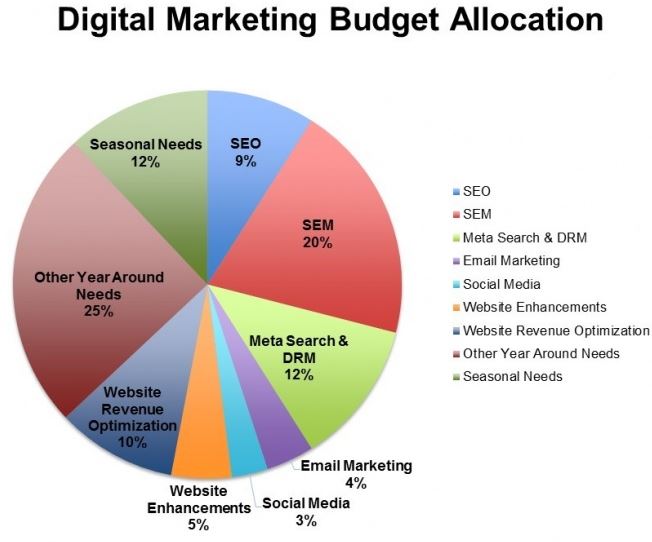
The hotel’s marketing budget generally accounts for approximately 4 to 5% of total revenues. However, although it is a small amount in relation to the total, much of the hotel’s success is directly proportional to the efficiency with which that budget is used. In addition, to date, approximately 55% of hotel bookings are made on the Internet. For all these factors we want to tell you: learn how to measure the ROI of online marketing for hotels and succeed.
Category: Travel marketing blog
-

How video marketing influences tourism
In recent years we have seen how the travel industry has been integrating the use of video to help build better user relationships, educate and convert consumers, and improve customer satisfaction.
-

Advantages of increasing direct hotel bookings
Hotels and hotel chains still have a lot of room for improvement when it comes to converting online traffic into direct bookings. That’s why we want you to discover the advantages of increasing direct bookings on your hotel’s website. However, remember that it is very important to have a balance between direct bookings and those coming from intermediaries, both online and offline. Rome was not built in a single day, so start step by step.
-

Communicating hotel theming through video marketing
As you may already know first hand, the conventional sun and beach offer is becoming obsolete. In recent years, themed hotels have been essential for chains to differentiate themselves from the competition.
Therefore, it has once again become necessary to attract new customers and to capture the attention of old ones. To achieve this, we give you the ultimate solution:communicating hotel theming through video marketing..
-

Find out how to convert web traffic into hotels and sell more
There are a number of tactics and strategies that can be used to increase direct bookings. However, we want to offer you the most significant keys so that you can discover how to convert web traffic into hotels.
-

Improve with these 5 keys to video marketing for hotels

Maybe your chain has already produced its own branded video, but it’s still not getting the results it could. No doubt it is a great tool, but you have to know how to use it. With these five keys we help you to take advantage of video marketing for hotels.
-

5 ways to improve profitability with online marketing for hotels
Online marketing for hotels is becoming more and more complicated, because the players (OTAs, metasearch engines, reviewplatforms…) within this playing field are very diverse and have objectives that often go against the hotels’ online distribution policy. Therefore, with this post we are going to convince you that you should dedicate efforts and investment in this channel by talking to you about 5 ways to improve hotel profitability through online marketing.
-
Trends in tourism: the future of video
The rise of video marketing in tourism has been one of the most exciting trends in recent years. In fact, this year it is positioning itself as the star in all stages of the conversion funnel.
-

Video marketing in tourism: key trends for 2024
Video marketing in tourism has gone from being a risky bet to becoming the central pillar of any digital strategy in the sector. Travelers don’t just consume video before booking: they use it to dream about destinations, compare experiences and, in many cases, make the final purchase decision. If your tourism business still treats video as a complement, these trends are going to make you rethink your priorities.

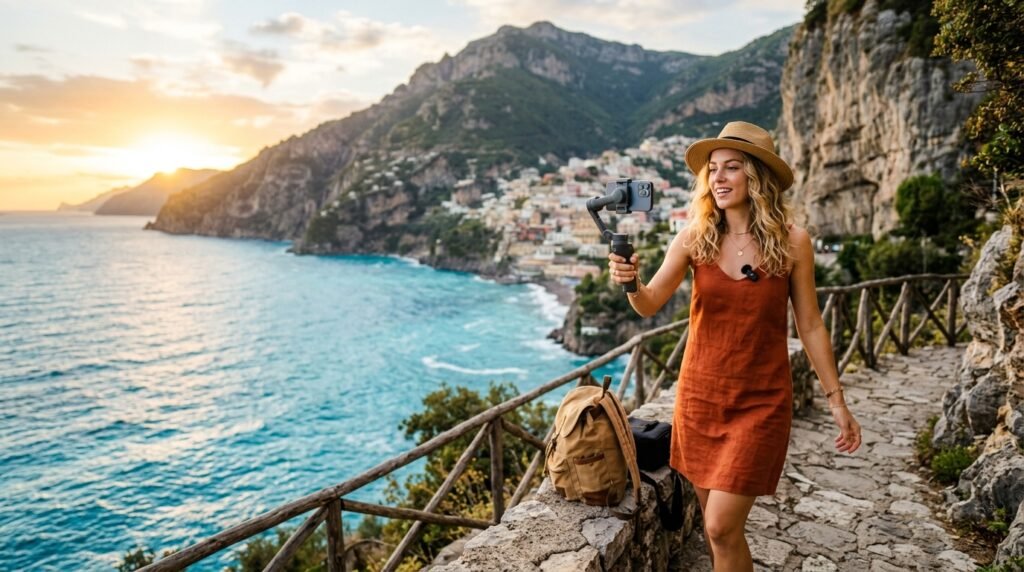
Video marketing in tourism has evolved from studio productions to authentic content recorded on location, allowing brands to emotionally connect with potential travelers in real time Why does video dominate the booking decision?
The data no longer leaves any room for doubt. According to Think with Google, 66% of leisure travelers are inspired by watching travel videos on YouTube before deciding on their destination. Meanwhile, Statista estimates that online video will account for more than 82% of global internet traffic in the coming years. In the tourism sector, where experience is everything, no format communicates sensations as effectively as audiovisual content.
The reason is simple: video shortens the distance between desire and reality. A hotel in Bali, a route through the Norwegian fjords or a gastronomic experience in San Sebastián come to life in thirty seconds of well-edited footage in a way that no text or photograph can match.
What are tourism micro-videos and why do they matter?
One of the most established trends is the creation of micro-video libraries: short pieces, between 15 and 60 seconds, that showcase specific aspects of a destination, accommodation or activity. Chains like Marriott or NH Hotels have already embraced this format to feed their social channels with agile and reusable content.
The advantage is twofold. On one hand, they allow communication to be personalized: a destination representative can share a selection of micro-videos tailored to each potential client’s profile, something that previously required costly production and can now be resolved with a smartphone and a good content strategy. On the other, they facilitate distribution across multiple platforms without the need to re-record.
How to personalize audiovisual content in tourism?
Tailor made content has gone from being a luxury to an expectation. Current tools allow dynamic data to be inserted within the video —the traveler’s name, the destination they have browsed, the dates of their search— to create pieces that feel unique even if they start from a common template. Companies like Booking.com or Airbnb are experimenting with this type of personalization in their retargeting campaigns.
In addition, interactive elements within the video —booking buttons, surveys, navigation menus— are notably improving lead generation and customer qualification. An interactive video can multiply dwell time and reduce friction up to the moment of conversion.
Multichannel distribution: beyond YouTube
YouTube remains essential —with more than 2.7 billion monthly active users it is impossible to ignore—, but video marketing in tourism needs a real multichannel strategy. Instagram Reels, TikTok and YouTube Shorts have changed consumption habits: short-form vertical video is today the most consumed format on mobile, which is precisely the device from which most travelers research and book.
Destinations like Iceland or the region of Andalusia have built communities of millions on TikTok by betting on authentic and relatable content, far removed from traditional corporate video. The key is not to be everywhere, but to adapt the message and format to each platform without losing brand consistency.
The role of user-generated content (UGC)
Prosumers —travelers who produce and consume content at the same time— are today one of the most valuable assets in tourism video marketing. Their TikTok videos, their Instagram Reels or their YouTube reviews generate a credibility that no brand production can replicate.
Brands like Iberostar or Meliá have integrated UGC into their official strategy, collecting and amplifying their guests’ content with hashtag campaigns and ambassador programs. The result is a library of authentic content, low cost and with high persuasive power in the traveler’s inspiration phase.
Emerging formats you cannot ignore
360° video and virtual reality allow travelers to take a virtual tour of a hotel or destination before booking, reducing traveler uncertainty and increasing confidence in the purchase decision. Destination livestreaming —live broadcasts of beaches, markets or events— is gaining ground in Asia and is beginning to emerge in Europe as a real-time inspiration tool.
Embracing some of these formats does not require cinematic production budgets. A smartphone, good lighting and an authentic story to tell are enough to get started. What matters is understanding which format best responds to each moment of the customer journey: inspiration, consideration or loyalty.
Where to start with video marketing in your tourism business
- Define the objective before recording: do you want to inspire, inform or build loyalty? The format and platform depend on that answer.
- Create a small library of reusable micro-videos of your facilities, services or destination.
- Choose two or three channels where your audience is and adapt the format to each one.
- Encourage your clients to share their experience on video and amplify that UGC on your official channels.
- Measure performance: viewing time, clicks and conversions will tell you what content works and what to adjust.
Video marketing in tourism is not a passing trend: it is the way travelers want to engage with destinations and brands. The companies that understand this first will have an advantage that is difficult to recover.
-

The use of video marketing to differentiate the hotel chain
Today, belonging to an audiovisual generation, our showcase is undoubtedly the Internet and the video is the wrapping that draws attention to our product. Video marketing to differentiate the hotel chain is no longer just another option.